Authors: Karen Kelm, Tanya Barber, Francois V Bolduc, and Denise Campbell-Scherer

Read Beyond Burden: A Cognitive Task Analysis of Maternal Expertise in Fragile X Syndrome from BMC Primary Care.

Summary

Parents of children with Fragile X syndrome (FXS) gain invaluable knowledge through years of caring for their children. However, research often focuses on the challenges families face rather than the skills and experience parents develop. In this study, researchers explored how mothers use what they have learned to support their children’s growth, happiness, and participation in everyday life.

Researchers interviewed seven mothers who had more than 15 years of experience raising sons living with FXS. They looked at how these mothers made decisions, handled challenges, and found ways to support their children. Three main themes emerged:

  1. Look beyond the diagnosis: Focus on each child’s interests, strengths, and abilities. One mother described this as “following the spark” by noticing what excites and motivates her child.
  2. Care for yourself, too: Mothers highlighted the importance of self-compassion, taking breaks, setting boundaries, and accepting help.
  3. Build a team of champions: Support from family, friends, teachers, healthcare providers, and others can help children feel included and find opportunities to participate in their communities.

Why It Matters

This study highlights that parents are the experts on their own children. Their everyday experiences give them valuable knowledge about what works and what doesn’t, what their children enjoy, and how to support their individual needs. The findings encourage healthcare providers to really work alongside families, listen to their experiences, and focus on children’s strengths—not just their challenges.

They also remind us that recognizing family expertise should go hand in hand with providing families with reliable, ongoing support. Caregiver well-being and community connections are important parts of family care, and families should not have to manage everything on their own.

Next Steps

The findings highlight ways healthcare providers can better support families living with FXS, including involving parents in care decisions, improving provider training, and creating opportunities for families to connect. Recognizing the knowledge families bring, while making sure they have reliable, ongoing support, can help build stronger partnerships and more family-centered care.

Authors: Deborah A. Hall, David Andrés González, Jessica Klusek, Peter K. Todd, Joan A. O’Keefe, Nell Maltman, Federica Alice Maria Montanaro, Dragana Protic, Laura Scorr, Rabia Malik, Pierpaolo Turcano, Matthew S. Meyers, and Andreea Seritan

Read “Management of Fragile X-Associated Tremor/Ataxia Syndrome: A Review for Clinicians,” published in Frontiers in Neurology.

Summary

Fragile X-associated tremor ataxia syndrome (FXTAS) is a condition that can affect some people living with an FMR1 premutation. It often develops later in adulthood and can cause problems with movement, balance, memory, and mental health. Symptoms may include shaking (tremor), difficulty walking, numbness or pain, memory loss, anxiety, and depression. FXTAS affects each person differently, and symptoms can change over time.

In this article, a team of experts reviewed existing research and shared recommendations to help doctors better care for people with FXTAS. The team – made up of specialists in neurology, mental health, speech therapy, physical therapy, and other areas – reviewed 66 research articles published over the past 10 years and used this information, along with their clinical experience, to develop updated treatment recommendations for FXTAS.

The review highlights several ways to manage FXTAS symptoms. These include medications for movement problems, pain, anxiety, and depression, therapies to support memory and thinking, and physical, occupational, and speech therapy. The authors also discuss the importance of regular exercise and healthy eating. Because FXTAS affects many parts of the body, the authors recommend care from a team of healthcare professionals who work together to meet each person’s needs.

Why It Matters

There are currently no FDA-approved medications specifically for FXTAS, and only a small number of clinical trials have tested treatments in people with this condition. This means doctors often use treatments developed for other conditions to help manage FXTAS symptoms. However, not every treatment works the same way for every person, and some medications can worsen other symptoms.

This review provides updated guidance that can help doctors make better treatment decisions. It also highlights that care involves more than medication. Physical therapy may help with balance and walking, occupational therapy can support everyday activities, and speech therapy can help with communication and swallowing. Findings show that support for memory, mental health, and caregivers is also important.

For families, one important takeaway is that there are ways to manage many FXTAS symptoms and support quality of life, even when a treatment cannot stop the condition from progressing. Regular check-ins with healthcare providers can help identify any changes and adjust care as needed.

Next Steps

The authors hope these recommendations will help improve FXTAS care while researchers work toward better treatment options. Ongoing studies are following men and women with FXTAS over five years to better understand how symptoms change over time. The findings may help doctors recognize changes earlier and plan care as the condition progresses.

Researchers are also exploring treatments that target movement, memory, and mental health symptoms, as well as ways to improve balance, daily activities, and overall well-being. These efforts may help identify which treatments and supportive therapies work best for people with FXTAS and guide future clinical trials.

Editorial Note

This is a review of existing research and expert recommendations, not a new clinical trial. Some recommendations are based on studies of other neurological conditions because research focused solely on FXTAS remains limited. The authors emphasize that treatment decisions should be individualized.

Ongoing FXTAS Research

Advancing Clinical Trials for FXTAS — Webinar
Dr. David Hessl joined the NFXF to discuss the exciting new ACT for FXTAS study, funded by the National Institute of Neurological Disorders and Stroke (NINDS). The post also includes a sign-up link for those interested in participating.

ACT for FXTAS — Study Flyer
Researchers at UC Davis MIND Institute, Rush University, and the University of Michigan are looking for volunteers for a research study on Fragile X-Associated Tremor/Ataxia Syndrome (FXTAS)

Longitudinal Study of Brain and Cognition in Fragile X Premutation Carriers (TRAX) — Research Opportunity
Learn how you can participate: Researchers at the UC Davis MIND Institute are examining changes in the brain and cognition associated with aging in males with the Fragile X premutation compared to those without.

Authors: Walter Kaufmann, MD; Paul Horn, PhD; and the FORWARD Consortium

Read “Profile of Behavioral Comorbidities in Children With Fragile X Syndrome” published in the Journal of Autism and Developmental Disorders[1]

Summary

Children living with Fragile X syndrome (FXS) often experience behavioral challenges, including anxiety, attention difficulties, hyperactivity, sensory sensitivities, and autism-related behaviors. Many children experience several of these challenges at the same time, which can affect their daily activities and everyday well-being.

In this study, researchers examined information from 1,410 children with FXS (1,072 males and 338 females) who participated in the FORWARD study, a large research project involving Fragile X syndrome specialty clinics across the United States.

Researchers examined eight of the most common behavioral challenges, how often they co-occurred, and how they affected children’s daily lives.

Results show that attention problems and anxiety were the most common behavioral challenges among children with FXS, but they were generally less severe than other challenges. Nearly 7 in 10 children (69%) experienced multiple behavioral challenges, and 39% had more than two. Children with more behavioral challenges tended to have greater difficulties overall.

Researchers also found that certain challenges often occurred together, especially attention problems and hyperactivity, as well as anxiety and mood changes. Surprisingly, sensory problems, such as sensitivity to sounds, lights, or touch, were strongly linked to every type of behavioral challenge studied. This suggests that sensory difficulties may play an important role in understanding the behavioral challenges children with FXS experience.

Why This Matters

These findings highlight how complex behavioral challenges can be for children living with FXS. Rather than focusing on one behavior at a time, healthcare providers may need to consider how multiple challenges interact and affect a child’s daily life.

For families, this research reinforces the importance of discussing all behavioral concerns with their child’s care team, including anxiety, attention, sensory sensitivities, and changes in mood or behavior.

Better understanding these patterns could help clinicians identify challenges earlier, develop more personalized care plans, and improve quality of life for individuals with FXS and their families.

Next Steps

These findings can improve how clinicians identify and manage behavioral challenges in children living with FXS. By understanding which challenges often occur together, healthcare providers can better recognize concerns that might otherwise be missed and develop more personalized care plans that meet each child’s unique needs.

The study also highlights the need to improve the measurement of behavioral challenges, especially anxiety, attention difficulties, and repetitive behaviors. Better tools could help healthcare providers better understand each child’s needs and help researchers more accurately measure whether treatments targeting these behaviors work in clinical trials.

Who represents you matters. Elected officials at the federal, state, and local levels make decisions that can affect health care, disability services, education, community supports, and research funding for people living with Fragile X and their families.

Learning about candidates and understanding their priorities are ways to use your voice. As the 2026 election season continues, these resources can help you prepare.

Get Ready to Vote and Know Who Represents You

Whether you are preparing to vote, helping a family member explore voting, or learning about accessible voting options, these resources can help you get started.

  • Vote.gov: Connects you to your state’s official election website, where you can find information on registering to vote, checking your registration status, and learning about voting options.
  • Find and Contact Elected Officials: Identify your federal, state, and local elected officials. (USA.gov)
  • Voting Accessibility: Information and resources to help people with disabilities access the voting process. (U.S. Election Assistance Commission)
  • Can I Vote: Find your state’s official election website to check voter registration, find polling locations, and learn about voting options. (National Association of Secretaries of State)

What Is a Constituent, and Why Does It Matter?

A constituent is someone who lives in the area an elected official represents. Where you live determines which U.S. Representative and Senators represent you, as well as which state and local officials serve your community.

Voting helps determine who represents you, and as a constituent, you can educate elected officials about Fragile X by telling them, “I live in your district, and this issue affects me, my family, or my community.” Knowing you are one of their constituents holds weight. Your experience matters whether you voted for that official or not.

During National Fragile X Foundation (NFXF) Advocacy Day, advocates meet with congressional offices to share their experiences and discuss issues affecting the Fragile X community. These conversations help decision-makers understand the needs of individuals and families and why their support matters.


Learn About the Candidates and the Issues

Your ballot may include candidates for Congress, state legislators, governors, county officials, mayors, city councils, and school boards. Each office has different responsibilities, so consider which issues an elected official can influence.

Use multiple sources to learn about candidates and their positions. No single source covers every race or issue.

  • VOTE411: Nonpartisan candidate information and responses to questions about community issues.
  • Ballotpedia: Information about elections, candidates, elected offices, and ballot measures.
  • Candidate campaign websites and public statements share candidates’ priorities, proposals, and positions.
  • Candidate forums, debates, interviews, and public records can offer additional perspectives on a candidate’s views and past actions.

As you review information, consider who is providing it, whether it reflects the candidate’s own words, and whether other sources offer additional context.

Questions to Consider

You don’t have to be an advocacy expert to ask questions or learn where candidates stand. Questions to consider might include:

  • What issues matter most to my family and me? Consider Fragile X research funding, health care, disability services, education, community living, and caregiver support.
  • What responsibilities come with this office? Consider which policies and programs the position can influence at the federal, state, or local level.
  • What are the candidate’s priorities and plans? Review their statements, past actions, and proposals, and ask what steps they would take if elected.
  • How could their decisions affect the Fragile X and broader disability communities? Consider the potential impact on individuals, families, and the supports available in their communities.

Use your research to inform follow-up questions you can ask at a candidate forum or send by phone or email to the candidate’s campaign. Start with what matters most to you and your family.

Looking Ahead: A New Congress Means a New Opportunity to Educate

Beginning in January 2027, a new Congress will take office, with many new members. This transition creates an important opportunity to introduce the new class to Fragile X-associated conditions and explain why their support matters to you, your family, and our community.

As these members of Congress learn about their constituents and the issues before Congress, sharing your experience can help them understand the needs of individuals and families, the importance of continued research funding, and the role of federal policies in supporting people with disabilities across the lifespan.

Advocacy Continues Beyond Election Day

Voting is one part of advocacy. The relationship between constituents and elected officials continues after the election through conversations, questions, and ongoing engagement on policies that affect individuals and families.

As we prepare for this new Congress, our next Advocacy Day, and beyond, understanding who represents you and how to connect with those offices are important first steps. Your voice helps decision-makers understand what matters to the Fragile X community.

The NFXF will continue to lead Fragile X advocacy at the federal level, working with our community to educate members of Congress and advocate for policies and research funding that address the needs of people living with Fragile X across the lifespan and associated conditions.

This is an original article by Jayne Dixon Weber, updated in 2026 by the NFXF Team.

Fall is a season filled with exciting traditions, but the sensory overload, crowd noise, and schedule changes that accompany autumn activities — especially Halloween — can trigger hyperarousal and anxiety in individuals with Fragile X syndrome (FXS).

While Halloween often centers on trick-or-treating and candy, the season offers many adaptable activities. The goal is to find what creates a positive experience for your family — even if that means starting brand-new traditions!

Here are some practical strategies, sensory-friendly ideas, and insights from NFXF community members to help keep fall enjoyable and low-stress.

Managing Noise, Crowds, and Auditory Sensitivity

Unpredictable sounds — like lawn animatronics, barking dogs, sudden laughter, or screaming trick-or-treaters — are primary triggers for auditory hyperarousal.

  • Use Hearing Protection: Earplugs, noise-reducing earmuffs, or over-ear noise-canceling headphones paired with favorite music or calming audio can significantly cushion environmental noise.
  • Go Off-Peak: Visit pumpkin patches, orchards, or festivals on weekday mornings or right when venues open to avoid peak crowds and long lines.
  • Avoid Animatronics and Strobes: Steer clear of stores or yards with motion-activated noise makers, fog machines, or flashing/strobe lighting, which can trigger both auditory and visual hyperarousal.
  • Establish a Calm Safe Zone: When attending community events or visiting neighbors, find a quiet retreat spot (like the car or a quiet side street) where your child can decompress if hyperarousal builds.

Navigating Routine Changes and October Anticipation

The buildup to Halloween can create prolonged excitement and anxiety, leading to sleep disturbances or behavioral challenges way before Halloween.

  • Visual Schedules and Countdown Calendars: Use visual calendars to clearly mark when events will happen so expectations are clear.
  • Prepare for Schedule Shifts: Keep day-to-day routines (mealtimes, bedtime rituals, familiar activities) as consistent as possible surrounding holidays (or any major events).
  • Acknowledge Anxiety Signals: Hyperarousal often presents as fidgeting, pacing, vocalizing, or hand-flapping. You know your child’s unique signals. Recognizing them early allows you to step away before a meltdown occurs.

Helpful Templates

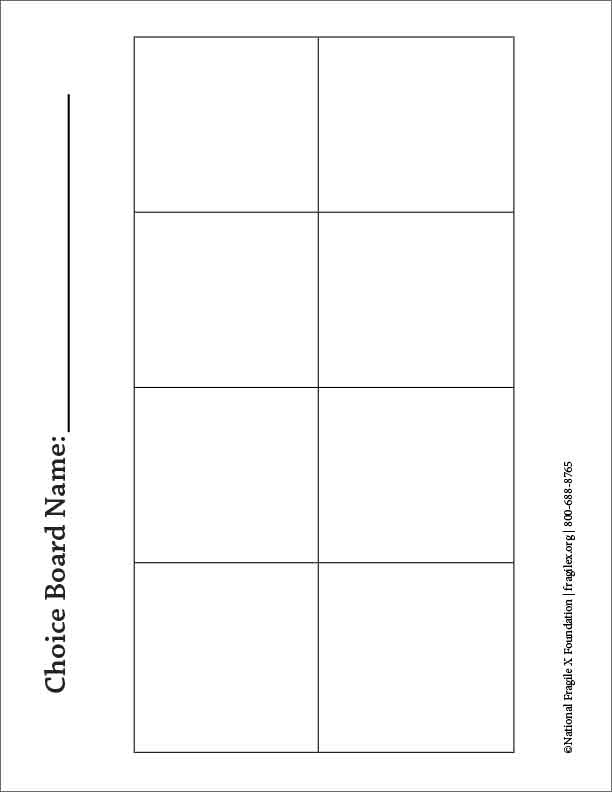
Choice Board Template
1 pages,
Updated 02/23/2026
This offers a set of preferred options, helping increase independence and reduce frustration around communication. Works well for snack choices, playtime activities, and picking clothing or shows.
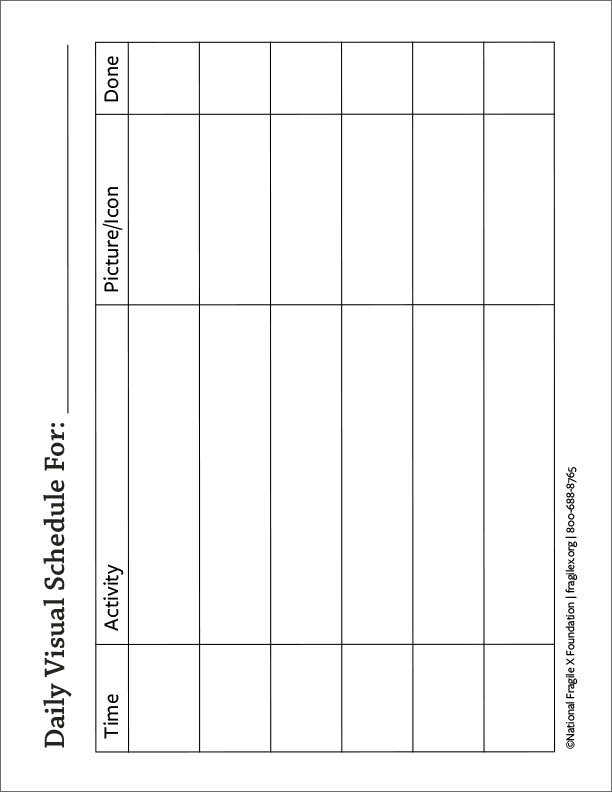
Daily Visual Schedule Template
2 pages,
Updated 04/17/2025
Helps show what’s happening now and what comes next. This can hep reduce transition struggles and help the person feel more in control. Works great for morning or bedtime routines, school or therapy schedules, and daily home routines.
First-Then Board
2 pages,
Updated 04/17/2025
Great for helping with transitions or when motivation is needed. Shows a task followed by a reward or preferred activity. Works well for getting through less preferred tasks, managing transitions, and reinforcing expectations.

Visiting Pumpkin Patches and Outdoor Events

  • Research Accessibility Ahead of Time: Call venues or check social media for quiet hours, accessible parking, and layout maps.
  • Social Stories & Photos: Print or display photos of the destination before you leave so they know exactly what it looks like.
  • Move at Their Pace: Avoid rushing through activities. If walking through a farm or patch becomes too overwhelming, picking a pumpkin at a local market is a great low-stress option!

Decorating Home Spaces Inside and Out

  • Let Them Lead: Involve them in choosing decorations or building simple DIY crafts without pressure.
  • Focus on Calming Decor: Avoid sudden movement sensors, loud props, or flashing lights. Ensure walkways remain clear of clutter for visitors.
  • Decorate Gradually: Introduce decorations over several days rather than changing the home environment all at once.

Choosing and Adapting Sensory-Friendly Costumes

Costumes should prioritize tactile comfort and a familiar fit over an elaborate look.

  • Embrace Everyday Wear: Use soft, familiar clothing like Halloween pajamas, character onesies, or themed hoodies (ideas include scrubs for a doctor, a firefighter jacket, or a sports jersey).
  • Skip Masks and Face Paint: Masks can obstruct peripheral vision and feel claustrophobic, while face paint can feel uncomfortable to the touch.
  • Plan for Layering: If you’re trick-or-treating in cold weather, make sure costumes fit comfortably over their usual outerwear or coat.
  • Keep Expectations Flexible: They may select a costume at the store but later change their mind and want to switch outfits or want no costume at all. Going without a costume is completely fine!
  • Consider Color-Coded Buckets:

Carving and Decorating Pumpkins

  • Tactile Alternatives: Pumpkin pulp and seeds can cause sensory aversion. Disposable gloves or tools let your child participate comfortably.
  • Mess-Free Options: Decorating pumpkins with paint, markers, foam stickers, or googly eyes completely avoids slippery textures and sharp carving tools.
  • Collaborate on Design: Draw designs on paper first. Ask them to pick features (eye shapes, smiles) or help pop out pre-carved pieces.

Trick-or-Treating and Social Interactions

Social demands — such as eye contact, waiting, knocking, or speaking on command — can cause intense social anxiety for individuals with FXS.

  • Practice and Pre-Teach: Rehearse knocking, ringing doorbells, and saying “Trick or treat” beforehand with familiar neighbors during daylight hours.
  • Eliminate Social Pressure: If your child doesn’t speak or make eye contact, step in naturally to help or say “Trick or treat” for them without making a scene.
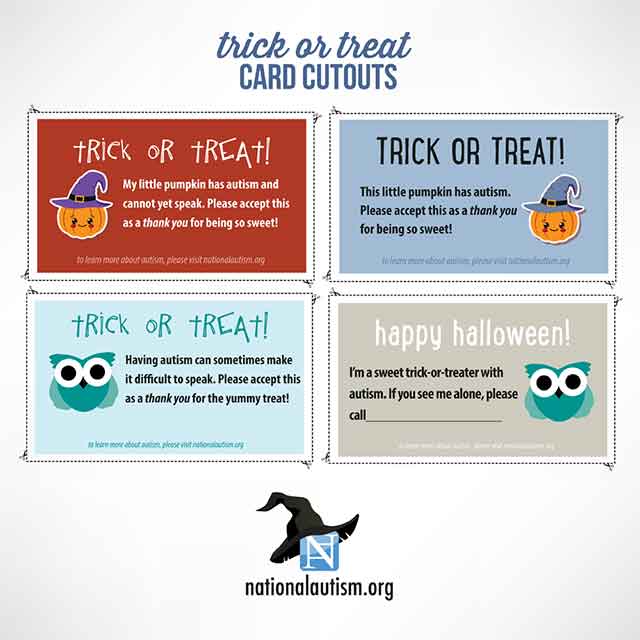
  • Use Awareness Cards: Carrying printable FXS awareness cards or trick-or-treat communication cards helps you explain your child’s communication needs to neighbors effortlessly:
  • Alternative Roles: Staying home to hand out candy or walking around the block without approaching doors are all valid ways to participate.
  • Set Clear Boundaries: Decide on the start time, route length, and end time before leaving the house.
Trick-or-treat card cutouts courtesy of the National Autism Association.
Click to view or download. Courtesy of the National Autism Association.

Managing Candy and Sensory Food Aversions

  • The “Trade-In” Strategy: Offer to trade part or all of their trick-or-treat haul for a desired toy, book, or activity.
  • Non-Food Treats: Offer non-food items (stickers, glow sticks, small fidget toys) for children with dietary restrictions or sensory food preferences.
  • Donate Extra Candy: Participate in local dental buy-back drives or donate surplus treats.

Alternative Ways to Celebrate

If traditional trick-or-treating isn’t a good fit, consider these low-intensity at-home alternatives:

  • Host a cozy movie night with non-scary seasonal films.
  • Bake and decorate Halloween-themed cookies or snacks together.
  • Read Halloween-related books together at home.
  • Attend daytime community events instead, which generally offer lower noise levels and brighter lighting than evening events.

Community Strategies from Fragile X Families

Parents and caregivers in the FXS community have shared practical tips that have worked for their families:

  • Soft Layers: “We use simple jackets or capes over familiar everyday clothes — like a firefighter coat or Superman cape — to avoid scratchy costumes.”
  • Cardboard Creations: “Building costumes out of cardboard boxes (like a car or robot) gave our son a comfortable physical barrier and made him feel secure.”
  • Home Display: “Our son loves dressing up, but prefers changing costumes multiple times at home and passing out candy in the driveway instead of walking the neighborhood.”
  • Peer Support: “We’ve found that going out alongside siblings or familiar friends provides natural social cues and helps keep anxiety down.”

Related Resources

For Adults With FXS

Authors: Elizabeth Merikle, Nancy Tich, Terri Sebree, Randi Hagerman, Stephen O’Quinn, George Nomikos & Kristen Bzdek

Read “Caregiver-Perceived Behavioral Challenges In Fragile X Syndrome And Implications For Measuring Treatment Benefit In Clinical Trials” published in the Journal of Patient-Reported Outcomes

Summary

When researchers test a new treatment for Fragile X syndrome (FXS), they need good ways to measure whether the treatment is helping. In a clinical trial, we call these measures the “outcome measures.” Just as important, outcome measures should focus on changes that actually matter to the people living with FXS and their families.

This study looked at a tool called the Aberrant Behavior Checklist-Community, scored specifically for FXS (ABC-CFXS). Caregivers use this questionnaire to report on behaviors such as social avoidance, irritability, hyperactivity, and difficulty interacting with others.

Researchers gathered information from caregivers of children and teens with FXS. Caregivers identified social avoidance, limited social interaction, aggression, irritability, anxiety, and hyperactivity as common challenges.

Overall, the behaviors caregivers said were important matched well with the behaviors measured by the ABC-CFXS. Caregivers also reported finding the questionnaire easy to understand and relevant to their child’s experiences.

The results of the study support using the ABC-CFXS to measure certain behavioral changes in FXS clinical trials.

Why This Matters to the Fragile X Community

For a clinical trial to show that a treatment works, researchers need to measure the right changes.

This study shows that the ABC-CFXS measures many behaviors that families say affect everyday life. That is important because caregiver input can help researchers understand whether a treatment is making a meaningful difference at home, at school, and in the community.

Better measures can lead to better clinical trials — and help researchers understand whether a new treatment is improving areas that truly matter to people with FXS and their families.

Next Steps

These findings can help researchers more confidently choose the best tools for future FXS clinical trials. The ABC-CFXS may be especially useful when a treatment is expected to improve behaviors such as irritability, hyperactivity, or social avoidance.

However, it’s important to note that one tool cannot measure everything. Treatments that target areas such as language, thinking, learning, or independence may need different measures.

Researchers can also continue involving people with FXS and their caregivers when planning clinical trials. Their input can help make sure studies focus on changes that would have a meaningful impact on everyday life.

While you may be most familiar with our annual NFXF Advocacy Day, our advocacy efforts are an intentional, year-round commitment to relationship-building, policy engagement, and community empowerment. The National Fragile X Foundation (NFXF) works continuously on Capitol Hill and alongside a community of advocates to ensure the Fragile X community has an active, informed voice wherever and whenever decisions on research, policy, and disability rights are made.

Key Takeaways

  • Year-Round Engagement: Beyond our annual Advocacy Day, NFXF engages in continuous outreach, participating in briefings, committee testimony, and ongoing dialogue with federal agencies and policymakers.
  • Broad Policy Scope: Recent efforts focused on critical priorities, including federal research funding, Medicaid, Home and Community-Based Services (HCBS), Supplemental Security Income (SSI), and family caregiving initiatives.
  • Cross-Collaboration: NFXF works alongside broader rare disease and disability organizations — such as attending the Newborn Screening Bootcamp and caregiving briefings — to stay ahead of policy changes that impact families even when Fragile X isn’t explicitly named.
  • Thoughtful, Fact-Based Leadership: Advocacy requires evaluating complex policy details beyond the headlines, consulting experts, and providing nonpartisan, factual information.
  • Community Empowerment: We translate complex policy updates into practical guidance, empowering individuals and families to advocate effectively at the federal, state, and local levels.

For us, advocacy means being in the room when conversations happen that may shape policies, programs, research, or opportunities for our community. It means listening, learning, asking questions, and making sure the voice of the Fragile X community is part of the conversation.

It also means building relationships before there is an immediate ask. Relationships with policymakers, federal agencies, researchers, advocates, and organizations don’t happen in a single meeting. They grow through ongoing conversations, follow-up calls, briefings, emails, introductions, and staying engaged over time.

A Good Example of What That Looks Like

The NFXF returned to Capitol Hill in September 2026 to meet with Members of Congress and congressional staff. We discussed issues important to the Fragile X community, including changes involving:

  • The Department of Education and Health and Human Services (HHS)
  • Medicaid
  • Home and Community-Based Services (HCBS)
  • Supplemental Security Income (SSI)
  • Disability rights and community living
  • Continued federal research funding for Fragile X-associated conditions

But Capitol Hill was only part of the week.

We also participated in a congressional briefing on the Family Caregiving Compendium, an interactive resource examining federal policy options related to family caregiving and long-term services and supports.

Caregiving is a major concern for the Fragile X community, and conversations about caregiver supports, Medicaid, HCBS, workplace policies, and other areas can affect our community even when Fragile X isn’t specifically mentioned.

We also attended the RARE Foundation (formerly EveryLife Foundation) Newborn Screening Bootcamp, where we learned more about emerging approaches to newborn and genomic screening, as well as the opportunities and limitations of programs currently being developed and piloted. We heard from professionals across the field, including representatives from:

  • NIH National Center for Advancing Translational Sciences (NCATS)
  • Health Resources and Services Administration (HRSA)
  • Centers for Disease Control and Prevention (CDC)
  • Researchers and other advocates

Meeting with and joining forces with these broader groups ensures Fragile X is never left out of the big conversations and helps us shape policies that fit our families’ daily lives.

Responsible Advocacy Takes More Than Showing Up

The NFXF approaches our role in advocating for the Fragile X community with great intention and care. That responsibility means listening, learning, asking questions, and understanding an issue’s details and implications before deciding how to respond. It means consulting with congressional offices we work closely with, partners across the broader disability and rare disease communities, and others with relevant expertise and perspectives.

Policy developments can generate questions and concerns, but understanding what they mean requires looking beyond initial headlines to examine the scope of a change and what is known versus what remains uncertain. We work hard to provide factual, nonpartisan information about issues that may affect our community.

Sometimes, that means taking the time to gather information from many varied sources, ask questions, and determine where and how our voice can make a difference. This work may not always be visible, but it is an important part of making sure our advocacy is informed, accurate, and focused on the needs of the Fragile X community.

Our Role Doesn’t Stop With Being In The Room

Part of our responsibility is bringing what we learn back to the Fragile X community. We work to provide factual, non-partisan information about policies and issues that may affect individuals and families living with Fragile X-associated conditions. We also provide information and practical guidance to help our community advocate for themselves and for Fragile X. That may mean contacting Members of Congress on Capitol Hill, in their local offices, by phone, or by email. It may also mean helping our community recognize when an issue calls for engagement with state or local elected officials.

We are grateful to the advocates who share their experiences and help policymakers understand what these issues mean for individuals and families living with Fragile X. Your stories bring the real-life impact of policies into focus and help ensure our community’s needs are heard.

Throughout the year, the NFXF submits written testimony to congressional committees and subcommittees, participates in briefings and roundtable discussions, meets with congressional offices and federal partners, joins calls, follows emerging policy and research issues, and continues to foster the relationships that make future conversations possible.

Advocacy is a continuous journey built on steady engagement, nonpartisan research, and authentic community stories. While much of this effort happens behind the scenes, every meeting, submission, and conversation ensures that the Fragile X community remains heard, represented, and prioritized.

As policies evolve, NFXF will continue to lead the way — keeping you informed and empowered every step of the way.

If you have questions or want to share your real-life stories and experiences, please reach out to us at advocacy@fragilex.org.

Advocacy Resources

Recent developments in Texas v. Kennedy have raised questions and concerns across our own and the broader disability community about the future of community living and disability rights.

On September 23, 2026, a federal district court entered final judgment removing specific community-integration provisions from the U.S. Department of Health and Human Services’ 2024 regulations implementing Section 504 of the Rehabilitation Act. The decision applies nationwide.

For individuals and families living with Fragile X syndrome who rely on Home and Community-Based Services (HCBS), this development can understandably raise concerns. HCBS are Medicaid services that provide support to people in their homes and communities rather than in institutional settings. They may include residential supports, personal care, day services, employment supports, and other services that help people live in their communities.

What Has Not Changed

  • The ADA and Section 504 are still federal law. The recent court decision did not repeal either law.
  • The Olmstead v. L.C. decision has not been overturned. The 1999 Supreme Court decision remains an important part of the legal history surrounding disability rights and community integration.
  • Medicaid HCBS has not been eliminated. The ruling does not automatically end Medicaid waiver programs or require individuals to leave their current homes or services.
  • The court did not eliminate the entire 2024 Section 504 rule. The court specifically removed the community-integration provisions.

What Has Changed

The federal government’s interpretation and approach to community integration have changed.

  • June 2026: The Department of Justice’s Office of Legal Counsel issued an opinion stating that the ADA and Section 504 do not impose the broad integration mandate that DOJ and HHS had previously interpreted these laws to provide. The opinion also took a narrower view of what Olmstead established.
  • July 2026: DOJ stated that it would no longer rely on its prior Olmstead guidance when enforcing Title II of the ADA. See: Understanding Recent Federal Activity Related to Olmstead: What Families Should Know.
  • September 2026: The court removed the community-integration provisions from the 2024 Section 504 regulations.
    These changes have raised concerns about future federal enforcement of community-integration protections. The longer-term impact is not yet fully known.

What Does This Mean for Community Living?

  • Medicaid HCBS has not been eliminated. The ruling does not automatically end Medicaid waiver programs or require anyone to leave their current home or services.
  • Medicaid is a federal-state partnership. States administer their Medicaid programs and make many decisions about HCBS, including eligibility, services, funding, waiver capacity, waiting lists, and provider rates, within federal requirements.

Both federal and state advocacy remain important as these issues continue to develop.

What Can Families Do?

Families can stay informed and make their voices heard with their state policymakers. Find your state legislators and their official legislative website.

Consider asking:

  • How is our state addressing HCBS access, waiting lists, and workforce shortages?
  • Are changes to HCBS eligibility, services, or funding being considered?
  • How can individuals with disabilities and families participate in Medicaid planning and budget discussions?

Your experience matters. Sharing specific examples of how access to housing, direct support, transportation, employment, or other HCBS affects your family can help policymakers understand the importance of these services.

Every state and U.S. territory also has a federally authorized Protection and Advocacy organization that may provide information, advocacy assistance, or legal services depending on the circumstances. Find your state’s protection and advocacy organization.

What’s Next?

The NFXF will continue to follow, engage, and share developments affecting community living, disability rights, Medicaid, and HCBS, and share information as it becomes available. Please feel free to contact our team at advocacy@fragilex.org.

This article explains where the challenges come from, what makes Fragile X syndrome (FXS) treatment different from other conditions, and how to start building a clearer picture of your options.

Key Takeaways: Why Treatment Information Feels So Confusing

  • Treatment information for FXS is split across behavioral, medical, educational, and developmental sources with little coordination between them.
  • No single approved medication exists for FXS, so treatment plans combine multiple approaches tailored to each individual’s needs.
  • Every person with FXS has a different combination of needs, which means no two treatment plans look alike.
  • The National Fragile X Foundation (NFXF) creates resources that help families organize fragmented treatment guidance into actionable steps.
  • Connecting with a Fragile X Clinical & Research Consortium clinic (specializing in FXS) gives you a team that understands how the different treatment areas fit together.

If you’ve ever looked into treatment options for FXS, you may have walked away feeling frustrated. One source may discuss behavioral therapy, another may focus on medication, and a third may offer potential educational strategies. But very little of it tells you how to connect these pieces into a plan for you or your family.

You’re not imagining things. Treatment guidance for FXS is fragmented because the condition itself affects so many areas of daily life — that’s where we come in.

We, the National Fragile X Foundation (NFXF), organize information into clear, family-centered pathways so you can feel more confident about the decisions ahead.

What Makes Fragile X Syndrome Treatment Information So Hard To Navigate?

FXS may impact learning, behavior, speech, sensory processing, anxiety, and sometimes physical health. Because it affects so many areas of life, treatment guidance comes from different specialists who address one piece, but nobody hands you the full picture.

A pediatrician might discuss medication treatment for attention. An occupational therapist might recommend a sensory diet (activities tailored to sensory processing issues). A speech-language pathologist focuses on communication goals.

According to the CDC, families affected by FXS often need coordinated support across medical, educational, and community systems. That coordination rarely happens on its own, which is a big part of why the information can feel so overwhelming.

Why Is There No Single Treatment Plan for Fragile X Syndrome?

Unlike some conditions with a standard course of treatment, FXS has no approved medication or therapy that addresses all symptoms. The FMR1 gene affects brain development in ways that vary from person to person.

Some people with FXS deal primarily with anxiety and behavioral challenges. Others face significant speech and language delays. Many experience a combination of these, along with sensory sensitivities and attention challenges.

Treatment plans should be built around the individual, not a one-size-fits-all checklist.

This individualized approach means your family’s plan can target exactly what matters most right now. But it also means you will not find a single, impossible guide that tells every family the same thing. This is where we see frustrated families struggle. Keeping up with what’s relevant to your family’s current stage adds another layer of complexity.

How Treatment Changes Across the Lifespan

Because the information you need changes over time, resources that made sense two years ago may no longer apply. A child diagnosed with FXS at age three will need very different support than a teenager entering high school or an adult transitioning to community-based services. Treatment priorities shift as the individual grows, and so does the type of information families need.

Early intervention often focuses on speech therapy, occupational therapy, and building foundational learning skills. As children enter school, the focus may expand to include individualized education programs and behavioral strategies. For adults with Fragile X, questions shift to housing, employment, and long-term care.

Where Families Typically Look for Treatment Information

Most families start their research online, and that’s where the confusion can multiply. A general search returns results from government health sites, academic journals, patient forums, and medical centers. The information varies in quality, accessibility, relatability, and relevance to FXS specifically.

Government resources like those from the National Institutes of Health are accurate, though often written for a clinical audience. Academic papers are detailed but hard to translate into daily decisions. Patient forums are relatable but not always reliable (and they’re for a broader population of “rare diseases” or “mental health and behavior,” not FXS-specific).

The NFXF bridges this information gap with our Fragile X Resource Library, which organizes treatment information by topic and life stage. Resources like the Treatment Recommendations put expert-reviewed, consensus-based information into a format designed for your real life.

How Different Specialists Talk About Treatment

Each professional discipline uses its own vocabulary and framework. A psychiatrist discussing medication treatment for anxiety may recommend an SSRI and talk about dosing. A behavior analyst may recommend a functional behavioral assessment and antecedent strategies for the same anxiety-driven behavior.

Both professionals are addressing the same core issue, but their language, tools, and goals sound completely different. For a family trying to coordinate care, it can feel like these experts describe separate problems rather than different strategies for tackling the same one. (For IEP and other special education terms, check out our Special Education Glossary.)

What a Coordinated Care Team Looks Like

The most effective FXS treatment plans involve a multidisciplinary team. This means professionals from different fields work together, share notes, and build a unified plan instead of operating in silos.

A coordinated team might include:

  • a developmental pediatrician
  • a speech-language pathologist
  • an occupational therapist
  • a behavior analyst
  • an educator
  • a psychiatrist or neurologist

The team works with your family to set goals and track progress across all areas simultaneously. As the individual ages, these team members may change, but multidisciplinary care remains important for success.

If you don’t yet have access to this kind of team, our Fragile X Syndrome Clinic Finder tool can help you locate specialized FXS clinics where multidisciplinary care is standard practice. While fewer clinics can see individuals with FXS into adulthood, some can or will help you transition to an adult care team.

How To Start Organizing Treatment Information for Your Family

Instead of trying to absorb everything at once, start by identifying your family member’s two or three most pressing needs right now.

Narrowing your focus helps you filter the information overload.

Next, look for resources organized by concern rather than by discipline. The NFXF’s Treatment Recommendations are structured so you can look up medication guidance sorted by symptom or read about behavioral approaches organized around specific challenges like aggression, hyperarousal, or social anxiety.

Finally, connect with other families who have been on this path. The NFXF Community Support Network links you with people who have navigated the same questions. Hearing how other families organized their own treatment plans can make the path forward feel less uncertain.

In Conclusion: Making Sense of Treatment Starts With the Right Guide

The confusion and frustration around FXS treatment information are real, and you are not alone. The condition touches so many areas of life that no single source can cover everything. You don’t need more information. You need information that’s organized, trustworthy, and designed for where you are right now.

The National Fragile X Foundation is exactly that kind of guide. From educational resources to symptom topics across the lifespan to community and clinic connections, the NFXF helps you turn scattered information into a workable plan. Take your time. Just know we are here for you every step of the way.

FAQs About Why Information About FXS Treatment Feels Confusing

Q: Why is there no single treatment guide for Fragile X syndrome?

FXS may impact behavior, learning, speech, sensory processing, and physical health differently in each person. Treatment combines multiple approaches tailored to individual needs, so a single universal guide would not be accurate or helpful.

Q: How does the NFXF help families navigate Fragile X syndrome treatment?

The NFXF organizes treatment information by symptom area and life stage so you can find what’s relevant to your situation. Resources like our Treatment Recommendations and expert-led webinars translate clinical knowledge into family-friendly language.

Q: What type of specialist should coordinate Fragile X syndrome care?

A developmental pediatrician, psychiatrist, or a clinical geneticist familiar with FXS may lead a coordinated care team. This team may include a speech-language pathologist, occupational therapist, behavior analyst, and psychologist who all work together on a unified plan. The team’s makeup will depend on the individual’s needs at the time.

Q: Can medication treat Fragile X syndrome directly?

No medication treats FXS itself, though there are many medications that are used to treat specific symptoms like anxiety, ADHD, or aggression. The NFXF’s medication treatment resource outlines which medications are commonly used for each symptom area, including dosing and side effects to discuss with your doctor.

Q: Where should newly diagnosed families start with treatment research?

Start with your family member’s most pressing needs and look for resources organized by concern. Focus on what matters now and expand your knowledge over time as your situation changes.

Navigating a New Fragile X Diagnosis

We are here to help you. When you’re ready, a whole community understands what you’re going through and will be here to guide and support you throughout your journey.


As part of our work to serve all Fragile X-related conditions, we are organizing a consortium of doctors and other specialists with expertise in Fragile X-associated primary ovarian insufficiency (FXPOI).

This would be in addition to our Fragile X Syndrome and FXTAS clinic finders.

To do that, we are asking the Fragile X community to share any specialists who have helped them with FXPOI and might be interested in learning more about the consortium.

Specialists may include those in obstetrics, gynecology, endocrinology, and reproductive endocrinology.

FXPOI is a condition in which the ovaries are not functioning at full capacity in an individual with the FMR1 premutation. It can cause infertility, early menopause, and other ovarian issues. FXPOI occurs in about 20% of women with the FMR1 premutation.

If you would like to recommend someone for us to contact, please complete our form, which asks for the doctor’s name and basic contact information. We’ll take it from there!

Please note: Including your personal information is completely optional!

Thank you for any contacts you can provide!

Share Your FXPOI Experience