


Introduction
Fragile X syndrome (FXS) is a genetic condition that causes developmental disabilities in both males and females. Though FXS occurs in both genders, males are more frequently affected than females, and often with more severity. FXS is the most common cause of inherited intellectual disability and the most common-known single gene cause of autism spectrum disorder (ASD) that accounts for about 2-3 percent of all ASD cases. At this time, there is no medical test, such as a blood test or brain scan, which can diagnose ASD; rather it is diagnosed by interview and clinical observation. Anxiety, especially social phobia and specific phobias, as well as generalized anxiety, is very common in FXS and often disabling.
FXS is a genetic disorder caused by a full mutation in the FMR1 gene. Full mutations in FMR1 cause a deficit in the Fragile X protein, FMRP. This deficit in FMRP results in abnormal communication among brain cells, which in turn affects learning and behavior. In many, though not all cases, FXS causes a spectrum of behavioral conditions in affected individuals, which can be challenging to their families, peers, and teachers, and can limit their interactions and opportunities within the wider society. At this time, there is no cure for the condition; therefore, management of FXS is largely focused on treatment of the challenging behaviors.
Behavior management tools may include medications or other treatment modalities, but ideally involves the combined efforts of a transdisciplinary team that ideally includes a psychologist, a physician who can prescribe and manage medication treatment (often a psychiatrist, neurologist, or developmental pediatrician), therapist, speech language therapist and educators, behavior analyst all working together with the family, school and community providers.
Behavior and Fragile X
Individuals with FXS often present with many endearing personality qualities and relative adaptive strengths in addition to challenging behaviors. While there are commonalities in behavior challenges in FXS, the intensity, frequency, and duration vary greatly and are influenced by other factors, such as their environment and medical conditions. Behavior problems can worsen if they are reinforced in a variety of ways; a behavioral specialist can help to specify factors that may exacerbate behavioral problems. It is critical to address behavioral concerns with an individualized approach.
The most common behavioral challenges seen in FXS include behaviors associated with generalized anxiety, social interaction difficulties (this includes social anxiety, withdrawal, and social aloofness), attention deficit hyperactivity disorder (ADHD), self-injury, and aggression. Addressing these challenges needs to be done with consideration to the person’s level of intellectual functioning, speech-language abilities, and ASD symptoms, if applicable.
High states of arousal, or hyperarousal, a common feature of individuals with FXS, are thought to be biologically driven but triggered or increased by environmental and social stimulation. Individuals experiencing overstimulation or hyperarousal may feel anxious or fearful. Some may become flushed, their ears and cheeks may become red, and their palms may begin to sweat. Their behavior may appear disorganized, and they may begin to engage in repetitive movements or speech. Some may become obstinate, refuse an activity or attempt to leave the stimulating environment. They may become unfocused, inattentive, impulsive, or aggressive. Avoidance or escape behaviors are more prominent in individuals with limited ability to communicate. Social withdrawal and phobias can evolve into full blown reclusion especially in adolescents and adults as the demands of schedules in later life do not necessitate going out of their homes on a regular schedule.
Many males, and some females with FXS, exhibit behavioral symptoms consistent with a diagnosis of ASD, a developmental disorder primarily characterized by a selective impairment in social interaction, stereotyped and repetitive behaviors, and communication deficits. Specifically, people with ASD have differences in how they understand and react to people and social situations, which result from differences in how their brains process socially-relevant information. Symptoms of ASD appear in early childhood. It is a lifelong disorder, though symptoms change over time. In some cases, the cause of ASD is known, such as FXS, a genetically-defined condition that can be diagnosed by a DNA blood test, unlike ASD that is a behaviorally-defined diagnosis. This does not mean that individuals with FXS have two separate, unrelated disorders; the FMR1 mutation is simply the underlying cause of their ASD symptoms.
Understanding the behavioral challenges and common triggers in FXS are the key to effective behavior management. Developmental differences, such as delayed language and sensory sensitivities, often contribute to behavioral challenges, especially in younger individuals. A loss of capacity for self-regulation, manifesting in aggressive outbursts or self-injurious behaviors is often observed in individuals with FXS, often based on a specific trigger, which may or may not be easy to identify. Difficulty handling transitions, new environments and changes in routine often present behavioral challenges, potentially including aggressive outbursts.
Initial Step — Comprehensive Evaluations
Addressing behavioral challenges in an individual with FXS should start with a comprehensive evaluation. A transdisciplinary team approach ideally includes: educators, school administrator, psychologist, psychiatrist or other physician if medication is being considered, behavior analyst, occupational therapist, speech-language pathologist and caregivers. If the child has previously had a comprehensive evaluation, the evaluation should be reviewed and updated. There should be documentation of relative strengths and weaknesses across all developmental domains. Comprehensive evaluations should be used whenever developing behavioral support plans, behavior intervention plans, educational plans, specially designed instruction, vocational plans, etc.
The following are important components of a transdisciplinary comprehensive evaluation.
Psychological and Adaptive Behavior Evaluation
A thorough psychological and adaptive behavior evaluation should be conducted and reviewed regularly. If school-aged, academic and achievement assessments are important aspects to include. Adults with FXS benefit from vocational and adaptive assessments as part of an annual service plan review. Input from family, independent providers, and school personnel should be solicited. This information is crucial to deciding if the goals and strategies are appropriate and realistic for the person with FXS.
ASD Evaluation
Many children with FXS should be formally evaluated for ASD. A diagnosis of autism is typically made by a specialist (psychologist, developmental pediatrician, neurologist, or psychiatrist). A comprehensive evaluation for ASD should include an in-depth parent interview and formal assessments of cognitive skills, adaptive skills, speech and language skills, social development, and behavioral differences.
Occupational Therapy Evaluation
An occupational therapy (OT) evaluation should be conducted to evaluate and create a plan to address fine motor skills, motor planning, sensory issues, self-regulation skills, adaptive functioning and daily life skills.
An OT evaluation can identify sensory sensitivities in a person with FXS and the profile of dysregulation that often is associated with these difficulties. Challenging behaviors can be the result of the ways the child acts to try to eliminate, avoid or cope with the aversive sensory input. Examples include taking off clothes, throwing oneself on the ground to avoid entering a loud space, or covering ears. Additionally, the child may seek or need more sensory input (leaning on or pushing into people or stuffing too much food in the mouth) as a way of coping or helping to deal with the challenges they are struggling to manage.
A child can be both sensory seeking and sensory avoidant, which can prove challenging for caregivers. The OT evaluation helps to describe the way the sensory or motor foundations in the child might be best addressed, through direct intervention or environmental and interactional changes in the world around them. Identifying daily strategies to address the sensory and motor challenges and to support the acquisition of self-regulation and coping skills is central to the OT’s role on the team and important for a comprehensive behavior intervention plan. Additionally, difficulties with coordination and skill development, and with fine motor skills and handwriting skills compounded by dislike for hand over hand instruction may be triggers for challenging behaviors. These elements should be included in the OT evaluation.
Speech-Language Evaluation
A comprehensive speech and language evaluation provides a great deal of information and can shed light on the function of challenging behaviors. Delayed speech and language development is noted in many boys with FXS. Oral motor difficulties may significantly impact sound production skills, making expressive language difficult to understand. Some individuals may be minimally verbal due to delayed or deficient oral motor planning skills. Difficulty with expressive speech and language or limited means of functional communication is a cause frustration for many boys with FXS. Also, attentional deficits and severe autistic features are also associated with relatively greater impairment in receptive language. In a state of hyperarousal, language demand can increase the arousal further, compounding an already compromised situation. Language frustration often results in challenging behaviors including: crying, grabbing items, hand biting or aggression. Refusal to follow directions may not be oppositional behavior but rather due to receptive language deficits (inability to understand the directions), expressive language deficits (inability to refuse or respond to the direction) or delayed auditory processing. Some boys and men may say “NO” initially in response to any direction. The transdisciplinary team should assess and parse out if this is a learned response to accommodate for poor auditory processing, poor receptive language skills or heightened state of arousal rather than noncompliance.
Physical Therapy Evaluation
A physical therapy (PT) evaluation should be completed to assess the level of joint laxity (looseness) and generalized mild hypotonia. Additionally, general gross motor skills are often included in the PT evaluation. These conditions are noted with varying degrees in most individuals with FXS. Mild hypotonia is often associated with fatigue following physical exercise. Fatigue may be a reason for refusal to continue an activity, particularly if it involves prolonged exertion. Frustration with motor skills can lead to resistance and hesitant participation and the PT evaluation can assist the team in best ways to alleviate these challenges.
ADHD Evaluation
Evaluation for ADHD can provide an understanding of how inattentiveness or poor impulse control may contribute to behavioral issues, such as lack of focus and poor response to redirection. Destroying materials or swiping at stimuli may be symptomatic of poor impulse control. Hyperactivity may also affect the person’s ability to stay engaged long enough to finish an activity or comply with a demand. An evaluation of ADHD symptoms assists in planning activities/goals that are appropriate and in alignment with the person’s attention span (for example, time on task, waiting time).
Sleep Study
A sleep study should be conducted if persistent sleep issues are noted by caregivers or daytime drowsiness is noted.
Neurology Evaluation
Approximately 10%–12% of individuals with FXS have a co-occurring seizure disorder, with a higher prevalence in males (13%–15%) and in those with a diagnosis of ASD. If the person with FXS has a seizure disorder, an evaluation by a neurologist may provide additional information for planning and interventions. Some anti-convulsants used to treat seizures can aggravate behavior. It is important for the team to help the neurologist monitor behavior when medications are changing, so that adjustments can be made if behavior specifically worsens after medication changes. Likewise, some anti-convulsants have positive behavioral effects and thus careful weaning of medication for seizures is warranted.
Functional Behavioral Assessment
A functional behavioral assessment (FBA) should be conducted to develop a hypothesis of the function of the challenging behavior and the maintaining consequences.
To start, the team, often led by a behavior analyst or psychologist, should carefully describe the challenging behavior of concern in an observable and measurable way. This description provides consistency among the family and those working with the person with FXS so that data collection can be used to determine whether progress is being made once an intervention is started.
Steps in the FBA process include identification of the following: medical concerns, history of the behavior and treatment approaches, possible triggers (activities, people, places, specific demands, etc.), preferences and possible reinforcers, and consequences that will not maintain the challenging behavior. Outcomes of the FBA include strategies for positive behavior support plans, and behavior intervention plans including strategies to prevent the behavior from occurring (antecedent strategies) and strategies to teach alternative-replacement behaviors. Ongoing collection and analysis of data is recommended to test the hypothesis of the FBA and identify triggers, trends in behavior, and multiple functions and maintaining consequences of challenging behaviors.
The culmination of the multidisciplinary evaluation process is best utilized when the information is integrated into a plan that is consistently utilized across providers and environments and maintained with consistent communication and collaboration. It is important to collect baseline and post intervention assessments. Regularly scheduled team meetings should be convened to review progress, update goals, strategies, reinforcers, and so on. in a continuous and concerted plan.
Behavior Management
Central to an effective plan for addressing behavioral concerns is a transdisciplinary approach across home, school and community settings. Effective management of physical and medical issues such as seizures should be addressed prior to a behavior intervention plan. Additionally, the team should ensure that there are appropriate accommodations to address functional communication skills and that the educational, vocational, or community program is appropriate for the individual’s needs.
Behavior problems serve a purpose (or a function) and are often a form of communication. The functions of behavior are sometimes reduced to four basic categories:
- to gain sensory input,
- to receive attention from others,
- to access preferred objects or materials, and
- to escape or avoid something undesirable (e.g., activity, person, place, demand).
Thoughts and feelings are private behaviors but may contribute to observable behavior. For example, if a person with FXS is feeling anxious, observable behaviors may include: flushed face, red ears or increased hand flapping, verbalizing the same statement repeatedly (perseveration) or mouthing of clothing. These behaviors often occur just prior to elopement or dropping to the ground and may function as escape from uncomfortable feelings, loud noises, fearful settings or activities, etc.
The purpose or function of the behavior is generally appropriate (individual is thirsty and wants a drink). It is the behavior the person utilizes that is not acceptable (grabbing someone’s water). In this example, it is recommended to teach alternative appropriate behaviors. For example, functional communication training can be used to teach the appropriate way to request and access a desired item. Reinforcement for engaging in the appropriate strategy is access to the desired item as well as additional reinforcement such as social praise, although praise may not be effective for everyone with FXS. It is also important to be mindful of the need for supports and instruction in appropriate ways to express frustration, fear or protest (e.g., crowded setting, change in schedule) rather than engaging in challenging behaviors. Anxious individuals may become hyper-aroused causing already compromised communication skills to worsen and result in more significant behavioral challenges.
An FBA conducted by the transdisciplinary team who are familiar with FXS will contribute to a better understanding of the multiple functions and maintaining consequences of challenging behaviors seen in individuals with FXS.
Common triggers for challenging behaviors in children and adults with FXS include:
- Forced eye contact
- Unclear expectations
- Verbal instructions that are unclear, too rapidly spoken or not at developmental level
- Lack of consistency and routine
- Environmental noises, crowds, and close proximity to others
- Transition, even when from preferred to preferred activities
- Having to wait without clear understanding of the time requirement
- Heightened emotion or excitement
Traditional strategies for addressing behavioral issues in children with intellectual and neurodevelopmental disorders include the use of positive reinforcement for appropriate behavior, shaping, reward systems, time-out, loss of privileges, and ignoring negative behavior. Such strategies are widely used in educational and residential settings. These approaches are “consequence-based” in that they are implemented after a behavior has occurred. While useful in shaping, reinforcing, increasing, or maintaining positive behaviors, these approaches are less effective for decreasing inappropriate behaviors with individuals with FXS. Preventative or antecedent strategies facilitate the learning of new skills, rather than addressing inappropriate behaviors that have already occurred. A behavior plan that is “front-loaded” with antecedent strategies is recommended so that the person with FXS is supported and set up to engage in appropriate behaviors which will then be reinforced by positive consequences. (see figure below)
While no two individuals with FXS present with the same repertoire or severity of behavioral issues, there can be striking similarities. Knowledge of behavioral and learning characteristics associated with FXS provides a foundation to develop appropriate supports and interventions.
Evidence-based behavioral interventions grounded in Applied Behavior Analysis (ABA) are often effective. ABA is not a specific program but rather a behavioral framework from which specific therapeutic interventions (such as Lovaas therapy, verbal behavior, or discrete trial) have been developed. As such, there may be wide variability from one ABA program to another. It is important to keep in mind that systematic instruction, careful ongoing assessment, positive reinforcement, and attention to the ABC’s (antecedents, behaviors, and consequences) of behavior are essential aspects of any successful therapeutic program, regardless of whether or not it is designated as “ABA.”
Decisions about the appropriateness of ABA services for a child with FXS should be made after careful evaluation of the individual. Discrete trial training (DTT) and intensive table teaching (ITT) procedures may need to be less direct and may include another student to utilize peer modeling or turn taking. Staff working with these students should continue to glean ideas and potential strategies from well-established programs while keeping in mind the syndrome-specific characteristics associated with FXS.
The following general treatment guidelines may be useful to customize the environment and set the stage for success for the person with FXS.
General Treatment Recommendations
Speech and Language
For many young males and some adolescents and adults with FXS, verbal speech and communication is not functional across settings. Rapid rate of speech or poor intelligibility and anxiety interfere with effective communication. Augmentative and Alternative communication systems (AAC) may be suggested for individuals with FXS. AAC refers to all tools that are used to supplement or replace speech when it is not sufficient to meet the individual’s needs. AAC includes high-tech tools, such as tablet technology, as well as low-tech strategies, such as a picture communication and sign language. Access to language may increase functional communication and reduce frustration which in turn may decrease challenging behaviors.
Language in Fragile X Syndrome
What does language development look like for individuals with FXS? We discuss receptive language (what is understood), expressive language (how an individual communicates), pragmatics (how language is used), and speech (how sounds and words are produced).
Feeding
Though not always a behavior problem, feeding time may be fraught with frustration due to sensory, motor, or medical reasons. The child may overstuff his mouth, be aversive to specific textures and have hypotonic oral muscles. Feeding can require patient and gradual introduction of new foods. Speech and/or occupational therapy can help develop appropriate use of the mouth and oral cavity, normalize sensory and motor functions and build healthy routines around meals and food. Nutritionist/Dietician can also play a role to help with picky eating, and weight issues.
Anxiety
When people experience anxiety or stress, they often have both physical and emotional reactions. Physical symptoms may include increased heart rate, redness of face or neck, sweating, stomach ache, trouble breathing, muscle tension, frequent urination, gagging or trouble swallowing. Emotional reactions may include feelings of fear, worry, or apprehension. During times of stress, transition, or frustration the sympathetic nervous system is activated by the brain, and the body responds with a “fight or flight” response. Commonly reported anxiety triggers in FXS include: being rushed, changes in routine, new plans or routines, making decisions, going from one place to another, transitioning from one activity to another, items out of place, loud noises or crying children.
Social anxiety is present to some extent in the vast majority of individuals with FXS. This can range from shyness to a clinical diagnosis of social anxiety disorder. When evaluating social responsiveness, individuals with FXS are often motivated to be social, but become overwhelmed by the intensity of the social interaction and expectations causing a negative or avoidant reaction. Some triggers for social anxiety include: being put on the spot, forced eye contact, standing up in front of people, making phone calls, attending a party or large gathering and meeting new people.
Many people with FXS exhibit the following behaviors in response to anxiety: laughing, fidgeting, pacing, crying, biting their hands, running out of the room, crawling under a table, shutting down (immobilized, standing still, remaining silent), hitting or throwing objects. Some individuals may develop selective mutism, which is when the person does not speak in unfamiliar or uncomfortable situations but has better communication in a familiar setting. Some children and adults with FXS exhibit behaviors that appear to be oppositional and defiant but may have the function to escape the anxiety of entering a new environment or a transitioning even when it is to a preferred activity. The seeming compliant, lovable child may become reluctant to follow directions such as cross a threshold, go out of the house, or disengage in a preferred activity. It can be helpful to give the child a “job” to perform or a transitional object to carry for another person while crossing the threshold. In this case, the child becomes focused on the task at hand rather than the transition. Try to provide the activity before the actual transition (e.g., before the bell rings for a change of class) so the child is complying with one activity and not having to cope with environmental stimuli and fear of transition at the same time. Providing a picture schedule helps define the activity and may reduce the anticipatory anxiety associated with it.
Anxiety triggers and behavioral responses vary from person to person, by age and/or developmental level as well as by the consequences to the behavior. Treatment for anxiety includes: limit known triggers while teaching self-regulatory behaviors, gradual introduction of triggers, and proactive strategies such as visual supports, video modeling, role play and rehearsal. Some older and higher functioning individuals with FXS benefit from Cognitive Behavior Therapy (CBT) and therapeutic interventions that involve the acquisition of coping skills. Medication choices are like those for the general population and should be viewed as adjunctive therapy that supports implementation of behavioral treatments. Input from a transdisciplinary team should be solicited when developing an intervention protocol for a person with FXS.
Gaze aversion, thought of as an emotional coping mechanism, is also a distinctive feature of FXS, related to a hyper-reactive sympathetic response to faces and other social stimuli. Family and staff working with people with FXS should be aware that gaze aversion (actively avoiding eye contact) could be due to a sensory overstimulating effect of eye gaze and social initiation by others that is uncomfortable for the person with FXS. Anyone working with an individual with FXS should not demand eye contact, due to the aggravation of hyperarousal and anxiety provoked by this in FXS. It should be noted that many people with FXS will make eye contact once they become more comfortable with the person.
Hyperarousal
When problem behaviors occur, it is important to recognize that they may be caused by overstimulation or hyperarousal. If a source of overstimulation is identified, environmental accommodations may be helpful. When accommodations are not possible, it may be advisable to remove the person from the over-stimulating environment. It is beneficial to teach children and adults with FXS an appropriate way to request a break when overstimulated. A quiet, “safe” place could be designated as a place to retreat and regain composure. Some individuals with FXS may take an extended amount of time to de-escalate.
It is important to recognize that the sources of stimulation vary within environments such as classrooms, and to situate individuals away from arousing stimuli. For example, seat the child away from the bell that signals class changes, or away from open doors that admit distracting sounds from adjunct rooms or hallways.
When exposure to intense stimulation is unavoidable, such as during assemblies, fire drills or other busy events, a familiar person should accompany the individual to help him remain calm and provide continuity and support. Preparing the person with FXS for intense stimulation should be included in programming (such as desensitization procedures) or be a part of the behavior support plan. It may also be prudent to provide noise-cancelling headsets, I-pod with music and ear buds, etc., to help “ground” the individual when the stimulation is unavoidable.
Unfamiliarity and unpredictability can be arousing and attempts to reduce these for the person with FXS are highly advisable. Strategies along these lines may include engaging in role play to help an individual anticipate social situations or providing picture schedules to prepare for changes in activities or routines.
An occupational therapist can provide valuable insight and advice regarding accommodations to improve an individual’s physical and social environment to reduce overstimulation as well as how to help the individual with FXS acquire the self-regulation skills needed to manage their hyperarousal.
Hyperarousal in Fragile X Syndrome
Teaching individuals with Fragile X syndrome personal stress-reducing strategies, such as “square breathing,” muscle relaxation techniques, and visualization of tranquil places can help them cope with unavoidable exposures to stimulation. Learn more about this plus other current treatment recommendations.
Sensory
Intervention for sensory sensitivities typically involves a program developed by an occupational therapist (OT). For some individuals with FXS, a treatment that is focused on desensitization and/or amelioration of uncomfortable sensations is applicable (e.g., loud noises, crowded settings, texture sensitivities). For some individuals engaging in undesired sensory-seeking behaviors, the OT can help develop a plan to substitute a more appropriate behavior serving the same sensory-seeking function or can work on a plan to extinguish the behavior. In some situations, accommodations are encouraged, for example, when a parent is mowing the yard, noise-cancelling headphones can be worn.
Sensory Processing and Integration Issues in Fragile X Syndrome
Sensory-based hyperarousal is the most prevalent, troubling, and defining characteristic in Fragile X. Learning to manage hyperarousal proactively allows people to grow into themselves, not out of the problem.
ADHD
ADHD is common in FXS. Males with FXS typically present with the combined hyperactive-impulsive and inattentive subtype. Females are more likely to present with the inattentive subtype. When making a diagnosis of ADHD, it is essential to consider that other underlying issues, or simply young age, may present as ADHD. Toddlers and young children with FXS and ADHD symptoms often present with significant behavioral challenges, particularly hyperactivity. These behaviors can manifest as pacing, jumping up and down, excessive talking or constant moving. It is critical to address safety concerns by setting clear boundaries and rules for unsafe behaviors.
Hyperactivity often lessens over time, replaced by impulsivity. Impulsive behaviors, noted in later childhood include difficulty waiting, rushing ahead of the group, and grabbing items. Hyperactivity, impulsivity and limited attention span are often barriers to learning. Inattentive behaviors can be addressed with strategies such as structured highly motivating learning opportunities with visual supports as well as specific positive reinforcement for attention to task. It is equally important to make environmental accommodations such as minimizing distractions.
Initial diagnosis of ADHD symptoms may simply involve observation. Once a conclusive diagnosis of ADHD is made, medication is often prescribed, and should be used in tandem with behavioral interventions. It is also important to consider if the individual with FXS has a co-occurring anxiety disorder, as some ADHD medications may exacerbate anxiety symptoms.
Aggression
Many significant behavioral problems in boys with FXS are secondary reactions to anxiety and accompanied by hyperarousal. These reactions often follow a predictable pattern of escalation or behavioral chain. Early signs typically include hand flapping, hand or finger biting, redness of face or ears, verbal perseveration (repetition of short phrases, noises, or sounds), and chewing on clothes (collars, sleeves). If unabated, hyperarousal may then result in loud verbalizations which sometimes include cursing, threats, screaming, and making threatening gestures. These reactions can escalate to property destruction (throwing objects, slamming doors, kicking tables) and ultimately lead to physical aggression toward others. The key to effective behavior support for individuals with FXS, lies in recognizing and minimizing triggers such as reducing environmental distractions which lead to hyperarousal, and establishing a consistent behavioral approach across all settings.
With the knowledge of known triggers and early signs of escalation, appropriate interventions can be put in a behavior intervention plan to interrupt the behavioral chain and replace challenging behaviors with appropriate prosocial responses. Additionally, offering specific praise for utilization of coping strategies and refraining from aggressive behaviors is an important component of behavioral support.
Individuals with FXS will commonly lash out, either at an offending individual or a trusted person. Lashing out at a trusted person often happens when the individual with FXS wants to avoid the conflict with a person offending them. This is common among females and higher functioning males who are better able to formulate a more regulated response. Many times, the person with FXS exhibits signs of confusion or expresses sadness after the incident and once calm, will usually apologize. A protocol should be in place that clearly outlines how and when the person with FXS returns to regularly scheduled activities.
If aggression is severe or the individual who is aggressive does not respond to management strategies, medication may be necessary. Atypical antipsychotics are often utilized and helpful in individuals with irritability and temper tantrums.
Aggression in Older Children and Adults
For older children and adults, also see Strategies for Addressing Aggressive Behavioral Outbursts in Adolescents and Adults with Fragile X Syndrome.
Proactive or Antecedent Strategies to Support Behavior and Learning
Effective strategies to support children and adults with FXS include:
- Clear, concise verbal instructions; always remember to reduce verbiage
- Consistent expectations, routine and structure
- Visual supports and strategies, such as an individual schedule
- Allow for possible delay of initial response to direction or instruction
- Ample personal space
- No demand for eye contact
- Limit known individual triggers, such as noises, crowds, specific environments
- Provide transition activities, such as job or transitional items
- Allow the child or adult closure before changing activities
- Consistent responses to challenging behaviors among caregivers and across settings
- Interrupt behavior chains; distract and engage in alternative behavior or venue
Crisis Intervention Plan
For school-aged children, a crisis intervention plan (CIP) should be included as part of the individualized education program (IEP). For adults with FXS, it is essential to create a plan or protocol to be utilized in the day program, work, or community settings. This should be developed and reviewed/updated annually. This plan will be critical to prepare staff to be proactive rather than reactive. The specific response to the crisis depends upon the individual situation. When there is a history of unsafe behaviors, it is crucial that the family and team develop a written crisis plan that focuses on safety. If crisis related behaviors are likely to occur across settings, separate crisis plans may be necessary.
This proactive crisis intervention plan should emphasize de-escalation interventions e.g., provide a quiet, safe, familiar place for the child/adult which removes the audience and possible triggers. The plan should delineate the behaviors that may be seen in a crisis as well as the different phases of escalation. It should include specific instructions of the interventions that will be implemented, who will be contacted with a list of current contact information. Contacts may include family members or a friend who would be helpful in a crisis, such as a psychologist or behavioral health provider who knows the child. It may also be necessary to include the local crisis line number, and walk-in centers or emergency rooms. In an emergency, as with anyone, you should call 911. If 911 should be called, emergency responders should be informed about the individual’s unique needs.
Conclusion
Interventions designed by a team who is knowledgeable of the behavioral, learning, medical, and physiological characteristics associated with FXS are usually helpful in reducing challenging behaviors. A proactive approach with appropriate supports and accommodations will likely foster positive outcomes and set up the child or adult with FXS to succeed in their home, school or community.
Introduction
Individuals with Fragile X syndrome (FXS) frequently have sensory processing and sensory integration problems.[16, 24] Sensory based hyperarousal has been noted to be the most troubling and prevalent feature of FXS.[23] These problems are frequently described by parents and professionals, and recent research supports their inclusion within the phenotypic presentation of FXS. For example, children with FXS have enhanced sympathetic nervous system reactivity to social-emotional stimuli (Cohen, in press). Individuals with FXS have profound deficits in sensori-motor gating as measured in the auditory domain, which implies greater difficulty filtering auditory stimuli.[13, 17, 36] Individuals with FXS have reduced habituation to sensory input, and overall sensory based hyperarousal has long been reported in individuals with FXS.[6, 19] Further, recent research advances suggest that sensory based processing issues characterized in animal models of FXS will increase understanding of the biology underlying FXS. For instance, Rotschafer and Razak reported that auditory hyperexcitability is a robust and reliable biomarker in FMR1 KO mice (2014).
Sensory integration (SI) is a specific frame of reference used in occupational therapy and is based on the work of A. Jean Ayres., Ph.D., OTR.[3] Within the field of occupational therapy, the terms sensory integration and sensory processing are used to refer to the theory that describes a range of difficulties seen in many neurodevelopmental disorders, as well as the treatment approach that is suggested for use to remediate the difficulties. There are various therapists and theorists who may suggest somewhat different terminology to describe the difficulties and accompanying intervention methods, and use of terminology can vary by geographic location. Many professionals and parents may be familiar with the work of Ayres, who founded the field, or with important contributors such as Pat Wilbarger, Winnie Dunn, and Lucy Miller.
Thanks to the efforts of these women, among many others, the field is evolving in its descriptions of the sensory processing difficulties and the sensory integrative treatment approach. For the purposes of this consensus document, an overview which is most consistent with basic neuroscience, rather than with a particular theorist or method is provided. This is done to provide an overarching review of sensory-based issues that are seen in FXS specifically. Therefore, the terms sensory processing and sensory integration will be used interchangeably. Additionally, as SI is used within the context of occupational therapy practice, the term OT/SI will be used to refer to the intervention under consideration for this consensus document.
Sensory Integration: A Natural Occurrence in Everyone
Sensory processing involves detecting sensory stimuli in the environment, processing this information, and integrating it into meaningful information, action and adaptation.[5] For most people, sensory integration occurs unconsciously. SI involves organizing sensations from all of our senses, giving us the ability to hear, see, smell, touch and taste and also includes the hidden senses of movement and body awareness. The brain attempts to process these sensations in a way that will allow the person’s nervous system to maintain a sense of order which is essential for daily functioning. The ability to do this appropriately is necessary for normal development. In fact, the idea of sensory integration is consistent with theories of the role that experience plays in brain development.[15] Think about how you maintain your balance when walking, especially if the surface is unfamiliar or uneven — your basic sense of body in space and in relation to the ground and to movement works with your balance (vestibular) system, eyes and spatial awareness to give you coordinated and responsive balance skill. This is one example of sensory integration. If you worked on your balance every day, this experience would quickly translate into a higher level of balance skill. But, more importantly, experiences as a young toddler learning to cruise, fall and get back up are essential for your sense of balance to develop so that you can take your first steps and venture into the world upright. Sensory integration through experience drives this learning and brain development.
Issues Surrounding Sensory Integration
In June 2012, the American Academy of Pediatrics published a policy statement on the use of sensory integration treatment for children with developmental and behavioral disorders, which would apply to those with FXS.[1] The policy statement stated that because there is no universally accepted diagnostic schema, sensory processing disorder should not be diagnosed. However, both the DSM5 and Zero to Three’s Diagnostic Classification of Mental Health and Developmental Disorders of Infancy and Early Childhood recognize that there exists sensory processing and regulatory differences and/or disorders. In fact, under DSM5’s definition of autism, the presence of either sensory hypo- or hypersensititivites to the environment are included as a part of the disorder, so there is increasing understanding of the pivotal nature of sensory based difficulties in neurodevelopmental disorders. While currently there is not a recognized stand-alone “sensory processing disorder,” children with Fragile X may be recognized to have sensory based difficulties that often impair functioning in school, with peers, at work, and with the family.
As with all AAP policies, the academy was conservative in endorsing occupational therapy as an acceptable form of treatment for sensory integrative difficulties within the context of a comprehensive treatment plan. They encouraged physicians to guide families to know of the limitations of research as well as the potential benefits of the treatment. As with any intervention, it is important to monitor progress toward goals and to evaluate the effectiveness of the intervention for each individual child.[1] As the term “sensory” can be attached to many techniques or tools, it can be a source of confusion. This confusion we will try to clarify later in this document. Further, the American Occupational Therapy Association was in support of the AAP statement on sensory integration, though they did respond with concern for the lack of inclusion of current research on the efficacy of sensory integration. See response statement from AOTA then-president, Florence Clark in a letter to the editor as well as a formal AOTA statement.[8]
Before further discussion on OT/SI intervention for individuals with FXS, it is important to clarify in general what is included as authentic OT/SI and what is not. There are many strategies that may have a label of “sensory,” and unfortunately, these masquerade as authentic therapy, though they do not meet the neural-based evidence for therapy as defined within the profession of OT, nor do they meet the criteria established by the recently devised Ayres Sensory Integrations (ASI) fidelity tool.[21] Many of these inauthentic therapies are passive in nature, non-individualized, and not evidence informed, such as, passive exposure to lights, sounds, motion, touch including the Snoezelen; attempts to reactively use a sensory “trick,” such as a weighted vest or a fidget toy, to address complex behavior; use of lavender aromatherapy in a classroom for setting a calm environment, to name a few. These so-called “sensory strategies” in and of themselves will not create change for a person with FXS and are not endorsed within the scope of recommendations outlined in this consensus document.
Rather, OT/SI is a relationship based intervention that employs specifically tailored and enhanced sensory and motor experiences, together with environmental supports and scaffolded, developmentally appropriate tasks that are targeted at a specified goal or outcome and facilitated by the therapist to evince an adaptive response. As Dr. Ayres stated, “It is the events between the sensation and the response wherein the story of sensory integration lies” (Ayres, 1972, p.11).[21] This is what makes the intervention powerful and unique. The evidence base of neuroplasticity parallels this process, wherein change is a product of experience that produces adaptation.[31] This is more complex in humans than in animals, and requires a therapeutic process to obtain when neurodevelopment is not happening neurotypically.
For example, if a child with FXS is struggling with hyperarousal, an OT/SI approach would include identifying the specific target of adaptation, which would be a more calm, organized arousal state, and then, selecting from the core elements of treatment (sensory, task, environment, predictability, self-regulation and relational interaction) to promote the changes required to meet the goal, or, the highest level of adaptive response possible. The therapist then scaffolds the elements into both direct treatment as well as carry-over programming for school and home, so that the adaptation is extended into daily life. Perhaps the intervention could include a weighted back pack, a balance practice program, or a chewable oral support, but, these would not be used indiscriminately, rather, incorporated within the framework of the core elements of treatment as noted above. Importantly OT/SI is aimed to promote optimal performance and outcomes for children and families with FXS and is often a primary referral from physicians and source of ongoing support for these families.
Review of the Evidence on Sensory Integration Interventions
There have been no controlled studies of the effects of any sensory integration (SI) interventions in FXS. Even in autism spectrum disorders (ASD), the lack of research on therapies to address this issue is notable. Wong et al in 2013 published a manual on therapies used in ASD, and determined that there was insufficient evidence for sensory diet or sensory integration modalities, in general, to include in their review of the literature of what are evidence-based therapies for ASD.[34] Despite this, Autism Speaks includes OT/SI as one of the recommended interventions for individuals with ASD. Baranek performed a systematic review of sensory and motor intervention studies for children with autism and concluded that most categories of these interventions had mixed results.[4] For OT/SI-classical and other sensory-based approaches, the studies were very small, usually singlesubject designs, with varying age ranges. In FXS specifically, Stackhouse and Scharfenaker presented single-subject case studies from two toddlers with FXS, suggesting positive goal attainment outcomes in a therapy intensive model that utilized an OT/SI approach which was customized for diagnostic specificity incorporating key features of the FXS phenotype.[30]
Below, we review the controlled studies that have examined the delivery of OT/SI as the intervention. Although there have been studies on single techniques, such as auditory integration training and ambient prism lenses, the use of a comprehensive SI approach based on solid principles in a manualized protocol and randomized controlled trial design are preferred and only possible now that a fidelity model has been established.
Perhaps the first controlled study to examine an OT/SI program intervention was a study conducted in Turkey using the Sensory Evaluation Form for Children with Autism to evaluate the differences in scores on this checklist from baseline to end of study.[12] Children with autism were separated into two groups each comprising 15 children, with the authors reporting significant differences in favor of the sensory integration therapy program intervention compared to a control group (abstract only).
In the first randomized controlled trial using an approach of modeling Ayres principles of sensory integration techniques, researchers enrolled children with ASD (autism and PDD-NOS) — 20 in the OT/SI intervention group and 17 in a comparison group that received a fine motor (FM) intervention.[22] Both the evaluators and the parents were blinded to intervention status, and goal attainment scales (GAS; these scales tailor measurement of a procedure(s) to goals identified by the parent) were used as the primary outcome measures. Both groups demonstrated significant improvement in the GAS, although the OT/SI group did better than the FM group in terms of sensory processing, motor skills, and social functioning goals rated by parents (p<0.05) and teachers (p<0.01).
A randomized controlled trial was published following the Wong review that may give the best evidence to date for a manualized intervention adhering to the Ayres principles of sensory integration techniques and using GAS as the primary outcome.[26] This trial included 17 children in the treatment group and 15 children in the usual care comparison group that were between 4 and 8 years old with ASD by ADIR (Autism Diagnostic Interview-Revised) and ADOS (Autism Diagnostic Observation Schedule). The treatment group achieved significantly higher scores on the GAS (p=0.003), and on Self-Care Caregiver Assistance (p=0.008) and Social Function Caregiver Assistance (p=0.04) subtests, compared to the usual care group. Although evaluators were blind to the intervention status, parents were not, which may bias the reporting of outcomes by parents.
Neither of the trials used the standard intention-to-treat design, which necessitates including measurements on children who did not complete the programs as specified. One of the major challenges in research of the efficacy of SI procedures, are the myriad therapies that don’t lend themselves well to treatment fidelity and/or replication. Using a manualized approach as above will be essential to assure that what is being measured is what has been defined as the intervention. Using a homogeneous group of children with SI problems will be important if small studies continue to be conducted. Due to the small size of the study, Schaaf et al could not use their stratification schema designed to remove the effects of cognitive function and severity.[26] Study samples should be homogeneous in terms of their FXS phenotype. Co-factors that may introduce heterogeneity are autism status, severity of the FXS, cognitive or intellectual function, and the presenting SI problem(s), to name a few. Much more rigorous research is needed to demonstrate efficacy of SI therapies, that is, whether they truly work in the ideal situation, before effectiveness can be established in the real world and having a demonstrable impact on the burden of SI disorders.
Of note, there is little direct intervention research for individuals with FXS in a number of fields. For example, there is no more evidence-based research supporting treatment with SSRIs for FXS than OT/SI but we know this is quite accepted as a reasonable treatment. The limitation of studies in OT/SI only verifies that much research in many areas is needed.
Types of Sensory Integration Problems
Virtually all of the sensory systems can be impacted by sensory integration problems.[18] There are two primary categories of sensory-based problems associated with the anatomical division of the streams of processing that take sensory information from the environment and body-based receptors into the brain. These pathways include two primary systems:
- Sensory discrimination — problems lead to poor processing of sensory/motor information for skilled response – this type of sensory integration problem results in poor coordination, known as motor planning problems or dyspraxia.
- Sensory modulation — refers to the manner in which sensory information is responded to and utilized for fundamental brain functions such as arousal, alertness, attention, organization, coping or adaptation, and self-regulation.
Individuals with FXS are likely to exhibit both of these types of sensory integration difficulties, and these difficulties will impact learning and skill development (including impacts on domains that are not solely sensory/motor — such as language, attention, and problem solving) — and also impact behavioral adaption.[29]
Sensory Discrimination Difficulties
Sensory discrimination is the ability to distinguish between various types of sensory input, assign meaning to them, and make use of the information for specific skill production. Sensory discrimination problems lead to poor processing of sensory/motor information for skilled response so individuals frequently exhibit poor recognition and interpretation of sensory stimuli. These problems also result in poor awareness of the differences or similarities between sensory stimuli.
As a result of sensory discrimination difficulties, individuals with FXS may struggle with refining sensory motor skill development in gross, fine, visual, and oral motor skills. Additionally, several decades of research show that sensory discrimination abilities underlie fundamental motor planning circuitry resulting in various forms of dyspraxia, or motor planning deficits (Ayres, 1989; Mulligan, 1998). Motor planning, or praxis, is the ability to plan, sequence and execute novel or unfamiliar actions. Dyspraxia refers to a breakdown in this process, which can affect one of all of the areas in motor planning. Individuals with FXS may struggle with motor planning of gross, fine, visual and oral motor skills. Several studies have found motor impairments to be present in individuals with FXS, and motor issues may be related more to cognitive ability than to autism status.[37] At least 80% of children with FXS have motor functioning that is severely impaired.[14]
Some examples of common sensory discrimination difficulties are:
Difficulties with sensory discrimination within the tactile system may impact Oral-motor skills and as a result, a child with FXS may:
- Overstuff the mouth; have poor oral control
- Have trouble brushing teeth or tolerating foreign objects in the mouth
- Be a picky eater — many child seem to prefer foods with hard textures versus soft or mushy textures
Difficulty with proprioception or vestibular functioning may result in:
- Trouble climbing stairs or climbing on outdoor toys
- Trouble learning how to ride a bike
- Trouble tolerating elevators and escalators
- Difficulty with balance, reaching out, and squat to stand
- Seeking increased amounts of pressure input, physical contact or physical activity
- Problem with using too much or too little force
Auditory system:
- Difficulty following directions
- Difficulty distinguishing between similar sounds
- Talking too loudly or too softly
Fine motor:
- Trouble holding a pencil correctly
- Trouble performing tasks that involve manipulation of small objects
- Trouble tying shoes or with fasteners and opening things
Sensory Modulation Difficulties
Sensory modulation refers to the manner in which sensory information is responded to and utilized for fundamental brain functions such as arousal, alertness, attention, organization, coping and adaptation, and self-regulation. As a result of sensory modulation difficulties, individuals with FXS may struggle with sensory hyper-responding, overactivity, poor attention, and poor coping.
Within the sensory modulation domain, hyperarousal is the most prevalent and troubling problem seen in individuals with FXS.[16, 23] Individuals with FXS tend to become hyperaroused by normal or excessive sensory information. This leads to a tendency to avoid stimulation and to become upset or anxious. Due to associated difficulties with self-regulation this leads to poor adaptability and coping. Many of the challenging behaviors seen in individuals with FXS, including selective mutism, fears and anxiety, withdrawal, perseveration and aggression can be related to hyperarousal.[6]
It is important for professionals and parents working with or raising a child with FXS to understand some of the mechanisms involved in hyperarousal in order to understand how to manage it. Arousal in the brain is well studied and a model for arousal is based on the YerkesDodson law which has established an empirical relationship between arousal state and performance.[35] The relationship demonstrates that in low or high states of arousal, performance is poor with optimal functioning happening in the middle arousal range.
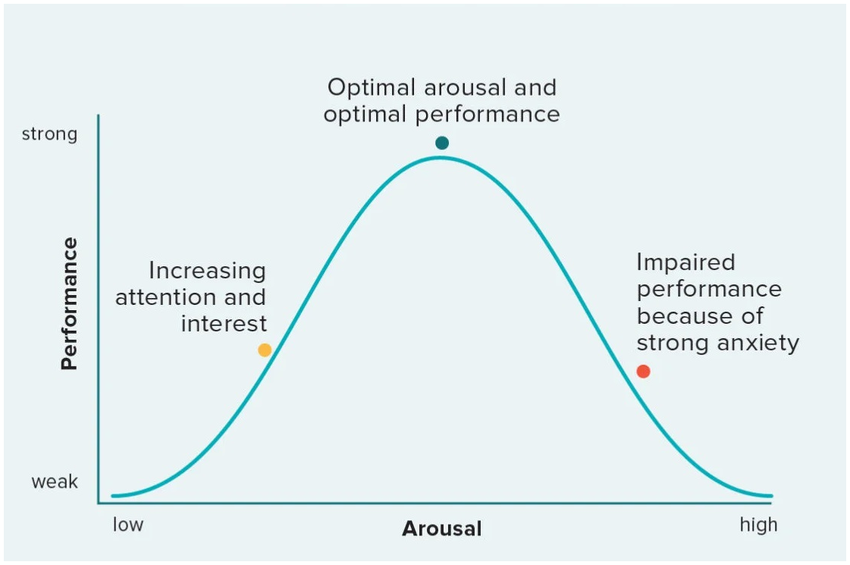
This inverted U model establishes one of the pressing issues for individuals with FXS, that when in a hyperaroused state, performance is minimized.
In a state of hyperarousal, the brain is impacted to adjust to the state of (dis)stress that it is in. Often this is associated with an increase in autonomic nervous system activity and in FXS, typically heightened sympathetic arousal (or fear, fight, flight responding). Additionally, when hyperarousal occurs, the brain becomes more narrow in what it processes and tends to shift toward more protective ways of operating.
Hyperarousal produces a lower threshold for responding to sensory and emotional stimulation. With a lower threshold, the system is vulnerable to negative bias in sensory and emotion processing. In individuals, this results in more sensory hyper-sensitivity, which is called sensory defensiveness. It can also produce more negative emotionality. The arousal system also influences attention systems. As the person becomes more hyperaroused, they become more vigilant, distractible and hyperactive. Therefore, inattention and anxiety result.
There is great variation in the ability to learn and utilize skills in individuals with FXS. This variation is in part accounted for by frequent shifts into a hyperaroused state. Importantly, if a person is in a very heightened state of arousal, the brain has a protective mechanism that shifts the person into a more calm state. This can make the individual appear to be in a low state of arousal although they are recovering from hyperarousal and not really relaxed. For the treating occupational therapist, it is important to observe heart rate, respiration and autonomic stress response cues to help determine the state the person is in and to provide the appropriate treatment plan.
Some examples of common sensory modulation difficulties:
Visual System:
- Difficulty tolerating bright lights
- Difficulty making good eye contact when looking at people
- Difficulty looking at written materials for long periods of time
Auditory System:
- Difficulty tolerating loud noises such as the vacuum cleaner
- Difficulty tolerating noisy places such as the mall, a restaurant or a movie theater
Touch:
- Trouble tolerating certain clothes
- Trouble going barefoot
- Difficulty tolerating light touch
- Difficulty working with writing utensils or art materials such as finger paint
- Not seeming to notice wet or soiled diapers (hyporesponsiveness)
- May be a picky eater, with aversion to temperatures and texture changes
- Difficulty tolerate touch or feeling of grooming activities
The sensory integration and sensory processing issues in those with FXS typically are a significant contributor to delayed skill acquisition and to challenging behavior. The intervention plan will often be broad, including OT utilizing a sensory integrative approach along with general OT clinical practice, as well as coordination of care with medical and educational providers, for a comprehensive approach.
Consideration of Clinical Reasoning to Guide Sensory Integrative Practice
As can be seen in the symptom lists, sometimes there is overlap between sensory discrimination and sensory modulation issues (such as with picky eating). While the pathways are dual and separate to and from the brain, their functions are interrelated. Why is this important to point out? For a general level of understanding, sensory based concerns are often categorized into one large construct called “sensory integration” or “sensory processing”. However, for a therapist utilizing this approach, a higher level of neurologically based clinical reasoning skill is required to understand, guide and provide appropriate treatment. The OT must be able to sort out the “what” and “why” of the underlying processing in order to provide comprehensive, efficacious intervention. So, for physicians, parents and collaborating professionals, it is important to find an OT who has the ability to make a discerning and clear assessment of the sensory based issues with specificity of treatment approach reflecting careful clinical reasoning.
Importance of Diagnostically Specific Intervention
The FXCRC members have long been proponents of ensuring diagnostically specific intervention approaches for individuals with FXS. As the phenotype of FXS is well specified, it suggests that utilizing the core features of FXS to modify, augment, or enhance interventions available for therapy, special education, behavior intervention, etc., will likely make said interventions more efficacious for those with FXS. As such, in 2006, Stackhouse and Scharfenaker outlined, for case study purposes, how to create diagnostically specific adjustments. This included: knowledge of the phenotype of FXS should guide treatment; a developmental presentation of FXS is emerging in literature, assisting in making intervention FXS specific developmental appropriateness; from phenotypic and developmental information, anticipate core issues and address each from best practice within each field; individually assess and determine goals for each child through play based assessment (as suggested by Scharfenaker, Riley, Stackhouse, Coleman, and Engleman, 2004).[27, 30] Consequently, for individuals with FXS, diagnostically specific modifications are suggested for most interventions, including OT/SI.
Who Do I Go to for Help?
A team approach to the varied issues related to SI and treatment for individuals with FXS is always recommended. Team members typically include, but are not limited to, physicians, psychologists, occupational therapists, speech therapists, physical therapists, and educators. Parents are pivotal members of the team and contribute to the assessment and ongoing treatment of sensory related issues (as well as all other developmental concerns). The intervention, school, and medical teams should work collaboratively with the parents to ensure communication, carry over and that necessary support is provided.
Physicians may provide medications that can be helpful for related problems such as ADHD and anxiety. They often refer individuals for necessary services, including occupational, speech, and physical therapy.

Assessment
Traditionally, occupational therapist(s) (OT) do the most work in this field and can perform assessments, create treatment plans and provide intervention. Occupational therapy is a profession that helps people gain, develop, and build skills that are essential for independent functioning, health, and well-being. The primary role of the occupational therapist in pediatrics is to help children play, grow, and develop many of the skills that will enable them to enjoy a satisfying adult life (Case-Smith, Allen, and Pratt, 2001). The OT should assess both sensory discrimination and sensory modulation functions and outcomes. The Sensory Profile (Dunn, 1999) and the Sensory Processing Measure (Parham & Ecker; Kuhanek, Henry and Glennon, 2007) are questionnaire tools available to assess individuals for this condition. Additionally, Tartaglia and Stackhouse have recently found that the most valid and reliable neuromotor assessments for use with individuals with FXS include the Movement Assessment Battery for Children, the Quick Neurological Screening Test and the Berg Balance Scale.[32]
Physical therapists may assess problems that affect gross motor development and muscle tone concerns, such as difficulty with balance, climbing or riding a bicycle. They may also provide orthotics for pronated feet.
Speech therapists may assess oral-motor issues. They will be important collaborators in looking at how language is impacted by basic sensory and motor processes. Co-treatments or other collaborative intervention models are often the optimal treatment for individuals with FXS.
Educators may assess problems with handwriting or other fine motor skills that are academic in nature, such as cutting and pasting or use of a ruler. Additionally, educators will have keen insights into the level of restlessness, anxiety, fidgeting, impulsivity, and distractibility in the child. Additionally, how the individual copes with and adapts to the demands of people and the environment is often best seen in a school setting.
Psychologists may assess cognitive and emotional skills as well as coping and self-regulation. Coordinated treatment planning is often required due to the overlap between domains of functioning and intervention.
Physicians are instrumental in assessing the medical aspects presented by the individual with FXS. Often, there may be medications available to address some of the issues, such as anxiety or attention based difficulties. While there is not currently a medication that will remediate the sensory integrative difficulties, other symptoms can be supported with medication management. Sleep and digestive issues may co-occur within SI related difficulties in FXS and management requires a team approach, starting with the physician. A team approach to the varied issues related to sensory integration is always recommended.
Assessment of Fragile X Syndrome — For Clinicians
Taken together, the clinical assessment of individuals with FXS must be comprehensive, accommodate the unique aspects and range of the FXS phenotype, and utilize tools that are appropriate (feasible, scorable, and valid) for use in FXS and commensurate with their developmental level.
An Introduction to Assessing Children with Fragile X Syndrome
Assessment of individuals with FXS has numerous challenges, ranging from choice and limitations of instruments to behavioral and emotional factors in the individual that may impact the testing process to scoring and interpretation. Fortunately, decades of research and clinical experience related to assessment have provided very useful guidance.
Comorbidity and Confounding Issues
Sensory processing/integration issues can potentially restrict attentional, social and cognitive development and lead to behavior problems such as anxiety and outbursts. Much like executive functioning difficulties, sensory integration problems tend to occur in many conditions and the influence on other capacities is evident, even when an additional formal diagnosis is not made. Children with sensory processing problems may resist participating in normal activities that are necessary for development. There is some evidence that this problem becomes more evident with age and is present in both males and females with FXS.[5]
Some of these problems may be difficult to distinguish from other common problems in FXS such as hyperactivity and anxiety. Additionally, difficulties with motor planning and imitation are associated with the presentation of autism within FXS. As many of the SI based difficulties may contribute to common behavior or associated diagnoses seen in those with FXS, it is important for an OT to be involved in clinical diagnostic and treatment plan decisions for individuals with FXS.
Recommendations for Treatment
Children with FXS should receive routine assessments from occupational therapists.
Occupational therapy is often one of the main interventions for children with FXS. These therapists should have some training in the field of sensory integration with knowledge of the brain processing involved in these disorders.
When possible, children with FXS should receive OT one to two times per week during early development, as early intervention is indicated. As children grow into adults, OT can be helpful at times of difficulty, to shore up skills and provides necessary supports and accommodations. Also, when an individual is experiencing a burst in skill acquisition, this can be bolstered by additional therapy. During more “status quo” periods a treatment hiatus may be indicated. The OT, family and physician should work together to determine if the child can benefit from therapy.
School occupational therapists may provide beneficial treatment for children but may not be mandated to address all areas of concern since all of these areas are not considered to be educationally related. Parents should consider providing their children with private therapy when the school services are limited.
Early Childhood Developmental and Educational Guidelines for Children with Fragile X Syndrome
For all children within the early childhood age range of birth to 5 years and especially for young children with identified disabilities associated with a diagnosis like Fragile X syndrome (FXS), inclusive, nurturing, and developmentally appropriate environments and caregiving are essential to growth and development.
Traditional Therapies
Occupational therapists may utilize clinic based sensory integration treatment with the adjunct of specific sensory-based strategies to support the child’s functioning. However, it is vital that these strategies are embedded in a multi-faceted occupational therapy treatment plan and not offered in isolation. For example, a weighted vest or noise reduction head phones may be suggested, but are only tools and not the full treatment. Sensory integration treatment has recently made important advances with the establishment of a fidelity to treatment model that should foster more research into its efficacy.[21] Regardless, Sensory integration treatment is offered in the context of a broader occupational therapy treatment plan. As Case-Smith and Schaff (2012) point out, sensory-based interventions are:[7]
- based on a thorough assessment;
- individualized in accord with the child’s sensory modulation and sensory discrimination problems;
- monitored closely to gauge the child’s fluctuating responsivity then adapted or adjusted accordingly; and
- periodically evaluated for their effects on the child’s participation in play, school, and home environments.
Finally, a key aim is to enable the family and the child to recognize when the strategy is or is not needed in everyday life.
Sensory Integration therapy is offered within the context of occupational therapy. It does not “sit alone.” The OT should provide outreach to home and school so that the sensory based strategies learned in the clinic are consistently implemented across the child’s day. They should work with other providers to ensure consistency and coordination of care. Additionally, OT’s working with children with FXS should include routines and language based supports in addition to the sensory based approaches that match the child’s needs. Stackhouse and Wilbarger (1998) have formulated a clinical reasoning model, the S.T.E.P.S.I. approach, which is an acronym for the components of a well formed treatment plan — this acronym stands for sensation, task, environment, predictability, self-regulation, and interaction.[28] These components should be included in clinic based treatment as well as in outreach programming. Some examples include the use of visual schedules and work processes as Task, Environment, and Predictability supports. Working on co-regulation (interaction) and self-regulation are pivotal skills for individuals with FXS and should be an active, ongoing part of the treatment.
If a child has difficulty with sensory modulation, an OTR can help create an intervention plan which may include a “sensory diet” — a structured sensory motor intervention plan based on individual needs — to guide him or her through activities that cultivate the ability for successful, organized responses to sensory input through the daily routine. A sensory diet is a component of an overall proactive intervention plan that might include other supports such as increasing organizational supports and routines, visual supports, and modifying interactions and the environment. Sensory diets often include the Wilbarger Protocol (often erroneously referred to as “brushing”) and auditory training programs such as Therapeutic Listening.
Within occupational therapy, specific focus on skill development is included. This may include fine motor skill development, such as for handwriting or washing dishes. It may also include learning to dress, to use a vacuum or to complete a work process. It could also include learning how to wait, keep your body still, or cope in the face of frustration. Occupational therapists devise treatment plans for both the underlying components (muscle skill, sensory processing, social or cognitive function) as well as for the occupational outcomes (such as being an independent worker, a friend, a student, or a family member) (AOTA Practice Act, 2002).
Some occupational therapists also use some nontraditional therapies
Protocolized sensory interventions, such as the Wilbarger Protocol; Astronaut Vestibular Activation Training; Auditory therapies that utilize specialized auditory inputs to make a child less sensitive to noise or to enhance auditory processing, Feldenkrais and cranial-sacral therapy are all examples that parents often mention as being accessed for their children with FXS.
Research is still extremely limited in FXS for most interventions in general, and for nontraditional therapies there is only anecdotal information about the potential benefits of these approaches.
Additional Therapies
Medications may be used to help with related inattention or hyperactivity, anxiety, autonomic symptoms, and aggression.
CBT (cognitive behavioral therapy) is often suggested for individuals with anxiety disorders. This treatment is efficacious for children and adults with typical cognitive and language skills. Clinicians experienced in working with individuals with cognitive impairments may be able to adapt this intervention for a select group of those affected by Fragile X, although the treatment results may be constrained by the cognitive and developmental level of the patient.
Behavioral therapy and intervention are not designed to treat sensory integrative and sensory processing problems directly. Sometimes, the behaviors that result as a part of the complexities of Fragile X, including the sensory based issues, may require a behavioral approach. The OT and the behavior therapist should collaborate to explore why a child might be having behavior problems and help the parents or school develop strategies to improve the situation. It should be noted that a directed behavioral intervention cannot improve the underlying motor planning issue, as practice and reward alone do not treat this type of sensory integrative problem. Likewise, hyperarousal can often confound directed behavioral intervention.
Non-traditional therapies such as cranial-sacral therapy and hippotherapy are becoming more common. Leisure pursuits such as yoga, dance, martial arts, and other sports are often utilized as well. Current evidence is not available for these less common and complimentary interventions. However, anecdotal case reports may suggest an emerging role for these and other treatments when matched to the individual needs assessment.
Home Life
Therapies should be carried over from home to school to therapy, and all team members should facilitate this. Families often require support to ensure routines are established to best support functioning related to the complexities of raising a child with fragile X, which includes specific supports related to sensory integration and sensory processing concerns.
Occupational therapists are an excellent resource for assessing, suggesting and assisting to implement home-based programs, accommodations and modifications.
When possible, parents should be proactive in preparing their children for daily challenges. Learning to live within the bounds of sensory integrative and sensory processing issues may mean limiting exposure to too much intensity until a child can manage these situations. A goal of OT intervention will be to move the family from restricted or limited ways of living, to a more fully realized experience. Rather than avoiding input, it is imperative to obtain the right tools and methods to approach and “live life to the fullest.” This is the “tag line” for the profession of occupational therapy.
Frequently Asked Questions
Do we always recommend occupational therapy?
We recommend occupational therapy if we suspect fine motor delays or the different types of sensory integration/processing problems reviewed above. Sometimes we recommend therapy before the school does because we know that these tendencies exist in Fragile X and we would like the child to receive intervention as early as possible. We recommend OT across the lifespan, since children and adults may benefit.
If a child is receiving occupational therapy for 30 minutes per week or less through the school or early intervention system, would we try to obtain more therapy for the child from a private OT?
Parents may consider whether private OT would benefit their child.
Do schools address sensory processing issues?
Some schools might but the focus may be largely on fine motor problems and not necessarily on sensory integration problems.
Will my child grow out of hyperarousal?
Hyperarousal, as the most prevalent and defining characteristic in fragile X is a life-long challenge. Learning to proactively manage hyperarousal allows the person to grow into themselves, not out of the problem.
Additional Resources
Sensory Symptoms and Signs of Hyperarousal in Individuals with Fragile X Syndrome: Findings from the FORWARD Registry and Database Multisite Study
This study was designed to increase our understanding about characteristics and the impact of sensory symptoms (SS) and signs of hyperarousal (HA) in individuals with fragile X syndrome (FXS) from childhood through early adulthood and by gender. Data derived from the Fragile X Online Registry With Accessible Research Database (FORWARD), a natural history study of FXS, were analyzed using descriptive statistics and multivariate linear and logistic regression models to examine SS and signs of HA, their impact on behavioral regulation and limitations on the subject/family.
Introduction
Fragile X syndrome (FXS) is a medical disorder caused by a mutation in the FMR1 gene. Its systemic effects are most noticeable in the cognitive behavioral domain, but multiple associated physical problems mostly related to loose connective tissue can occur. These include hypotonia (low muscle tone), hyperflexibility, flat feet, recurrent ear infections, and mitral valve prolapse (a common heart condition where the mitral valve does not close properly). Seizures, precocious (early) puberty, and ophthalmic issues (eye disorders) can also be present.
At this time there is no definitive specific treatment for these problems. Management is therefore largely empiric and, depending upon the individual, may include drug or other modalities but typically involves the combined efforts of a multidisciplinary team including ideally, psychology, developmental and behavioral pediatrics, neurology, speech and occupational therapy, neurology, psychiatry and genetics.
Diagnosis and Recognition
Diagnosis of FXS is the key to management. The disorder should be tested for in every child (male or female) with unexplained intellectual disability as well as in the offspring of premutation and full mutation carrier mothers, and considered for girls with significant processing and behavioral issues.
Following diagnosis, potential problems should be actively investigated and managed accordingly. This evaluation can be carried out systemically as, for example, via the guideline below taken from the Fragile X health watch table, which includes specific recommendations for the following:
- A detailed history — actively enquiring for motor and language delays, autistic symptoms, behavioral profile, characterization of sleep, feeding, seizures, ear infections, dislocations, and in girls, relevant menstrual history
- A detailed physical exam — specifically check for hypotonia, heart murmur, blood pressure, flexibility, pes planus, joint dislocations, hernias, scoliosis, weight, strabismus/refraction, dentition and, if applicable, signs of puberty
- Evaluation — specifically for speech and hearing; fine motor and sensory integration (occupational therapy evaluation); psychometrics (IQ, behavioral profile including evaluation for anxiety, ADHD and autism when clinically indicated)
Current Treatment Guidelines
Cognitive Deficits
Developmental and behavioral pediatricians and psychologists should provide a working plan, ideally integrated with the early intervention service or the school’s IEP (individualized education program). Speech is typically delayed and speech and language pathology should be involved if there is any deficit, as assisting communication is typically a complex issue. Cognitive services may need to be coordinated with behavioral and sensory recommendations.
Behavioral Issues
Following assessment by the psychologist and occupational therapist, a plan should be devised, again ideally integrated with school services. Additional inhome support may be needed. Not infrequently, pharmacologic intervention is necessary. It should always be provided together with behavior therapy. In general medications for similar mental health concerns used in children without FXS (stimulants, alpha agonists, SSRI’s, atypical antipsychotics) are also useful for children with FXS. Medications generally to be avoided include gabapentin (which appears to be unhelpful) and topamax (because of its cognitive dulling effect). A number of other medications which function as mGluR antagonists and may be specifically helpful for individuals with FXS are being currently being evaluated.
Medications for Individuals with Fragile X Syndrome
Medications are, at times, helpful to facilitate the individual’s ability to attain optimal life skills and allow for better integration into educational, adult, and social environments.
Behavioral Challenges in Fragile X Syndrome
The most common behavioral challenges seen in FXS include those associated with generalized anxiety, social interaction difficulties, ADHD, self-injury, and aggression.
Ear Infections
Early referral to an otolaryngologist is recommended, as many children with FXS will need myringotomy tubes. The majority suffer from recurrent ear infections, for which an aggressive approach is recommended.
Hypotonia
Evaluation and management by physiotherapy is recommended. Ideally, early intervention services will commence in infancy.
Early Childhood Developmental and Educational Guidelines for Children with Fragile X Syndrome
For all children within the early childhood age range of birth to 5 years and especially for young children with identified disabilities associated with a diagnosis like Fragile X syndrome (FXS), inclusive, nurturing, and developmentally appropriate environments and caregiving are essential to growth and development.
Seizures
Typically these occur post infancy/early childhood and are often complex partial, though all types of seizures can occur. Usually they are readily managed on standard monotherapy, though care should be taken to avoid drugs which cause connective tissue hyperplasia, e.g., phenytoin, as this can be disfiguring. EEG abnormalities are more common than frank seizures, and any suspicion of seizure should be evaluated by a neurologist, ideally one with experience in FXS. Medications proven to be helpful include carbamazepine and valproic acid. Good results are also occurring with newer generation AEDs.
Seizures in Fragile X Syndrome
Based on study data, 12% of people with Fragile X syndrome have seizures, and treatment and management are similar to seizure treatment in other conditions associated with seizures. They are easily controlled in Fragile X syndrome and most patients grow out of their seizures before their 20s.
Autism
Applied behavior analysis therapy is recommended, likely provided in conjunction with sensory integration techniques. It is also important to note that gaze aversion is a sensory overstimulating effect in individuals with FXS, rather than a reflection of socially cued indifference.
Understanding Autism Spectrum Disorder in Fragile X Syndrome
Clarification on how the ASD diagnosis and FXS do and do not overlap. Understanding this distinction can be particularly helpful for genetic counseling and deciding on the most appropriate interventions.
Connective Tissue Problems
Connective tissue problems include pes planus (flat feet or fallen arches), scoliosis (curved spine), pectus excavatum (breastbone and ribs curve inward, also known as funnel chest), and hyperflexibility (muscles and tendons to stretch beyond their normal range). Orthotic support (and occasionally braces) are often required, as is referral to
orthopedics.
Heart Murmur
Mitral valve prolapse occurs at a greater frequency in FXS from late adolescence onwards. However, if there are concerns, an echocardiogram or cardiology evaluation should be undertaken.
Frequently Asked Questions
What should I tell my patients?
Fragile X syndrome is a genetic disorder with cognitive/behavioral and systemic effects that are present in varying degrees from one individual to another. There is no cure but there are treatments that can help the symptoms and signs. Life expectancy is in the normal range though affected individuals will typically need life-long support and care. IQ for males is typically in the 50-70 range, but with areas of relative strength.
Females are often in the borderline-to-normal IQ range, though some are as affected as males. Novel research treatments are currently under investigation, which may improve the outlook for the future. As the disorder is genetic, it is important to ensure that no other family members are affected or at risk for symptoms related to being a carrier.
What are the expected benefits or side effects of treatment?
An active approach to treatment can ensure that affected individuals will optimize their potential. In addition, affected individuals are often responsive to standard treatments, though as with all people, side effects may have an impact. Given the cognitive and behavioral aspects of the condition, side effects may present primarily as behavioral or atypical changes.
What to do in acute situations?
In general, FXS does not cause acute emergency problems. In rare cases, seizures will require emergency treatment and should be managed in the acute setting as they are with individuals without FXS. More commonly, behaviorally related problems such as aggressive outbursts or impulsive running away will precipitate a crisis situation. In such instances, the child should be taken to a familiar location with a “safe” room. This will usually allow the trauma to recede and the precipitant can be managed in a calmer manner.
Fragile X Syndrome Health Watch Table
Forster-Gibson, Cynthia, MD, PhD; Berg, Joseph M, MB, BCH, MSC, FRCPSYCH, FCCMG. Also available as a PDF.
| Considerations | Recommendations |
|---|---|
| 1. HEENT (HEAD, EYES, EARS, NOSE, THROAT) | |
| Children: Strabismus, refractive errors, recurrent otitis media and sinusitis are common | ✔️ Undertake newborn screening and auditory brainstem response (ABR). Arrange comprehensive ophthalmologic examination by 4 years of age ✔️ Visualize tympanic membranes at each visit |
| Adults: Strabismus, refractive errors are common | ✔️ Undertake hearing and vision screening at each visit, with particular attention to hearing loss and myopia |
| 2. DENTAL | |
| Children & Adults: High arched palate and dental malocclusion are common | ✔️ Initiate annual dental exam |
| 3. CARDIOVASCULAR | |
| Children: Mitral valve prolapse (MVP) is uncommon in children (≤10%), but may develop during adolescence | ✔️ Auscultate for murmur or click at each visit. If present, do ECG and echocardiogram; refer to cardiologist if indicated |
| Adults: MVP is common (≤80%); Aortic root dilation usually not progressive. Hypertension may be related to anxiety. | ✔️ Undertake clinical exam, ECG, and echocardiogram with referral to cardiologist as appropriate ✔️ Measure BP at each visit but at least annually |
| 4. RESPIRATORY | |
| Children: Obstructive sleep apnea (OSA) may be due to enlarged adenoids, hypotonia, or connective tissue dysplasia | ✔️ Ascertain sleep history for signs of OSA ✔️ Do sleep study as appropriate |
| Adults: Obstructive sleep apnea (OSA) may occur | ✔️ Recommendations as for children |
| 5. GASTROINTESTINAL | |
| Children: In infants, feeding problems are common with recurrent emesis associated with Gastroesophageal Reflux in >30% of infants | ✔️ Refer for assessment of gastroesophageal reflux disease (GERD). Thickened feedings and upright positioning may be adequate treatment |
| 6. GENITOURINARY | |
| Children: Inguinal hernia is relatively common in males. Macroorchidism generally develops in late childhood/early adolescence. Persistent ureteral reflux may occur. | ✔️ Assess for inguinal hernia beginning at age 1 year ✔️ Macroorchidism can be measured with an orchidometer and reassure parents that it does not require treatment ✔️ Evaluate recurrent urinary tract infections (UTI) with cystourethrogram and renal ultrasound and refer to nephrology or urology as needed ✔️ Consider renal etiology for persistent hypertension |
| Adults: Inguinal hernia is relatively common in males. Macroorchidism persists. | ✔️ Assess periodically for inguinal hernia ✔️ Macroorchidism does not require treatment |
| 7. SEXUAL FUNCTION | |
| Adults: Males and females are fertile | ✔️ Consider discussion of recurrence risk and reproductive options as a basis for referral to a genetics clinic. Make such a referral even if FXS is only suspected so that molecular testing can be undertaken in the person concerned and relevant family members. |
| 8. MUSCULOSKELETAL | |
| Children: Hyperextensible joints and pes planus are common. Scoliosis, clubfoot, joint dislocation (particularly congenital hip) may also occur. | ✔️ Undertake physical exam at birth and then every 4 months ✔️ Elicit history of dislocations ✔️ Make orthopedics referral as dictated by clinical findings ✔️ Consider physiotherapy referral, orthotics |
| Adults: Hyperextensible joints and pes planus are common. Scoliosis, joint dislocation may also occur. | ✔️ Assess at regular physical exam ✔️ Make orthopedics referral as dictated by clinical findings ✔️ Consider physiotherapy referral, orthotics |
| 9. NEUROLOGY | |
| Children: ± 20% have epilepsy (may include generalized tonic-clonic seizures, staring spells, partial motor seizures and temporal lobe seizures) | ✔️ Ascertain history of seizures which usually present in early childhood ✔️ Arrange EEG if seizures are suspected from medical history ✔️ Obtain neurology consult as dictated by clinical findings |
| Adults: Seizures occasionally persist into adulthood | ✔️ Assess for atypical seizures if suspicious symptoms exist or intellectual function decreases ✔️ Arrange EEG if seizures are suspected from medical history ✔️ Obtain neurology consult as dictated by clinical findings |
| 10. ENDOCRINE | |
| Children: Precocious puberty may occur | ✔️ Include attention in clinical examination to signs of precocious puberty in females. Refer to endocrinologist for consideration of use of gonadotropin agonist to block precocious puberty. ✔️ Note presence of macroorchidism and reassure parents |
| Adults | ✔️ Ascertain history with attention to menstruation, anxiety, depression, and mood lability. If PMS symptoms are severe enough, consider a serotonin agent to stabilize mood. |
Introduction
Arousal refers to a general state of nervous system activation that is reflected in behavior, physiological activity, and emotional experience. There is an optimum level of arousal that is necessary for controlled behavior, and this level is usually maintained by internal homeostatic mechanisms. One of the characteristics of Fragile X syndrome is an impairment of this homeostatic control of arousal. Another is a heightened sensitivity to environmental and social stimulation. Together, these factors combine to cause people with FXS to become aroused more easily, and to a greater extent, than others, and to remain in such a “hyperaroused” state for prolonged periods of time. While hyperaroused, such individuals are less able to control their behavior. They may act impulsively, have difficulty focusing and sustaining attention to tasks, exhibit speech and language impairments, and emit other “problem” behaviors.
Diagnosis & Recognition
The hyperarousal discussed above is believed to underlie many of the phenotypical behaviors commonly associated with FXS. Individuals experiencing hyperarousal may become flushed, their ears and cheeks may become red, and their palms may begin to sweat. Their behavior becomes disorganized and they may begin to engage in repetitive movements. Some may become obstinate and not wish to continue an activity or to remain in the stimulating environment. They may become unfocused, inattentive, impulsive, aggressive, and display symptoms that mimic anxiety. Their behavior may become disorganized, repetitive, and less efficient. Their speech may also become repetitive and perseverative.
Current Treatment Recommendations
When problem behaviors occur, it is important to recognize that they may be caused by hyperarousal, and to first try to identify any sources that may be overstimulating the person. The initial intervention should always be to try to reduce environmental stimulation. When that is not possible, it may be advisable to remove the person from the overstimulating environment. A non-stimulating, quiet, and “safe” place should be designated, so that when hyperarousal occurs, the individual can have a place to quickly retreat to where they will be able to dearouse, regain their composure, and re-establish a sense of well-being before returning to their previous activity.
Proactive strategies to prevent hyperarousal include modifying the physical environments of individuals with FXS (e.g., their homes, classrooms, and workplaces) to reduce their stimulating quality. Examples might include providing natural or incandescent lighting instead of fluorescent lighting, and introducing sound-dampening material such as curtains or acoustic tiles in order to minimize sound reverberation and echo.
It is important to recognize that the sources of stimulation vary within environments such as classrooms, and to situate individuals away from arousing stimuli. For example, seat the child away from the bell that signals class changes, or away from open doors that admit distracting sounds from adjunct rooms or hallways.
When exposure to intense stimulation is unavoidable, such as during assemblies, fire drills, or other busy events, a familiar person should accompany the individual to help them remain calm and provide continuity.
Unfamiliarity and unpredictability can be arousing, and attempts to reduce them for the person with FXS are highly advisable. Strategies along these lines may include engaging in role play to help them anticipate social situations, or providing picture schedules to prepare them for changes in activities or routines.
An occupational therapist can provide valuable insight and advice regarding accommodations to improve their physical and social environment to reduce its arousing quality, and can also recommend ways to provide an appropriate sensory diet to help them maintain control and feel calm and focused throughout the day.
Teaching individuals with FXS personal stress-reducing strategies such as “square breathing,” muscle relaxation techniques, and visualization of tranquil places, can also help them cope with unavoidable exposures to stimulation.
Medication may also be helpful in some cases, by reducing their threshold for becoming hyperaroused when exposed to stimulating environments. See Medications for Individuals with Fragile X Syndrome.
Frequently Asked Questions
What are the types of conditions that will arouse individuals with Fragile X syndrome?
Hyperarousing conditions vary according to the particular sensitivities of the individual. This is why an evaluation of the environment should be made to determine what might be causing the problem. Generally, auditory and visual stimulation, environmental complexity, unpredictability, and eye contact are all stimuli that can trigger hyperarousal in many people with FXS. Other triggers can include confrontational encounters, being made the center of attention, being asked to produce novel answers to new questions, and being asked to perform personally challenging tasks.
Will my child always experience hyperarousal or will they outgrow it?
Individuals with FXS are always susceptible to hyperarousal. Their environments may change, and their responses to hyperarousal may change as they age, but it remains an important consideration. It is useful to periodically re-evaluate the potential sources of stimulation in their environment, especially following changes in the home, school, or vocational setting.
What is the role of eye contact in hyperarousal?
Making eye contact is a social behavior that signals interest in, and attention to, another person. Individuals with FXS tend to have social anxiety, and asking them to make eye contact can be very arousing. It is preferable to let them initiate eye contact to the degree that they are comfortable with it, and to avoid demanding it. The avoidance of eye contact is one way that individuals are able to exert some self-control over their own state of arousal, and when eye contact is forced on them it deprives them of this useful coping strategy.
Can medication help?
Medications may help an individual with Fragile X syndrome avoid becoming aroused too easily. The use of medications must be coupled with the prescribing physician’s understanding of the environment and an awareness of the particular stimuli that cause an individual to become aroused. Because some environmental stimulation is unavoidable, they should be provided with strategies and tools to help them cope with it. In some cases appropriate medication may be considered one such tool.
What can I as a parent or caregiver do to help an individual with FXS de-arouse?
The most important thing is to eliminate or reduce the source of stimulation. When that is not possible, the individual must be removed from the stimulating environment. A quiet, nonarousing place should be available, where they can feel comfortable and safe, and can have time to regain their composure and self-control. Occupational therapy interventions, such as brushing or joint compression, may help them calm down. Hyperaroused individuals often recognize that they have lost control and may feel scared and guilty about their reaction. It is therefore important to express an understanding that they are not responsible for their emotional state, to offer support, and to praise them for trying to manage their behavior. Even non-verbal children will respond to such expressions of love, support, and understanding, and be calmed as a result.
Related Webinars and Articles

July 6, 2026
00 h 29 m
This series of on-demand videos helps anyone seeking a clearer understanding of Fragile X syndrome and the Fragile X premutation.
March 17, 2026
01 h 00 m
Challenging behaviors (such as tantrums, aggression, and self-injury) are often the most significant concern reported by parents of children with FXS. This presentation covers how to assess the functions of challenging behavior (why the behavior is occurring) by identifying the antecedents that “trigger” it and the consequences that follow it. Then, how to PREVENT the challenging behavior by changing the antecedents that trigger it, how to teach skills to REPLACE the challenging behavior with more desirable behavior, and how to RESPOND to challenging behavior by changing the consequences that follow it and rewarding desirable behaviors instead.