


Each year, the National Fragile X Foundation funds one or more summer student research fellowships at $2,500 each through the Randi J. Hagerman Summer Scholar Research Awards. This award is meant to introduce undergraduate students, or students in professional training programs, to research in the Fragile X field, by providing funding for a summer project. We understand the importance of investing in the future of Fragile X, and this award is part of our commitment to fostering the researchers of tomorrow.

The following is a report from one of the students whose project we funded.

Fragile X syndrome (FXS) is a genetic condition that is a most common cause of inherited intellectual disability in both males and females but usually, the males are more severely affected. The genetic reason behind this disorder is an increasing number of CGG nucleotide repeats in the upstream region of FMR1 gene on the X chromosome. In normal individuals, the number of CGG repeats ranges from 5-54 while in individuals having FXS the number of CGG repeats exceed 200. It leads to the promoter methylation that resulted in silencing of gene and lack of the encoded FMRP protein. This FMRP protein is essential for normal brain functioning and plays an important role in synaptogenesis and synaptic plasticity.

Individual carriers of a premutation allele as having 55-200 CGG repeat are at risk of developing Fragile X-associated tremor/ataxia syndrome (FXTAS), a late-onset neurodegenerative condition, which affects both males and females. The associated psychiatric problems are anxiety, social avoidance, hypertension, depression, fibromyalgia, migraines and immune-mediated problems. In addition, approximately 8-16% of premutation women are at risk of developing Fragile X-associated primary ovarian insufficiency an ovarian disorder that is associated with the menstrual irregularities, infertility, and menopause before the age of 40. One of the potential reason of these premutation problems is associated with CGG expansion that leads to an increased level of FMR1 mRNA resultant in decrease production of protein FMRP (the mechanism opposite to the FXS). There are no therapies currently available so new studies are needed for developing treatment strategies for the Fragile X-associated disorders.
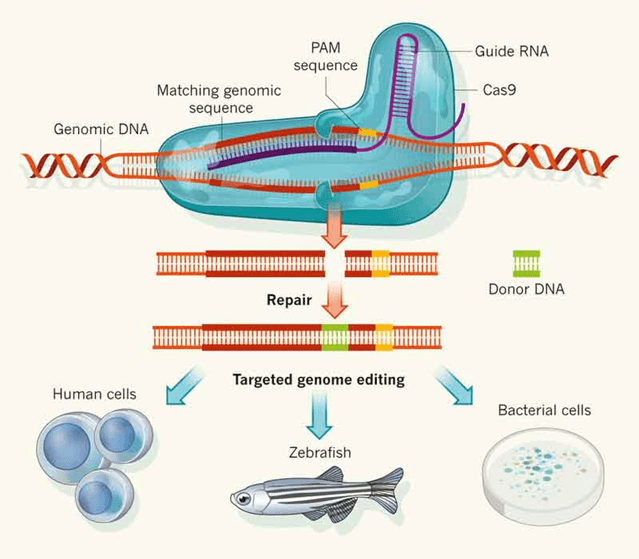
Fig 1. CRISPR Cas9 Genome Editing System.

CRISPR (clustered regulated interspaced short palindromic repeats) is an RNA-guided genome editing tool, that is capable of targeting and modifying specific genomic regions. It has been applied in eukaryotic genome editing, in which the Cas9 protein, with the help of gRNA, targets a specific region of the genome and generates the double-stranded break. The cut site is repaired by non-homologous end joining (NHEJ) a process results in insertions or deletions of base pairs (indels) or homologous directed repair (HDR) where the introduction of donor template results in precise editing (Fig 1).

In this study, we utilized the Ribonucleoprotein (RNP) complex that is a mixture of single guided RNA (sgRNA) and purified Cas9 protein to target both upstream and downstream flanking region of CGG repeats in human fibroblast cell lines carrying the premutation allele (Fig 2). We hypothesize that excision of these CGG repeats will the rescue the altered FMR1 mRNA and FMRP expression levels observed in premutation carriers.

Fig 2. CRISPR Cas9 mediated CGG repeat removal in fibroblast cell line.

Our preliminary results demonstrate that this CRISPR system is working successfully in in-vitro (on PCR products) but we couldn’t able to excise the repeats in Human fibroblast cells that is probably due to a low editing efficiency of sgRNA2 that target the downstream of CGG repeats. Now I am testing new gRNAs to target the downstream of CGG repeat in combination with gRNA1. CRISPR Cas9 has a profound impact on research efforts including identification of genes as well as the development of new disease models. But there is no previous study reported regarding the use of CRISPR genome editing tool for FMR1 premutation alleles. Hopefully, the genome editing by transient expression of Cas9 (as RNP) will permit the consideration of a range of delivery options for therapeutic applications. With the optimization of suitable delivery system and proper assessment of specificity, we can clinically translate this study for the therapeutic editing specifically in the fragile X-associated disorders.

Citation

Zafarullah, M. Genomic Editing of FMR1 Premutation in Human Fibroblast Cell Lines via Delivery of Purified Cas9 Ribonucleoproteins. Poster presented at 7th Genomic and Big Data Summit; 2017 September 26-27; San Diego California. USA.

Perseveration is the continuation of something (as repetition of a word) usually to an exceptional degree or beyond a desired point.

Anyone who lives with a person with Fragile X syndrome is very familiar with this continuation of a repeated word or phrase. This repetition can be maddening when you are the recipient. At face value, perseveration has no redeeming features and simply serves as an irritant, but in the life of one with FXS, it can be a valuable asset. Perseverative verbiage often accompanies arousal and acts as a buffer to reduce the anxiety. The repetition can be comforting like a mantra or song.

Understanding the function of the perseveration can be better understood if one listens to what is being repeated. For example, when a young child repeats a phrase like “And then?” or “Next?” it is easy to understand that the function is related to needing to know what is coming next. This continued repetition serves as a safety net to assure the child that no surprises await them and that they will be OK with the plan.

Sometimes perseveration serves as a way to initiate conversation. Often the conversation begins with the same phrase over and over without really listening for a response. The perseverative phrase may be borrowed from an observation, television program, or video. This type of conversational mechanism is far different from scripting or echoing a phrase heard in a video. The echolalic response is more typical of individuals with autism.[1]


An echolalic response is when someone repeats what another person says, often without meaning to.


Phrases such as, “I didn’t do it, it’s your fault” or “Right on” is more consistent with the speech patterns of those with FXS. These rote phrases open up or keep a conversation going without much regard for the conversation or topic that follows. Additionally, because the phrase can become a trademark of the person using it, the response from the listener is predictable, creating less social stress for the person with FXS.

Sometimes, the repetitious verbiage creates rehearsal of an action or task. For example, repeating the steps of a direction over and over tends to hold information to compensate for short-term memory deficits. Using perseverative talk can enhance overall functioning and executive functioning.

Decoding Perseveration Through Cloze

How can someone “decode” perseverative communication to understand what the person with FXS is attempting to communicate? Using a cloze strategy to finish out the statement can be helpful.

For example, sometimes when a person with FXS is especially aroused, they remember certain aspects of the experience that caused the hyperarousal. They may repeat something like “He hit my leg,” “He hit” or “He hit and got mad, mad.

Of course this kind of conversation gets stuck when one tries to question what happened while sorting out the repeated phrases. Following up with “Who hit?” or “What happened?” or “Why did he hit you?” falls short and may result in more frustration.

Using a cloze phrase such as, “Today at school, he hit you and got mad” will then generate additional comments such as, “Jim got mad, Jim hit me, got mad and hit me, got in trouble, Jim was bad.”

Females with Fragile X Syndrome

Females with Fragile X syndrome may also use perseverative speech, but as would be expected, it serves a different purpose. Anecdotal accounts suggest that females use the perseverative talk to emphasize a salient point or to mark a particular aspect of an experience. For example, the perseveration may not be repeated consecutively but rather pop up several times in the conversation. Often when a female with FXS is communicating an especially emotional experience, she may intersperse a comment she repeats several times in the conversation.

An example would be:

Therapist: How do you think your session with David went?

Client with FXS: He needs to be serious and look at people when he talks.

There you go: Do you think he may have been too emotional to look up? I noticed other people in the group felt sorry for him.

Client with FXS: He needs to look up, he doesn’t even look at me.

This perseverative thought persists in a way that interferes with the conversational flow and content but clearly indicates what was most difficult about their interaction. The female was unable to get beyond David not looking at her to understand the reason for his behavior. This common reaction can be redirected by repeating the perseverative language.

In the example above, the therapist could say something like, “David was so upset, he couldn’t even look at you. He was really upset and didn’t look up when he spoke to you.” This conversation puts the behavior in a context that uses the female’s language to better understand the interaction and more importantly the emotional content.

Understanding the function of perseveration requires the observer to look beyond the monotonous repetition of the verbiage into what in the environment is prompting the excessive repetition. Equally as important, the observer should attempt to extract meaning from the perseveration. If you take time to listen to the perseverative talk by utilizing the “fill in” or cloze method, you might find an annoying behavior will become useful in the quest to better understand your child.

Learn more about females and Fragile X syndrome

Going to an IEP meeting was always an emotional experience for me.

After a couple of years of meetings with a group of people — teachers, psychologists, and administrators — who had obviously already made many decisions regarding my son, and meetings where a “draft” IEP (individualized education program) was handed to me when I walked in the door, I decided to make some changes in what I did.

Changes to My Approach

First, I took a class on IEPs, offered by our local Arc, the largest national community-based organization advocating for and with people with intellectual and developmental disabilities and their families. The best part was that they spoke about the specific IEP form that our school district used, not a generic one.

IEPs have sections that are required by law, and having someone walk me through one in general terms demystified it for me. I discovered IEPs are not that complicated. Most importantly, I found which sections I needed to focus on to develop an IEP that would meet my son’s needs and direct his learning.

Next, I asked my husband to come with me to every meeting. In general, when my husband was there (this may just have been my perception), the school personnel were nicer and talked to me in a more respectful way. In those rare cases when my husband could not come, I would bring a friend, but it was not the same.

I began to ask for the draft ahead of time.

In the meantime, I would draft my own IEP. I never walked into a meeting without knowing exactly what I wanted my son to work on for the next year, and I had it in writing. In the weeks prior to the IEP meeting, I would put a notebook on the kitchen counter, in which I would jot down my son’s strengths and needs, as well as the goals I wanted him to pursue.

Here’s an example of what I would bring to a meeting (these are the categories on our IEP):

Strengths & Needs

EDUCATIONAL

Strengths: Responds well to the 1:1 aspect of reading and math, extremely motivated to do work because of involvement in football and wrestling, wants to learn to type, thrives on routine, likes to see his daily schedule using words not pictures, more focused on activities when sensory diet and when areas of high interest are used, and his desire to learn, try new tasks, and stay focused has increased.

Needs: To continue the 1:1 for reading and math, continue typing class, work on improving handwriting skills, and learn to use a planner (using the strengths listed above).

SOCIAL, EMOTIONAL, ADAPTIVE

Strengths: Loves being “one of the guys” on the football team, interacts with a lot of people in the school, has a great sense of humor, knows that he needs to have his schedule laid out for him and asks for that, thrives on routine, has a good attitude, is empathetic towards others, likes to please others.

Needs: To continue in regular education classes, continue as manager of football and wrestling teams, develop skills for unexpected transitions, learn self-calming techniques when his anxiety goes up.

PHYSICAL MOTOR, HEALTH

Strengths: Loves extracurricular football and wrestling, adaptive PE, regular PE, and any other gross motor activities, and is in good overall health.

Needs: To continue participation in extracurricular football and wrestling, adaptive PE, regular PE, regular weightlifting, and regular health classes, be monitored for hypotonia, and use the bathroom independently.

COMMUNICATIVE

Strengths: Likes to communicate with others, is starting to slow speech when asked, and is tolerant of being asked to repeat words when they are not clear. He likes to use “mantras” and practice what he is going to say in certain situations.

Needs: Independently decrease rate of speech, answer why? questions about the way he is feeling or something he did, and stay on topic within a conversation.

COGNITIVE

Strengths: Is very proud when he completes/accomplishes tasks, has good rote memory, has good receptive verbal skills, learns by observing, can focus on subjects of high interest for extended periods of time, and responds well to repetition.

Needs: Opportunities to use his strengths during his academic day.

TRANSITION, LIFE SKILLS, CAREER

Strengths: Likes to work with people, has a desire to learn to read, wants to understand money, wants a job, likes to cook, wants to do activities independent of parents, is proud to use his own cell phone, and loves music.

Needs: Become more independent as manager of football and wrestling teams, improve math skills, improve reading skills, use phone accurately and independently, become comfortable riding bus home independently, to learn strategies for calming when frustrated, and to learn to ask adults questions or ask for help.

I would also bring in goals and objectives. I was never too big on the goals where Ian would do something “four out of five times with 75% accuracy.” The goal should be to do it, not do it just three quarters of the time. Here are some examples of the goals I would bring into a meeting. (Note: these goals were written for a February IEP meeting; that’s why the first date for goal completion is in April.)

Goals

MATH

Will independently and with 100 percent accuracy:

Read numbers 1-300.

— 1-100 by 4/1
— 1-200 by 10/1
— 1-300 by 1/1

Add/subtract two-digit numbers on a calculator.

— Prompted by 5/1
— Independently by 12/1

Will recognize the following coins: penny, nickel, dime, quarter, and dollar; and bills up to $100.

— Penny, nickel, dime, quarter by 6/1
— Dollars up to $20 by 6/1
— Others by 12/1

Learn $1 up strategy up to $100. (For example, if an item cost $1.50, he will need $2)

— $1–$50 by 5/1
— $1–$100 by 2/1

WRITING

Will write name, address, and phone number on lines with one-half inch spacing that is legible to a person who does not know him. Spelling, capitalization, and punctuation to look like:

Ian Weber
9876 Easy St.
Boulder, CO 12345
212-555-5555

— Name by 5/1
— Address by 10/1
— Phone by 1/1

Detailed status reports will be sent home on a weekly basis — I received weekly reports on how Ian was doing on each of his IEP goals. It was often short and simple, but it was enough.

When it comes to writing your child’s goals and objectives, I want you to think about this: What exactly do you want your child to do/learn? The goals have to be measurable, so keep that in mind when creating your goals and objectives. If you find the school staff proposing goals that seem too general, keep asking them questions:

  • What exactly will you work on?
  • How will you know when you have met the goal?

And finally, I would create my own list of accommodations and modifications. Here’s an example:

Accommodations & Modifications

— Ian needs preparation way ahead for any changes to routine.

— He needs to get places early.

— He needs a calm environment.

— He needs closure on everything.

— Materials modified to instructional level in Ian’s academic classes.

— Ian needs to know schedule ahead of time and know exactly what is going on—changes, etc.

— Feedback to Ian needs to be framed in a positive way.

— Instructional staff will have knowledge of Ian, of Fragile X syndrome, and be familiar with Ian’s behavior support plan.

— Ian needs frequent breaks that involve heavy work/gross motor activities.

Final Thoughts

Do not be intimidated by your IEP. I know that’s easier said than done, but sit down sometime when you have 15 minutes and just look through your IEP. Look for categories similar to what I have listed above. When you create your lists, use the terminology that’s in your IEP. This will let the school personnel know that you are serious about this, and you know what you are doing.

Also, when the discussion turns to services (this is the best advice I ever received), always frame it in the words of what your child needs. It’s not about what you want, it’s about what your child needs. I’m not an attorney so I can’t help you with legal issues, but I can tell you what I did and what worked for me.

My son made great progress throughout school. All children can. But it requires a lot of vigilance and work from parents and teachers.

In summary, I read every book I could find on IEPs, I read everything on our state website, I read everything on the internet I could find, I attended IEP classes, and I have my own copy of the IDEA law and regulations that is tabbed and highlighted, which I happened to carry with me to every IEP meeting. It somehow always ended up on the top of my pile of papers that I carried in.

Resources

In recent years, researchers have identified more than 100 autism risk genes, which — amazingly — is 100 more than we knew of less than a decade ago. This is an amazing leap in knowledge, and researchers are telling us that an identifiable single-gene condition may account for 15% to 20% of all cases of autism.

Known single-gene and chromosomal disorders associated with autism include Angelman syndrome, chromosome 15 duplication syndrome, tuberous sclerosis, and — the most common known single-gene cause of autism — Fragile X syndrome (FXS).

To be clear, we are not talking about a test for autism:

  • Autism is a behavioral diagnosis. There is no lab test for autism. If a child is showing certain signs of developmental delays, an ASD (autism spectrum disorder) specialist or team will make a behavioral diagnosis, which describes and confirms the observed symptoms. In the case of an individual with both FXS and autism, the FMR1 mutation is the underlying cause of the autism.
  • Fragile X is a genetic diagnosis. Diagnosis is done in a lab using blood or body tissues. In the case of FXS, when “turned off,” the FMR1 gene can no longer produce an important protein called FMRP. Fragile X syndrome is a “full mutation” of the FMR1 gene. Learn more about Fragile X syndrome testing and diagnosis.

What we’re talking about is a medical test — known as genetic testing — for individuals with a previous behavioral diagnosis of autism of unknown causes. A genetic test identifies changes in chromosomes, genes, or proteins to confirm or rule out a genetic condition, or the possibility of developing or passing on a genetic disorder. Because there are genes known to be associated with autism — Fragile X being the most common — it is important to test for the presence of an underlying genetic disorder.


Why Genetic Testing is Important

Sometimes, a child with FXS is later diagnosed with autism, and sometimes, a child with autism is later diagnosed with FXS.

As with many developmental disorders, FXS and autism each come with their own set of highly variable challenges and treatment options; and knowledge of both is key to building personalized therapies and developmental care plans specific to each child’s situation.

Additionally, many genetic disorders can have associated medical issues, Fragile X included. In the case of Fragile X, a diagnosis can help inform other family members of the cause of their undiagnosed symptoms, such as a nephew, uncle, or cousin with intellectual developmental delays, an aunt with infertility (Fragile X-associated primary ovarian insufficiency, or FXPOI), or a grandfather with tremors (Fragile X–associated tremor/ataxia syndrome, or FXTAS).

Researchers continue to confirm the importance of early intervention for both FXS and autism. Knowing they exist simultaneously—sooner rather than later — could conceivably change a child’s entire life.

And lastly: Scientia potentia est. Knowledge is power.

Barriers to Post-ASD Diagnosis Genetic Testing

No one will stop you from getting genetic testing, but there are many reasons it might not happen.

If a child is diagnosed with autism, and any of its associated genetic disorders runs in your family, the doctor may recommend further genetic testing. However, a woman (and her doctor) with a known family history of Fragile X would already be aware of the need for testing, with or without an autism diagnosis.

So, what about the mother or father who isn’t aware of a genetic disorder lurking in their family history?

We looked into this and found two issues potentially hindering the convergence of an autism diagnosis with a known genetic cause. One is lack of consensus and the other is the test itself, meaning:

  1. Lack of Consensus: There is no solidarity on whether or not to recommend genetic testing
  2. Which Genetic Test: If testing is ordered, will it include the FMR1 gene (or any specific gene for that matter).

1. Lack of Consensus

One lab we looked at during our research reported that the most common question they received from parents when offered genetic testing following an autism diagnosis is: Why get a genetic test if my child has already been diagnosed?

And that’s just the start of the confusion families go through with any complicated medical or behavioral diagnosis. The ensuing flood of information is overwhelming (e.g., we built an entire website around navigating your way through Fragile X), and most will need some level of guidance as they sift through it all so they can make informed decisions around their future care.

A recent study — Pathways from Autism Spectrum Disorder (ASD) Diagnosis to Genetic Testing — looked at the experiences of families and their health providers as they moved from diagnosis, to the offer of genetic testing to determine etiology, to the decision of whether to pursue testing. Some of what they found includes:

  • Many providers choose not to offer testing to families and many families are unaware of the option for genetic testing
  • Testing decisions are influenced primarily by providers and secondarily by insurance carriers
  • Lack of insurance coverage may discourage providers from ordering genetic testing and by association may raise questions about their usefulness

The report also demonstrates inconsistencies when it comes to who makes the initial ASD diagnosis, who suggests or offers the genetic test (if at all), and the criteria used to determine a genetic test recommendation.

An ASD diagnosis can come from one of many types of providers across a variety of settings. In the Pathways study, initial diagnoses were made by either a single provider or a medical or diagnostic evaluation team made up of developmental pediatricians, neurologists, nurses, occupational and physical therapists, psychiatrists, psychologists, social workers, and in one case, a dietician.

The most common setting was large specialty care centers. According to one provider from the study, “Most pediatricians aren’t going to make a diagnosis of autism. Most pediatricians, the vast majority, refer out to a tertiary center,” such as specialized autism centers or children’s hospitals.

Following an ASD diagnosis, families in the Pathways study typically were also offered a range of recommendations, community resources, and medical, educational, and behavioral therapies. But, here again, the amount and type of information they received — and from whom — varied dramatically.

Nearly a third of the families were not offered genetic testing at all, and others reported genetic testing as one among many options, but with no real guidance on what their next steps should be. When genetic testing was offered, it was rarely by the same provider who made the diagnosis. And when a genetic test was actually ordered, it was done by yet another provider.

As for the criteria for genetic testing, the majority of referrals were made based on whether autism ran in the family or if certain clinical features were present, such as abnormal growth or shape of certain body parts, seizure disorders, and severe developmental delays.

2. Which Genetic Test?

Current guidelines from such organizations as the American Academy of Neurology and Child Neurology Society, American Academy of Pediatrics, American College of Medical Genetics, and the International Standard Cytogenomic Array Consortium, illustrate the variations in recommendations that providers are exposed to, which adds to the confusion around the criteria for a genetic testing referral—and which genetic test to order.

According to several studies, including Heterogeneity in Clinical Sequencing Tests Marketed for Autism Spectrum Disorders, chromosomal microarray is currently the recommended first-tier genetic test for ASD. However, as the NFXF has previously reported:

Chromosomal microarray analysis is a powerful test for detecting certain genetic causes of developmental disabilities, but it is not able to detect Fragile X mutations of any kind.

The study also looked at the number and genes included in clinical gene sequencing panels offered by 21 commercial labs and marketed for autism spectrum disorders illustrates the need for health professionals to work toward a consensus:

Number of genes in each panel 11 to 2,562
Number of unique genes across panels 2,928
Number of genes shared across all panels* 1
Number of genes shared by at least 10 of the 21 labs63
Number of labs with identical gene lists2
Number of panels with the FMR1 gene14
Number of panels without the FMR1 gene7
*MECP2, associated with Rett syndrome, and which is no longer considered part of the ASD spectrum as of the fifth edition (2013) of the American Psychiatric Association’s Diagnostic and Statistical Manual of Mental Disorders.

The study also looked at four academic autism research-based lists*:

Number of genes in each list61 to 1,109
Number of genes shared across all lists15
Number of lists with the FMR1 gene2
Number of lists without the FMR1 gene2

NFXF Guidance

The bottom line for you, today, is if your child has an ASD diagnosis with no known cause, request genetic testing and make sure the test includes Fragile X. It can help them, you, and your extended family.

Unfortunately, most parents of a child with autism are unaware of genetic testing options. We have detailed information on testing, and recommend working with a geneticist if possible. However, if needed, you can also take matters into your own hands.

If your child has been diagnosed with ASD with no known cause:

  • Request genetic testing, and be specific about the reason: I want my child to have genetic testing to determine if one of the known single-gene and chromosomal disorders associated with autism is the cause.
  • Don’t assume FMR1 is included. For example, we found many tests with names like “Autism Spectrum Disorders Panel” that did not include FMR1. Ask specifically if the FMR1 gene is included, or ask to see the list of genes.
  • If you’re still not sure, find out everything you can about the recommended test, such as the names of the lab and the test, and do your own online research. Or call the lab directly and ask for a list of genes for that particular test (you might also want to ask about the methodology behind the list).

Currently Available Autism Genetic Testing Panels

Below we’ve included a list of labs and tests that are both marketed for autism spectrum disorder and include the FMR1 gene. Though we tried to locate and verify as many as we could, we do not assume this list is exhaustive. Because they can change at any time, please review the information carefully and follow up with your health professional or the lab for the most current information.

Please note that the commercial labs in this list may or may not also offer specific Fragile X DNA testing. Our intent with this list is to assist people facing an autism diagnosis with an unknown cause, and who would benefit from testing that includes all currently known autism-related genes.

Please let us know if you need help in interpreting any of the information here:

Note that the following are as of January 2025. We will update this list periodically and note the date of last revision. These are not Fragile X DNA tests, they are tests for an autism diagnosis of unknown cause that include the FMR1 gene.

LabTest Name
Ambry GeneticsAutismNext
ARUP LaboratoriesAutism and Intellectual Disability Comprehensive Panel
Ayass BioScienceExome Sequencing
Fulgent GeneticsAutism NGS Panel
GeneDxAutism/ID Xpanded Panel
Greenwood Genetic CenterEpiSign Complete
LabCorpFragile X Syndrome, Diagnostic
MNG LaboratoriesComprehensive Intellectual Disability/Autism (NGS Panel and Copy Number Analysis + mtDNA)
Prevention GeneticsAutism Spectrum Disorders (ASD) Panel
Prevention GeneticsPGmaxTM – Intellectual Disability, Epilepsy, and Autism (IDEA) Panel
Reference Laboratory GeneticsAutism, Panel Massive Sequencing (NGS) 116 Genes
*FMR1 repeat expansion testing is not included in this test but can be ordered concurrently

What’s Next?

For the future, it’s imperative that healthcare providers and insurance companies come to a consensus on genetic testing related to ASD. In the meantime, we are here to help you, today and tomorrow, and to continue to raise awareness of the need for genetic testing when an individual has an ASD diagnosis.

This guide is intended for classroom teachers with little or no exposure to Fragile X syndrome. Our goal is to help make the teaching and learning environment from preschool through high school more effective, efficient, and rewarding for teachers and their students with FXS who come under their care.

This guide provides practical information that includes:

  • A background on Fragile X syndrome
  • Descriptions of behavior and learning styles
  • A discussion of educational and community resources
  • Sample lesson plans for children with FXS at a variety of developmental levels
  • Strategies to facilitate the inclusion of children with FXS

Download the Guide

Lesson Planning Guide for Students with Fragile X Syndrome
198 pages,
Updated 01/01/2004
A wealth of practical information that includes background on FXS, descriptions of behavior and learning styles, discussion of educational and community resources, and sample lesson plans for children with FXS at a variety of developmental levels.

Note: Special thanks to NFXF members Randy and Diane Dobslaw and in honor of their son Brett, whose generosity enabled this publication. This guide also owes a profound debt of gratitude to Dr. Marcia Braden, whose original work, “Curriculum Guide for Individuals with Fragile X Syndrome,” is incorporated extensively throughout the guide.

Additional Resources for Teachers

Have you ever shopped in Berkeley? After your obligatory coffee at one of the city’s 10,000 cafes, you must try Shoes on Solano — they even accommodated Tracy’s size “43.” (U.S. size 12; oops, maybe shoe size is like age and shouldn’t be disclosed?). In any case, we were in the Berkeley area for a wonderful daylong conference on Fragile X syndrome arranged by the Northern California Fragile X Support Group — and what a day it was!

Randi Hagerman, Marcia Braden, the two of us, Scott Hall, and Allan Reiss were on the slate as presenters. How encouraging to hear Allan say:

“The number one issue in Fragile X syndrome is hyperarousal.”

We are always delighted when researchers echo what we find in our clinical work. We think that the hyperarousal issue, in all of its differing forms, is the single most critical aspect affecting learning and development in those affected by Fragile X syndrome. It is also the factor most therapists and teachers need specific information about.

Happy boy in the woods.

We have been advocating comprehensive intervention for hyperarousal for 20-plus years, and we remember fondly the first time our work dovetailed with research information when Vicki Sudhalter and Rick Belser first published their findings on the clinical implications of hyperarousal in Fragile X syndrome.

Recently we’ve encountered many situations in which therapists are confused by how to address hyperarousal while implementing autism-oriented treatment. This is because hyperarousal intervention strategies appear counter to the direct nature of many autism interventions, or, teaching strategies.

We see this confusion in therapists across the country as they attempt to integrate treatments from the field of autism into their intervention for children with Fragile X syndrome, with or without autism. It is critical to integrate knowledge of hyperarousal into any intervention strategy and especially for those treatments that come from a tradition of autism intervention. My, this is a serious and strong cup of coffee!

We were recently asked to travel to New York for a consultation regarding a young boy with Fragile X syndrome and autism who attended a private school utilizing a strict applied behavior analysis, or ABA, approach. The school and family were frustrated, as was the boy. The boy’s mother had provided the school with copious amounts of information about Fragile X syndrome learning styles, hyperarousal, and how to adapt curriculum. Sadly, the school insisted on a strict ABA approach with absolutely no modifications for Fragile X syndrome, going so far as to state, “You can bring in anyone [meaning Fragile X experts] you want, but we are not going to change our program.”

While this is an extreme situation, the need for therapists and school intervention programs to understand the Fragile X syndrome learning style and the specific role hyperarousal plays in learning and development has never been more urgent. This article was originally written in 2006, but it’s even more so true today, as the blind application of autism-based intervention is widespread with little regard to the role of hyperarousal in reducing adaptive capacity.

We answer several emails or calls each week about how to adapt autism intervention for Fragile X syndrome. As the prevalence of such programs and strategies grows, so will the need for guidelines for adapting strategies to honor the core of the Fragile X syndrome learner. The “FX Max” was created to provide a tool to families, schools, and interventionists to assist them in keeping the focus on Fragile X first, or, as we like to say, “living the Fragile X way.”

The main problem with many autism-oriented approaches is that they fail to take into consideration the learning style of individuals with Fragile X syndrome, in which the main issue is hyperarousal. We know that the research community is exploring this issue empirically, as are we.

For now, the evidence from our many years of experience suggests the following key adaptations be made to any intervention approach, especially those from an autism tradition.

Key Adaptations to Intervention

In general, a discrete trial approach that utilizes mass trials will elicit hyperarousal and in turn shut down learning and language and elicit maladaptive behaviors. A discrete trial approach is a behaviorally based approach to teaching or therapy that includes a single cycle of a prompt-stimulus for an expected response, which is then reinforced.

Sometimes this cycle is repeated several times over in a single session — the mass trial approach. Each skill is systematically built upon based on the data. Our point with the mass trial approach is not to say that careful, systematic work isn’t vital to the therapy process. The ability to analyze behavior and learning is an inherent part of all therapeutic interventions. However:

We understand that children with Fragile X syndrome are incidental learners who easily become overwhelmed in the face of direct instruction that requires an immediate, face-to-face response. This is the exact nature of a discrete trial approach if it’s not adapted.

It’s critical to modify a discrete trial approach to avoid forced responding. Following the child’s lead, interest areas and indications of comfort/engagement are critical. We value tracking responses with careful data gathering, and have found a more relationship-oriented approach works best.

Sequential teaching, especially forward chaining methods (a technique that teaches the steps of a more complex behavior/skill by teaching the first step sequentially through the last step), is often employed in autism interventions and is directly counter to the Fragile X syndrome learning style.

Children with Fragile X syndrome have a simultaneous cognitive style. This means that they are “gestalt” learners who need to see and understand the “whole” and not the parts that add to a whole. They are keen observers who learn from seeing a whole process or skill that they can replicate through imitation.

Many autism intervention programs target social skill development, including improving social eye contact and social interaction with reinforcement for correct performance.

We know that children and adults with Fragile X syndrome make wonderful eye contact when their level of arousal and anxiety are minimized, allowing them to feel comfort in the social situation. Conversely, when they feel social pressure, their hyperarousal skyrockets, and skills such as greetings and shared gaze are sacrificed. Attempting to “train” social skills without regard for hyperarousal is ineffective at best.

Creating opportunities to settle and manage hyperarousal as the first step in a social interaction is much more effective; it allows the individual to demonstrate their social drive appropriately. Then utilizing any of the more relational approaches can be successful. We have experienced positive benefits from several of these strategies, including DIR/Floortime developed by Greenspan and Wieder, Early Start Denver Model by Rogers and Dawson, and Pivotal Response Training by Koegel & Schreibman, which are all easily adapted for Fragile X syndrome.

Note the key word: adapted. All therapists should customize their treatment plans specifically for Fragile X syndrome, regardless of the strategy and regardless of any dual diagnosis that the individual may have (such as Fragile X syndrome and autism, or Fragile X syndrome and ADHD, etc.). Remember, they have Fragile X syndrome first and foremost, so it should lead the way.

Hyperarousal can produce some troubling or simply annoying behaviors in children and adults with Fragile X syndrome. These could include hand-flapping and biting, poor eye contact, and perseverative speech and motor activities. Autism treatment programs typically target these behaviors and attempt to shape/change them.


Again, we know it’s better to manage the hyperarousal that leads to the behaviors instead of struggling to change behaviors that are produced from the biology of hyperarousal. As our dear colleague Karen Riley always says, “You can’t battle biology.” This is a take-home message for adapting autism-oriented interventions.

Related Webinars

  • Daily Living Strategies
  • Learning & School

00 h 29 m

This series of on-demand videos helps anyone seeking a clearer understanding of Fragile X syndrome and the Fragile X premutation.

  • Physical & Mental Health
  • Reproductive Health

00 h 56 m

Experts discuss the unique health, wellness, puberty, and fertility considerations for girls and women with Fragile X syndrome (FXS), including how needs can vary widely across individuals. Panelists discuss guidance on puberty conversations, reproductive healthcare, emotional wellness, sleep, exercise, and supporting independence.

When we saw an increase in my son’s aggressive behavior during his middle school years, his teacher and I worked long and hard on a detailed schedule to help manage it. We had done a functional behavior assessment and knew the reasons for the behavior — it was his way of communicating that the work was too hard or too much, and the environment was overwhelming.

The focus of this article is the schedule we developed during Ian’s 8th grade, but a variation of it was used throughout high school.

Meet Ian

Ian attended a public middle school of about 350 children. Our district provides special education for children in two ways, based on the level of help they need throughout the school day:

  • Resource: Occasional.
  • Life Skills: Frequent.

Life Skills students either stay in their own class all day or are included in typical classes with aide support. My son was based in a Life Skills classroom and, with the exception of reading and math, was included in typical classes throughout the day.

When we developed my son’s daily schedule, we alternated between gross and fine motor activities. When Ian arrived at school, he would go into the Life Skills classroom before his first-period class and choose a gross motor activity: bouncing on a therapy ball, swinging, rocking, or jumping on a mini-trampoline. A visual schedule for the day was also reviewed with him. Here was his schedule, with each period lasting about 40 minutes:

  • Reading
  • PE
  • Math
  • Lunch
  • Science
  • Cooking
  • Computer

As with most kids with Fragile X syndrome, 40 minutes was a long time for my son to stay on task. Twenty minutes was about the most we could expect. After that, his aggressiveness escalated, so we knew we had to vary each lesson and keep it moving.

We broke reading down into two 20-minute halves. The plan was to have the first half be fine motor/academic and the second half gross motor/sensory. For the first half, Ian had to complete three activities, after which he would get to do a gross motor activity. Our thoughts behind this:

  • Ian understood how many “three” were, and it was not an overwhelming number for him.
  • Teachers could easily enough come up with three activities that could be completed in the 20 minutes.
  • The activities would be chosen ahead of time so Ian knew or had a good idea what they would be.
  • In each activity there would be a combination of familiar and new — so part of it was easy and part was challenging.
  • The gross motor activity would be a motivator.

The crucial consideration was that reading had to be done on a 1:1 basis — not small group. It was often done by an aide, but under the instruction of a teacher. It also had to be done in a quiet room with no distractions, including sights, sounds, smells, and textures. Here is a detailed example of the approach:

  • Big Picture: The aide would state what was going to happen for the whole period, “We are going to do three activities, then we will go to the office to do work.” (Or whatever activity had been decided.)
  • The aide would write the three activities down — preferably on a chalkboard — keeping the wording simple and reading them aloud as she wrote them. We opted for the chalkboard because, as each item was completed, Ian could get up and mark it off, entailing “closure” and a “transition activity.”
  • After each activity, the aide would say something like, “We’re all done with this activity, you can mark it off, and we have two more activities to do.” Then… “We have one more activity to do.”
  • When the three activities had been completed, the aide and Ian decided what activities would occur the next day. Ideally, Ian would pick the first activity (it was best when he had two options acceptable to him), the aide would pick the second, and they would decide on the third activity together. (This gave Ian some control and a good idea of what to expect the next day, which helped reduce his anxiety.)
  • The activities for the second half of the period may be the same every day or vary depending on the school and its programs. For example, the only options available for the first period might be working in the office or library (preferably doing physical activities) or going back to Life Skills to swing or bounce on the ball.
  • The second half of the third period might be best spent setting up the cafeteria for lunch. (He zipped through math.)
  • The second half of the fifth period might entail cleaning up after lunch. Other options might include helping out in other classes, going to a PE class, or doing custodial work. Most middle schools do not have playgrounds, but maybe there is a track — ideal for doing a couple of laps. While some of these activities are not inclusive, I saw it as a necessary phase in order to get past the aggressive behavior. Being suspended is not very inclusive either.

Presenting each activity: Again, start with the big picture, the teacher might say,

  • “The first activity is sight words…”
  • Here she might point to the board where it is written
  • “…and there are 25 of them here.”
  • She shows the stack of cards
  • “We will go through the words — the ones you know will go here…”
  • She points to the left
  • “…the ones you don’t will go here…”
  • She points to the right
  • “…and we will go through that pile one extra time.”

An example of three activities that Ian might do:

  • Sight words: There might be 20 words he knew really well, 20 he mostly knew, and 10 he was working on.
  • Letter/sound association: We used sight words to “back” into phonics, rather than vice versa.
  • Read a chapter of a book: At whatever level is familiar, yet still challenging.

After a week of this, Ian knew the routine. We then repeated the program with math, computer, and science. He did not need anything like this for PE or cooking (play and food … hmmm 🤔).

The day we implemented this schedule, the aggressive behaviors dropped substantially. Because he was working 1:1, it was much more relaxed (we all know that’s a good thing), and the aide could work on helping him vocalize his thoughts and feelings. If he was struggling with work, she might model what to say, such as “This is hard,” or “I need help.” And when she taught Ian to say, “I need a break,” it was honored, and strategies were developed to help him take the break. “Why don’t you get a drink of water, and then we can finish the words?” the aide might say.

The middle school years can become challenging with that puberty thing going on. Add in anxiety, limited speech, unreasonable expectations, and an environment over which students have little control, and you have a recipe for disaster/suspension (in this case, they are synonymous). While Ian had been doing a simple version of this program throughout elementary school, we had to kick it up a notch for middle school.

So if you are having similar problems, take a step back — see what’s working and what’s not. If it is working, keep doing it or do more of it. If it is not, work with the school (!) to try new ideas.

My whole marriage to my husband Vince can be described by one acronym: F-X-T-A-S. Our wedding was in April 1999. It was a second marriage for us both, and we weren’t youngsters (I was 48 and Vince was 64), but I thought we were both healthy. We had no inkling that Vince’s mind was already deteriorating from FXTAS.

Vince’s first blatant physical symptom appeared a month after our wedding when he fell down while playing golf, without knowing why. He occasionally fell again in the ensuing months when exerting himself, and gradually started having trouble moving his feet to walk.

The cognitive symptoms had actually started taking hold of Vince’s brain a few years before our marriage, but this only became evident to me in retrospect many years later. I had never known anyone with a cognitive illness, so that possibility never occurred to me when I saw Vince gradually losing interest in his work, having small auto accidents, or having occasional irrational anger outbursts. At least he didn’t forget to show up at our wedding!

We began married life in Vince’s house, which resembled the ramshackle junkyard on TV’s “Sanford & Son.” He had promised to fix it up, but it never happened. His daughter eventually helped me make the house livable.

Vince once screamed at me for trying to throw away an old plastic cereal bowl, and I cried. I did lots of crying in those first years, and often felt terrified at the situation I had gotten into. My gentle, loving husband just wasn’t the same person — he would lapse into episodes of apathy and withdrawal from me. I would try to talk to him and he would stare at the TV and not answer. Still not thinking of dementia, I was afraid that I had been misled about who he really was.

Meanwhile, other strange things were happening. I began noticing that my brilliant PhD laser scientist husband was losing track of his finances — we almost had our water turned off and our homeowners’ insurance canceled because Vince hadn’t paid the bills. He was buying things he had no use for from telemarketers and making crazy investments with con men that caused us huge losses.

I started taking Vince to neurologists in 2001. His brain MRI report had several comments indicating abnormalities, but it would take over two more years of exhaustive tests, incorrect diagnoses, useless attempts at physical therapy, and five neurologists before the FXTAS diagnosis in 2004. We were both greatly relieved to get a diagnosis, and this being a newly discovered condition, we had no idea of the challenges that lay ahead. In a way, I was glad that Vince had something “new,” because it wasn’t an immediate death warrant; maybe I could do my research and be creative about managing the illness.

I like to think that I saved Vince’s life and he saved my soul. I found Drs. Randi and Paul Hagerman on the internet and contacted them. By the time Vince was diagnosed with FXTAS, he was too disabled to travel across the country to take part in their studies at the UC Davis MIND Institute, but I sent them his MRIs and a blood sample for their research. They recommended medications, which Vince’s doctors prescribed. I also became acquainted with MIND’s Louise Gane, the kind and caring genetic counselor — I had called her in a panic when I realized that Vince didn’t even remember my name! She gently confirmed the dementia I hadn’t recognized.

As Vince’s balance and walking continued to worsen, bladder and bowel incontinence joined the fray. But it was his mental decline that was by far the hardest aspect of FXTAS for me to accept. As I saw him get confused about where he was (he often thought our house was a hotel), who I was (he often thought I was his daughter), and lose his ability to write, speak, or have any emotional responses (blank expression), I did not know how I could ever cope. I was rapidly losing my husband’s whole persona, and I was inconsolable.

There was nothing in this world that could replace Vince’s mind — except, that is, for the relationship I began to develop with a God whom I had never believed in. Vince’s church reached out to me; his priest visited and spoke with me and gave me books which drew me into a conversion to the faith. As I felt God hold me up and answer prayers, I began to have some confidence that I could manage this life with God’s help. I also found the Well Spouse Association, a support organization for spousal caregivers that brought me life-saving friendships with people who were entrenched in situations similar to mine.

As turbulent as everything was, I was determined to keep Vince at home and care for him in the best way possible. I kept my resolve to do my research and harness whatever resources I could find. That included a nutritionist for dietary recommendations, handicap modifications to the house, whatever physical and speech therapy Medicare would provide, and home health aides.

It took about a year (2005-06) of trial and lots of error to find a nursing agency that could provide the right help. I finally obtained a strong young man who is still with us most every day. Another aide comes in the evenings. I can handle Vince by myself overnight and for a few hours in the late afternoon.

When Vince’s decline got to the point where I felt everything was lost, my attitude changed to thankfulness for what was still left. For several years, he was able to tell me he loved me, and he often did. Now, I’m just thankful for any random word he may say or any step he takes (he is still able to take some walking steps with help from the aide and me).

Since becoming completely disabled — unable to do anything for himself, including feeding — Vince has been very peaceful and content, and as of today, he is still generally healthy, aside from the FXTAS brain damage. He is not in any pain, and seems to have reached a plateau a few years ago, where things have remained more or less stable. He has days when he looks relatively alert, and days when he sleeps more. He spends the days in front of the TV, sometimes looking at newspapers or magazines, and sometimes playing with put-together toys. He looks great for a very disabled 79-year-old! He also maintains a steel-like strength — probably helped by the testosterone injections I give him twice a month.

Terri with her husband, Vince.

The whole experience of our FXTAS marriage has been extremely difficult for me — physically, mentally, and emotionally. But with God’s help, I learned that I could get through this ordeal one day at a time, establishing priorities and respecting that I was doing enough by doing my best.

As long as I have my aides, we have a workable daily routine, and I’ve been able to get out most days to shop, see friends, and take on many volunteer responsibilities for Well Spouse.

I try to take care of myself with a decent diet, exercise (workouts at home), and time here and there to read or sing with my piano. Life in general is a little calmer for me now than in earlier years when everything was coming at me at once — major house repairs, financial and legal knots to untie, and frequent calls to the rescue squad to pick Vince up when he fell. My greatest challenge now is having to purée Vince’s food because of the chewing and swallowing problems he developed a few years ago. I spend a good part of every day cooking, puréeing, and washing blenders and pots, but Vince has done well eating my culinary “creations.”

There is no part of our almost-15-year marriage that FXTAS has not affected. I know we still love each other, and every day with Vince is one less day without him in my life. He doesn’t speak to me, but I tell him everything that’s on my mind, and he listens. And I can still feel comforted by his strong, quiet presence beside me.

More than anything, I’ve wanted our marriage to have some kind of transcendent meaning, since it never was and never will be normal. I like to think that I saved Vince’s life and he saved my soul: I have preserved the best quality of life he can have, and his FXTAS has challenged me to grow spiritually and in so many other ways. We do have a special marriage.

“Jeff, what did you do at school today?”

“Did Mrs. Miller give you any homework?”

“Where’s your lunchbox?”

“Did you talk nicely in speech therapy?”

Does any of the above sound familiar? To us, it sounds like the typical series of questions parents ask their children at the end of most every school day.

How does your child respond to these questions? Children with Fragile X syndrome will most likely not respond to them directly, but may instead respond with one of the following:

  • Avoid all eye contact and walk away.
  • Start talking about their favorite cooking show on TV.
  • Answer the last question asked with a simple yes or no.
  • Repeat the most relevant word in the last question, “Speech? Speech therapy, not today … not going!”

Parents usually ask their children questions to get information or to simply engage them in conversation. In the case of a child with FXS, asking direct questions is the least likely way to accomplish either of these goals.

Interestingly, it’s not that different at Developmental FX, where the end of the day often sounds like this:

“Mouse, where are you going? Are you leaving early? Are you going to work on your garden? Can you get me that report before you leave?”

It turns out that direct questions don’t work well with Mouse either!

Direct questions are typically the way we try to engage people in conversation. For children with FXS, we need to learn other strategies. It is critical to understand why it is so difficult for children with FXS to understand and respond to these questions, before we get to the how of getting answers.

Why It’s So Difficult

It has been well documented that individuals with FXS often experience a hyperarousal response to direct social interaction. (Hyperarousal is the clinical term for: Get all flustered and probably red in the face.)

In addition, their difficulties with working memory make it difficult for them to hold the questions in mind long enough to consider them, formulate a response, and act on that response. Combine these two conditions and you have the perfect scenario for not answering a direct question!

So then, how do we find out where Mouse is going at the end of the day, or if Mrs. Miller gave your child any homework?

How to Get Answers

These tried-and-true strategies provide the how for getting information and fostering simple conversation.

  1. Use a fill-in-the-blank (cloze) format. As you verbalize the following short phrase, your voice should be leading and expectant: “Your lunchbox is _______”
  2. Make statements … not questions. Talk about what your child is doing or has just done. Be the narrator for your child’s life events. For example, when driving home from school together, you could remark, “You brought home some papers today,” or “You have a smile on your face, what a great day you must have had,” or “I can’t wait to hear about your trip to the zoo!”
  3. Use self-commenting about your day as a model for your child to follow: “I’m so excited about my day! I saw some puppies at the park, and I ate my lunch with a friend.”
  4. Soften your gaze when attempting an interaction in order to minimize hyperarousal.
  5. Use a physical prop or visual aid to support the context of your comments. For example, hold up the visual schedule of the day and make a comment while pointing to a particular picture on the schedule. While emptying your child’s backpack, hold up a specific item (Tupperware container) and remark, “Oh, your sandwich must’ve been deeelishhh today!”
  6. Movement activities will help facilitate language expression. If you want to have a conversation, try it while going for a walk, jumping on the trampoline, or while swinging at the park. This is one of the reasons we often pair occupational and speech therapy, because movement promotes talking!
  7. Remember: Do not try to have a conversation or get information during a transition. This is the hardest time to establish a flow of language. Rather, use routines to ease the transition, then after you are settled in, use one or a combination of the strategies listed to spark conversation.

Have these suggestions been helpful? How will you use them? Will you share them with your school? Will they work with Mouse?

Oops! Too many direct questions. Instead, we’ll make a comment.

These great suggestions could be used in a variety of situations. We hope they are helpful and that you’ll share them with _______!

This is an archived page referring to the Seaside Arbaclofen (STX209) clinical trial, which was terminated in 2013. Learn more.

To our Fragile X family:

Many of you by now have heard the news that Seaside Therapeutics has decided to end their extension of the trial medication known as Arbaclofen (STX209). The NFXF Board of Directors and all those within the National Fragile X Foundation share your heartfelt concern of the impact this decision will have on your family or of those you may know.

While this may be a difficult time for many, it is important for us to remember there has never been more of a reason to remain optimistic. There are many new medication targets under investigation and researchers are continuing their ground-breaking work toward translating these potential treatments to individuals with Fragile X syndrome in the future. In addition, at this time, we are still aware that Seaside plans to pursue FDA approval pending the results of the placebo-controlled studies.

We understand that you still have many questions. To provide you with accurate and timely information, we have developed some Frequently Asked Questions and Answers [no longer available] to help you interpret what has happened and make the best choices for your loved ones.

There are many misconceptions about Seaside’s decision circulating on social media and we encourage everyone to consult their physicians or study coordinator to discuss further options.

As more information becomes available, we will update this site. We will also initiate discussions with relevant parties and gather appropriate data to keep everyone properly informed. [No further updates.]

Until more is known, please review the FAQs [no longer available]. We have also created a comments section where you can share your thoughts and concerns with us. We will continue to address the most frequently asked questions moving forward.

Forward,

Brad Whitus
President
[then] NFXF Board of Directors

Robert Miller
[then] NFXF Executive Director