Fragile X–associated tremor/ataxia syndrome was first described in five grandfathers of children with Fragile X syndrome in 2001 by Dr. Randi Hagerman and her colleagues at the MIND Institute, University of California, Davis. These men were generally healthy until the onset of the FXTAS-related symptoms.

For a few years before the first report, Dr. Hagerman and other Fragile X experts had been noticing a pattern of grandfathers of children with Fragile X syndrome diagnosed with:

  • Parkinson’s disease
  • Alzheimer’s disease
  • Various “ataxias” (balance problems)
  • Tremors (shakiness of the hands)
  • Other neurological conditions

Sometimes these men accompanied their grandchildren to the clinic where their symptoms were noticed, or it was reported when the family was giving family health histories.

Eventually, magnetic resonance imaging (MRI) exams were obtained on these men, and similar findings were noted among them. This information linked together:

  • Their symptoms.
  • Their genetic markers (the FMR1 premutation).
  • The MRI changes in their brains.

Based on this data and a great deal of scientific consultation, Dr. Hagerman and her team introduced the term “FXTAS,” or Fragile X-associated tremor/ataxia syndrome, in 2003. Though it initially included only male carriers over the age of 50, females were later also found to have features of FXTAS, though the symptoms are usually milder and the condition is not seen as often.

Within a short time, individuals with no family history of Fragile X were being diagnosed with FXTAS at various medical clinics. These were FMR1 premutation carriers who did not have known family members with Fragile X syndrome and may not have known they carried the FMR1 premutation.

Learn more about FXTAS

Most people first hear about Fragile X when someone in their family is unexpectedly diagnosed. Our Newly Diagnosed toolkit discusses diagnoses and other information a family may need.

We also have two letters to share with you.

The first one is from Avi’s mom. We often ask parents for their advice for newly diagnosed parents, and she wrote this just seven months after Avi’s diagnosis. This is Avi.

My Letter to You

My advice for newly diagnosed families is to first allow yourself permission to grieve; to mourn the life you had imagined for your child, the life you had imagined for your family, the hopes and dreams that you had envisioned.

Understand that it is okay to feel whatever you’re feeling; to be sad, angry, worried, lost, and confused.

Then, begin reaching out to other families who understand what you’re going through. Join a Community Support Network near you.

Be leery of the internet. While it can be a tool of knowledge, it can also be a tool of misinformation and negativity.

Know that support from friends and family is important, but, no matter how they try, they may never understand or “get it.”

The grief comes and goes in waves. We only found out 7 months ago, and I am still constantly cycling between anger, hopelessness, sadness, empowerment, strength, courage, hope, and then anger again.

Most days though are days of strength and courage because there’s no other choice. My sweet boy needs a strong mama who can spread awareness, advocate for his needs, be a voice for him since he hasn’t quite found his yet, roll cars and trucks back and forth for what seems like hours, and give unlimited hugs and kisses.

A diagnosis can drive treatment and intervention, but at the end of the day remember that your child is still the same child they were before, the diagnosis didn’t change that.

—Avi’s Mom

The second letter is from Jayne Dixon Weber, who served as the NFXF director of community education (and other positions over the years) from 2007 to 2023. Sheʼs also the mother to a son, Ian, with Fragile X syndrome. She’s worked with countless people and families just like you, and several years ago, she wrote a letter to families with a newly diagnosed child. This is an excerpt of that letter.

Jayne’s Letter to You

I can still remember getting my son’s diagnosis, and that was over 28 years ago.

You never forget that day and where you were standing. I was devastated. All of these things ran through my mind: Having a child with a disability only happens to other people, not to me. I have all these plans for my family and for my child. We’re going to go on vacations and do all these fun things. I don’t really have time for this disability thing. I don’t really want to do this disability thing. I don’t even know what Fragile X is.

The next time I looked at my son, he changed before my eyes — he became disabled. That’s all I could see — everything he could not do or was delayed in doing. Then the guilt set in — because it came from me. That X chromosome. That. X.

Would he drive? Would he go off to college? Get married? Have children? What would his life be like? What will my life be like?

Then I heard the laugh, his laugh, the laugh that made me laugh. He didn’t know he had Fragile X. He was still the same toddler as he was yesterday. The tears came, and I picked that little guy up and said, “Why? Why me?” And then I looked at him and thought, “I don’t know if I can do this.” He continued to look at me, and I looked back at him and said, “I will do whatever I need to for you.”

Take a deep breath. You won’t be able to take care of anyone if you don’t take care of yourself. Take some time to process all that has happened and all that you have learned. You may feel grief or a sense of loss. Acknowledge those feelings. They are real, and they are normal to feel.

Now, pick up your baby or your child and give them the biggest hug. One day you will see your child as a child – you won’t see the disability. Trust me, your child really will amaze you.

—Jayne Dixon Weber

So remember, you don’t have to do anything you don’t want to do. Your most important priority right now is caring for yourself and your child. Your bond will get you both through this. For now, don’t worry about understanding all the medical and scientific terminology, because today you’re a parent.

Please visit Newly Diagnosed for more

Russell and I are high school sweethearts, now married 14 years. I love hearing the stories he tells about the first time he saw me at a mutual friend’s birthday party. He is two years older than me.

When I turned 16, he got up the courage to ask me out on a date, and we have been inseparable ever since. Our relationship has seen lots of life events, including the divorce of his parents and then of my parents, the deaths of family members and friends, going to college and graduate school, getting fired, making bad choices, buying two houses, and having two children.

We’ve had celebrations and tragedies, and always managed to make it through them together, but then came Jack’s diagnosis.

“Your child has Fragile X syndrome.”

“Huh?” my husband and I replied to the doctor.

We couldn’t have a child with a disability. I had never closely known anyone who had a disability. We also had another child who was typical so it seemed out of left field. How could Jack’s delays be something so permanent — a syndrome? I thought he would grow out of this, and now I heard he wasn’t going to.

I think I remember falling to the floor. In that split second, our lives were forever changed.

Jack was diagnosed with Fragile X syndrome, the most common genetic cause of autism, when he was 15 months old.

The pain was unbearable. The grief was immeasurable. The tears and fears were blinding and heavy. Our lives were forever changed, and now looking back on it, so was our marriage.

A Changed Marriage

I knew nothing about special needs. As a woman with a college education and a masters degree, I felt very under-equipped for what was headed our way. I was about to enter a world that spoke a foreign language as far as I was concerned — with acronyms like IEP, OT, SLP, and PT. I needed to learn how to shift my thinking and my attitude and help my child.

Long discussions about therapies were a hot topic of conversation with my husband, and medications were a close second. We talked about Fragile X day and night. Our relationship as a married couple of 12 years was demolished down into discussions that accompanied having a special needs child. I feared a divorce may be the next thing coming, as a dark depression swept over me. I was either researching my child’s syndrome, caring for him directly, or I was sleeping — being unconscious was my only refuge from the pain. Even caring for my typical daughter was sad to me because I cried over everything she could do on her own and dubbed each “a miracle.”

Connecting with my spouse was the last item on the list.

Actually if I’m being brutally honest, it wasn’t even on my list.

Going on dates only provided time to talk about Jack’s syndrome at a different table that wasn’t in our kitchen.

My relationship with my husband began to suffer as a result of our new fate. Why wouldn’t it? At the time, the diagnosis was the worst thing that had ever happened in my entire 38 years on planet Earth. The more my husband asked me to not talk about our son, the more I seemed to want to talk about it. It was like a weird OCD had washed over me, and it was all I could think about.

As the days became weeks and the weeks became months, I began to adjust to my new fate as a mother with a special needs child. My husband also began to absorb the impact, but his grief was different. While I cried and worried, he seemed to grow more focused on his next steps to support our future, which now included providing for Jack for the rest of his life.

The evenings became a separate affair. He stayed up late working while I stayed up late having a meltdown, most nights on the phone with my mother or my best friend, Jen.

Prioritizing our relationship became a non-existent task, as I crawled deeper inside myself, buried in my own grief.

The First Steps to Taking Back Control

Six months into the Fragile X diagnosis, I knew I needed to get help. I wasn’t eating, wasn’t sleeping, was sad 24/7, and my hair began to fall out. I was watching my husband continue on, and I felt like my life was heavy, dark, and sad. I felt jealous of his ability to handle life because I knew I wasn’t handling mine very well.

I made an appointment with a psychiatrist and agreed to take some medication to help me function. I knew my grief was heavy when the doctor that I was seeing openly wiped away tears while I was telling him my story. The medicine helped me sleep, and feeling rested helped me cope with all that I had on my plate.

The next step was trying to get Jack’s care organized. I filed for disability for him so that he could have access to services. I called an advocacy service to help support me. I made appointments to meet with a speech therapist, an occupational therapist, a physical therapist, and a behavioral therapist who began working with my son and teaching me how to help him. I also connected with other moms who had children with special needs so I could ask them questions about access to services and what they knew about these systems.

Next, I went on Facebook and found the Fragile X group. Through chats and phone calls, I learned how they helped their children, took care of themselves, and cared for their relationships. Connecting with people in my shoes helped me feel less isolated and less depressed. I began to meet with those moms and families who lived near our family in Denver. I also attended the International Fragile X Conference in 2014. I knew enough to know that I had a lot of learning to do about Fragile X, and the conference was a stellar place to accomplish that.

Rekindling the Flames

Finally, it was time to reconnect with my husband, whose patience should get an award. I began by asking him to go out on a lunch date with me. It had been eight months since the diagnosis, and I’ll bet we hadn’t had but a handful of conversations that didn’t revolve around Fragile X.

I began our lunch by apologizing for not being focused on our relationship and telling him that I was officially reprioritizing so that having a good connection with him was number one on my list. I also told him that I wanted us to pick something new that we would do together to keep us connected.

He liked that idea and suggested that we try to have a date night together once a week and use that time to not talk about either of our beautiful children. I told him I thought that was a great idea, and we could start the next night. He smiled bigger than I had seen him smile in eight months and said, “I would love that. I have missed you, Lisa.”

The Thomas family.

Taking on Fragile X as a Team

That lunch was a little over a year ago, and I am happy to report that I have kept that weekly date with my husband. Having a nice meal out together once a week has helped make huge improvements in communication and connection in our marriage. I have been much more focused on my relationship with him and have now found some zen in my life, balancing two kids, a career, and a husband. It has made my life feel a little bit more normal to have regular family dinners, watch TV together, and be present in the marriage with him.

Not completely sure what the future holds for my now three-year-old son, but I do feel more confident that I will be handing things as part of a team with my husband.

The lesson I learned from the early part of getting a very scary diagnosis is that the sun does come out again, even when you never thought it would. Time helps to heal and being connected with people you love and who love you helps the dark clouds part so that sun can shine down.

Remember to take care of yourself and your relationship. Those two things are the foundation for your life.

Each year, the National Fragile X Foundation funds one or more summer student research fellowships at $2,500 each through the Randi J. Hagerman Summer Scholar Research Awards. This award is meant to introduce undergraduate students, or students in professional training programs, to research in the Fragile X field, by providing funding for a summer project. We understand the importance of investing in the future of Fragile X, and this award is part of our commitment to fostering the researchers of tomorrow.

The following is a report from one of the students whose project we funded.

Fragile X syndrome (FXS) is a genetic condition that is a most common cause of inherited intellectual disability in both males and females but usually, the males are more severely affected. The genetic reason behind this disorder is an increasing number of CGG nucleotide repeats in the upstream region of FMR1 gene on the X chromosome. In normal individuals, the number of CGG repeats ranges from 5-54 while in individuals having FXS the number of CGG repeats exceed 200. It leads to the promoter methylation that resulted in silencing of gene and lack of the encoded FMRP protein. This FMRP protein is essential for normal brain functioning and plays an important role in synaptogenesis and synaptic plasticity.

Individual carriers of a premutation allele as having 55-200 CGG repeat are at risk of developing Fragile X-associated tremor/ataxia syndrome (FXTAS), a late-onset neurodegenerative condition, which affects both males and females. The associated psychiatric problems are anxiety, social avoidance, hypertension, depression, fibromyalgia, migraines and immune-mediated problems. In addition, approximately 8-16% of premutation women are at risk of developing Fragile X-associated primary ovarian insufficiency an ovarian disorder that is associated with the menstrual irregularities, infertility, and menopause before the age of 40. One of the potential reason of these premutation problems is associated with CGG expansion that leads to an increased level of FMR1 mRNA resultant in decrease production of protein FMRP (the mechanism opposite to the FXS). There are no therapies currently available so new studies are needed for developing treatment strategies for the Fragile X-associated disorders.

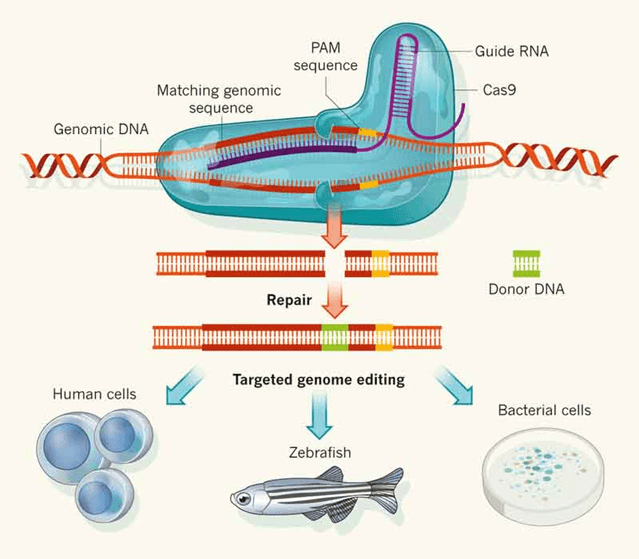
Fig 1. CRISPR Cas9 Genome Editing System.

CRISPR (clustered regulated interspaced short palindromic repeats) is an RNA-guided genome editing tool, that is capable of targeting and modifying specific genomic regions. It has been applied in eukaryotic genome editing, in which the Cas9 protein, with the help of gRNA, targets a specific region of the genome and generates the double-stranded break. The cut site is repaired by non-homologous end joining (NHEJ) a process results in insertions or deletions of base pairs (indels) or homologous directed repair (HDR) where the introduction of donor template results in precise editing (Fig 1).

In this study, we utilized the Ribonucleoprotein (RNP) complex that is a mixture of single guided RNA (sgRNA) and purified Cas9 protein to target both upstream and downstream flanking region of CGG repeats in human fibroblast cell lines carrying the premutation allele (Fig 2). We hypothesize that excision of these CGG repeats will the rescue the altered FMR1 mRNA and FMRP expression levels observed in premutation carriers.

Fig 2. CRISPR Cas9 mediated CGG repeat removal in fibroblast cell line.

Our preliminary results demonstrate that this CRISPR system is working successfully in in-vitro (on PCR products) but we couldn’t able to excise the repeats in Human fibroblast cells that is probably due to a low editing efficiency of sgRNA2 that target the downstream of CGG repeats. Now I am testing new gRNAs to target the downstream of CGG repeat in combination with gRNA1. CRISPR Cas9 has a profound impact on research efforts including identification of genes as well as the development of new disease models. But there is no previous study reported regarding the use of CRISPR genome editing tool for FMR1 premutation alleles. Hopefully, the genome editing by transient expression of Cas9 (as RNP) will permit the consideration of a range of delivery options for therapeutic applications. With the optimization of suitable delivery system and proper assessment of specificity, we can clinically translate this study for the therapeutic editing specifically in the fragile X-associated disorders.

Citation

Zafarullah, M. Genomic Editing of FMR1 Premutation in Human Fibroblast Cell Lines via Delivery of Purified Cas9 Ribonucleoproteins. Poster presented at 7th Genomic and Big Data Summit; 2017 September 26-27; San Diego California. USA.

Perseveration is the continuation of something (as repetition of a word) usually to an exceptional degree or beyond a desired point.

Anyone who lives with a person with Fragile X syndrome is very familiar with this continuation of a repeated word or phrase. This repetition can be maddening when you are the recipient. At face value, perseveration has no redeeming features and simply serves as an irritant, but in the life of one with FXS, it can be a valuable asset. Perseverative verbiage often accompanies arousal and acts as a buffer to reduce the anxiety. The repetition can be comforting like a mantra or song.

Understanding the function of the perseveration can be better understood if one listens to what is being repeated. For example, when a young child repeats a phrase like “And then?” or “Next?” it is easy to understand that the function is related to needing to know what is coming next. This continued repetition serves as a safety net to assure the child that no surprises await them and that they will be OK with the plan.

Sometimes perseveration serves as a way to initiate conversation. Often the conversation begins with the same phrase over and over without really listening for a response. The perseverative phrase may be borrowed from an observation, television program, or video. This type of conversational mechanism is far different from scripting or echoing a phrase heard in a video. The echolalic response is more typical of individuals with autism.[1]


An echolalic response is when someone repeats what another person says, often without meaning to.


Phrases such as, “I didn’t do it, it’s your fault” or “Right on” is more consistent with the speech patterns of those with FXS. These rote phrases open up or keep a conversation going without much regard for the conversation or topic that follows. Additionally, because the phrase can become a trademark of the person using it, the response from the listener is predictable, creating less social stress for the person with FXS.

Sometimes, the repetitious verbiage creates rehearsal of an action or task. For example, repeating the steps of a direction over and over tends to hold information to compensate for short-term memory deficits. Using perseverative talk can enhance overall functioning and executive functioning.

Decoding Perseveration Through Cloze

How can someone “decode” perseverative communication to understand what the person with FXS is attempting to communicate? Using a cloze strategy to finish out the statement can be helpful.

For example, sometimes when a person with FXS is especially aroused, they remember certain aspects of the experience that caused the hyperarousal. They may repeat something like “He hit my leg,” “He hit” or “He hit and got mad, mad.

Of course this kind of conversation gets stuck when one tries to question what happened while sorting out the repeated phrases. Following up with “Who hit?” or “What happened?” or “Why did he hit you?” falls short and may result in more frustration.

Using a cloze phrase such as, “Today at school, he hit you and got mad” will then generate additional comments such as, “Jim got mad, Jim hit me, got mad and hit me, got in trouble, Jim was bad.”

Females with Fragile X Syndrome

Females with Fragile X syndrome may also use perseverative speech, but as would be expected, it serves a different purpose. Anecdotal accounts suggest that females use the perseverative talk to emphasize a salient point or to mark a particular aspect of an experience. For example, the perseveration may not be repeated consecutively but rather pop up several times in the conversation. Often when a female with FXS is communicating an especially emotional experience, she may intersperse a comment she repeats several times in the conversation.

An example would be:

Therapist: How do you think your session with David went?

Client with FXS: He needs to be serious and look at people when he talks.

There you go: Do you think he may have been too emotional to look up? I noticed other people in the group felt sorry for him.

Client with FXS: He needs to look up, he doesn’t even look at me.

This perseverative thought persists in a way that interferes with the conversational flow and content but clearly indicates what was most difficult about their interaction. The female was unable to get beyond David not looking at her to understand the reason for his behavior. This common reaction can be redirected by repeating the perseverative language.

In the example above, the therapist could say something like, “David was so upset, he couldn’t even look at you. He was really upset and didn’t look up when he spoke to you.” This conversation puts the behavior in a context that uses the female’s language to better understand the interaction and more importantly the emotional content.

Understanding the function of perseveration requires the observer to look beyond the monotonous repetition of the verbiage into what in the environment is prompting the excessive repetition. Equally as important, the observer should attempt to extract meaning from the perseveration. If you take time to listen to the perseverative talk by utilizing the “fill in” or cloze method, you might find an annoying behavior will become useful in the quest to better understand your child.

Learn more about females and Fragile X syndrome

Going to an IEP meeting was always an emotional experience for me.

After a couple of years of meetings with a group of people — teachers, psychologists, and administrators — who had obviously already made many decisions regarding my son, and meetings where a “draft” IEP (individualized education program) was handed to me when I walked in the door, I decided to make some changes in what I did.

Changes to My Approach

First, I took a class on IEPs, offered by our local Arc, the largest national community-based organization advocating for and with people with intellectual and developmental disabilities and their families. The best part was that they spoke about the specific IEP form that our school district used, not a generic one.

IEPs have sections that are required by law, and having someone walk me through one in general terms demystified it for me. I discovered IEPs are not that complicated. Most importantly, I found which sections I needed to focus on to develop an IEP that would meet my son’s needs and direct his learning.

Next, I asked my husband to come with me to every meeting. In general, when my husband was there (this may just have been my perception), the school personnel were nicer and talked to me in a more respectful way. In those rare cases when my husband could not come, I would bring a friend, but it was not the same.

I began to ask for the draft ahead of time.

In the meantime, I would draft my own IEP. I never walked into a meeting without knowing exactly what I wanted my son to work on for the next year, and I had it in writing. In the weeks prior to the IEP meeting, I would put a notebook on the kitchen counter, in which I would jot down my son’s strengths and needs, as well as the goals I wanted him to pursue.

Here’s an example of what I would bring to a meeting (these are the categories on our IEP):

Strengths & Needs

EDUCATIONAL

Strengths: Responds well to the 1:1 aspect of reading and math, extremely motivated to do work because of involvement in football and wrestling, wants to learn to type, thrives on routine, likes to see his daily schedule using words not pictures, more focused on activities when sensory diet and when areas of high interest are used, and his desire to learn, try new tasks, and stay focused has increased.

Needs: To continue the 1:1 for reading and math, continue typing class, work on improving handwriting skills, and learn to use a planner (using the strengths listed above).

SOCIAL, EMOTIONAL, ADAPTIVE

Strengths: Loves being “one of the guys” on the football team, interacts with a lot of people in the school, has a great sense of humor, knows that he needs to have his schedule laid out for him and asks for that, thrives on routine, has a good attitude, is empathetic towards others, likes to please others.

Needs: To continue in regular education classes, continue as manager of football and wrestling teams, develop skills for unexpected transitions, learn self-calming techniques when his anxiety goes up.

PHYSICAL MOTOR, HEALTH

Strengths: Loves extracurricular football and wrestling, adaptive PE, regular PE, and any other gross motor activities, and is in good overall health.

Needs: To continue participation in extracurricular football and wrestling, adaptive PE, regular PE, regular weightlifting, and regular health classes, be monitored for hypotonia, and use the bathroom independently.

COMMUNICATIVE

Strengths: Likes to communicate with others, is starting to slow speech when asked, and is tolerant of being asked to repeat words when they are not clear. He likes to use “mantras” and practice what he is going to say in certain situations.

Needs: Independently decrease rate of speech, answer why? questions about the way he is feeling or something he did, and stay on topic within a conversation.

COGNITIVE

Strengths: Is very proud when he completes/accomplishes tasks, has good rote memory, has good receptive verbal skills, learns by observing, can focus on subjects of high interest for extended periods of time, and responds well to repetition.

Needs: Opportunities to use his strengths during his academic day.

TRANSITION, LIFE SKILLS, CAREER

Strengths: Likes to work with people, has a desire to learn to read, wants to understand money, wants a job, likes to cook, wants to do activities independent of parents, is proud to use his own cell phone, and loves music.

Needs: Become more independent as manager of football and wrestling teams, improve math skills, improve reading skills, use phone accurately and independently, become comfortable riding bus home independently, to learn strategies for calming when frustrated, and to learn to ask adults questions or ask for help.

I would also bring in goals and objectives. I was never too big on the goals where Ian would do something “four out of five times with 75% accuracy.” The goal should be to do it, not do it just three quarters of the time. Here are some examples of the goals I would bring into a meeting. (Note: these goals were written for a February IEP meeting; that’s why the first date for goal completion is in April.)

Goals

MATH

Will independently and with 100 percent accuracy:

Read numbers 1-300.

— 1-100 by 4/1
— 1-200 by 10/1
— 1-300 by 1/1

Add/subtract two-digit numbers on a calculator.

— Prompted by 5/1
— Independently by 12/1

Will recognize the following coins: penny, nickel, dime, quarter, and dollar; and bills up to $100.

— Penny, nickel, dime, quarter by 6/1
— Dollars up to $20 by 6/1
— Others by 12/1

Learn $1 up strategy up to $100. (For example, if an item cost $1.50, he will need $2)

— $1–$50 by 5/1
— $1–$100 by 2/1

WRITING

Will write name, address, and phone number on lines with one-half inch spacing that is legible to a person who does not know him. Spelling, capitalization, and punctuation to look like:

Ian Weber
9876 Easy St.
Boulder, CO 12345
212-555-5555

— Name by 5/1
— Address by 10/1
— Phone by 1/1

Detailed status reports will be sent home on a weekly basis — I received weekly reports on how Ian was doing on each of his IEP goals. It was often short and simple, but it was enough.

When it comes to writing your child’s goals and objectives, I want you to think about this: What exactly do you want your child to do/learn? The goals have to be measurable, so keep that in mind when creating your goals and objectives. If you find the school staff proposing goals that seem too general, keep asking them questions:

  • What exactly will you work on?
  • How will you know when you have met the goal?

And finally, I would create my own list of accommodations and modifications. Here’s an example:

Accommodations & Modifications

— Ian needs preparation way ahead for any changes to routine.

— He needs to get places early.

— He needs a calm environment.

— He needs closure on everything.

— Materials modified to instructional level in Ian’s academic classes.

— Ian needs to know schedule ahead of time and know exactly what is going on—changes, etc.

— Feedback to Ian needs to be framed in a positive way.

— Instructional staff will have knowledge of Ian, of Fragile X syndrome, and be familiar with Ian’s behavior support plan.

— Ian needs frequent breaks that involve heavy work/gross motor activities.

Final Thoughts

Do not be intimidated by your IEP. I know that’s easier said than done, but sit down sometime when you have 15 minutes and just look through your IEP. Look for categories similar to what I have listed above. When you create your lists, use the terminology that’s in your IEP. This will let the school personnel know that you are serious about this, and you know what you are doing.

Also, when the discussion turns to services (this is the best advice I ever received), always frame it in the words of what your child needs. It’s not about what you want, it’s about what your child needs. I’m not an attorney so I can’t help you with legal issues, but I can tell you what I did and what worked for me.

My son made great progress throughout school. All children can. But it requires a lot of vigilance and work from parents and teachers.

In summary, I read every book I could find on IEPs, I read everything on our state website, I read everything on the internet I could find, I attended IEP classes, and I have my own copy of the IDEA law and regulations that is tabbed and highlighted, which I happened to carry with me to every IEP meeting. It somehow always ended up on the top of my pile of papers that I carried in.

Resources

IN PROGRESS!

This article was adapted and updated from an original article by Laura Greiss Hess and Kerrie Lemons Chitwood.

Making Sense of Special Education Alphabet Soup


  • Just like all other children, students with special needs have the right to a FAPE.
  • Schools must consider teaching a child with special needs in the LRE whenever possible.

What? Here’s the above in English:

  • Just like all other children, students with special needs have the right to a free and public education.
  • Schools must consider teaching a child with special needs in the least restrictive environment whenever possible.

Here we cover the following “alphabet soup” acronyms and abbreviations (not necessarily in this order):

  • AT = Assistive Technology
  • AAC = Augmentative and Alternate Communication
  • IDEA = Individuals with Disabilities Education Act
  • IEP = Individualized Education Program
  • IFSP = Individualized Family Service Plan
  • FAPE = Free and Appropriate Public Education
  • LRE = Least Restrictive Environment
  • LSH = Language, Speech, Hearing Specialty
  • OT = Occupational Therapy
  • SI = Sensory Integration
  • SLP = Speech-Language Pathology (or Pathologist)
  • ST = Speech Therapy (or Therapist)

What is IDEA?

IDEA = Individuals with Disabilities Education Act

IDEA is the federal law that makes early intervention and special education available for students with special needs.

IDEA stands for the Individuals with Disabilities Education Act, the federal law that provides early intervention and special education for students with special needs.

What is FAPE?

FAPE stands for free appropriate public education. This is central to the federal law IDEA and is a protected right of children eligible for special education. Just like all other children, students with special needs have the right to a free public education.

What is LRE?

LRE stands for least restrictive environment and means that schools must consider teaching a child with special needs in general education whenever possible.

There is a continuum of “restrictiveness” ranging from the most restrictive of residential placements, to special education centers where all children on the campus have special needs, to special education classrooms on general education campuses, to resource-style classes where students spend parts of a day in special education and parts of the day in general education plus full inclusion in general education settings. The graphic is a representation of “restrictiveness.”

School experiences on a scale from least to most restrictive.

What is an IEP?

IEP stands for individualized education program and is a written document for each child with a disability. It is developed, reviewed, and revised according to the requirements of IDEA.

IEPs are typically held once per year, but the timing may vary depending on the needs of your child.

Tip: You can call an IEP meeting any time.

IEPs typically have a flow of how things will proceed. Each team is different, but generally the team should collaboratively brainstorm the following:

  • Identify present levels of performance
  • Develop goals and objectives
  • Discuss and document necessary therapy supports.

What is a SLP? Is it the same as a ST? What is an LSH specialist? And what else do I need to know about speech and language?

Often in schools, SLP, ST, and LSH are used interchangeably — though LSH is typically only used in school settings.

  • SLP: Speech-language pathology (or pathologist)
  • ST: Speech therapy (or therapist)
  • LSH: Language, speech, hearing specialty

Communication is an “umbrella” that includes many concepts. Here is a breakdown that we find helpful:

Communications umbrella showing a breakdown of concepts.

What is speech?

Speech is production of phonemes (sounds), voice, and fluency. In other words, articulation.

What is language?

Language is the area of functioning most crucial for cognitive and social development. Language includes both verbal and visual input and is comprised of:

  • Receptive Language: The understanding — or what the individual receives via communication in the environment.
  • Expressive Language: Ability to communicate or express wants and needs.

What are pragmatics?

Pragmatics is the use of language, sometimes referred to as “social language” (e.g., taking turns, waiting, sharing, eye contact, facial expressions). Pragmatics also includes flexibility of thought and language use depending upon the situation.

What do speech-therapy services in schools mostly focus on?

  • Socialization and pragmatics
  • Design of a language-rich environment
  • Encouraging language through various modalities on an everyday basis

Language, speech, hearing (LSH) therapists are support staff who can assist in the development of communication tools, which should be used on a consistent basis and embedded into the IEP.

What is OT?

OT stands for occupational therapy. The word “occupation” comes from how we “occupy” our time. Our daily life’s roles and activities, including self-care, play, work, social engagement, leisure, and learning, are all daily occupations, thus occupational therapy teaches daily life skills.

Students participate in occupational therapy to meet annual goals as outlined in the IEP. In school settings, OTs support student learning, access to and overall participation in educational settings, and routines, including academic and non-academic domains. Sensory processing differences are the most common reason for needing occupational therapy.

What is SI?

SI stands for sensory integration, which is how the brain processes sensory information from a combination of sources, including vision, hearing, touch, balance, and body awareness. SI issues can impact how people respond to sensory information, particularly in social situations.

Sensory integration issues have been well-documented in many individuals with FXS. Sensory integration issues, also known as sensory processing differences, can impact:

  • Attention and focus
  • Behavior
  • Language processing
  • Learning
  • Overall functioning

What is AT?

AT stands for assistive technology, which IDEA defines as:

Any item, piece of equipment, or product system, whether acquired commercially off the shelf, modified, or customized that is used to increase, maintain, or improve functional capabilities of children with disabilities.

Assistive technology must be considered on every IEP.

What is AAC?

AAC stands for augmentative and alternate communication. It is the part of assistive technology (AT) that focuses on communication, but is not just a “device that talks.” It includes a broad spectrum of applications including symbols, gestures, pictures, and icons to enhance communication. Use of AAC applications will not stop someone from talking.

What is an IFSP?

IFSP = Individualized Family Service Plan

An ISPF is for children three years and younger. An IFSP is written after the child is evaluated and found eligible for early intervention services. It is developed, reviewed, and revised according to the requirements of IDEA.

This plan is made by a team, including the family, Part C coordinator, and other service providers. Using their understanding of the child and the assessment results as well as the family’s priorities, the plan is developed to guide everyone to achieve the desired outcome(s). The IFSP is typically made up of several supports and services, and should outline those supports and services, where and how they will take place (source: Individualized Family Service Plans (IFSPs) Tips | ECLKC).

During the IEP Meeting

You are the best source of information on your child, and their best advocate. Go in as a collaborator not as an adversary. Begin with your child as an individual who has strengths and gifts, and from there:

  • Ask to have the IEP notes read aloud at the end of the meeting with all team members present. This helps to make sure the team is in agreement about what was discussed and will help to clarify any issues.
  • Pointedly discuss collaboration during the IEP meeting and put it on the IEP as part of the service delivery. Many therapists and teachers have good intentions, but unless we have formal collaboration spaces, time, and places, it may not actually happen in the way we all want it to happen.
  • Schedule team meetings monthly or quarterly.
  • Define expectations for team communication (e.g., logs in notebooks or email).

You do not need to sign the IEP right away at the end of the meeting. You can take it home, review it, share with partner or family and sign later. Many families make this their regular practice, not just when things are contentious.

According to WrightsLaw, IDEA does not require parents to “sign” an IEP. Threatening to not sign an IEP does not really mean much. Also, if you do not sign the IEP, others may think you agree to it. You have an absolute right to disagree with the IEP. Do not sit on that right. If you disagree with the IEP, go ahead and sign it, but put a note below or to the side of your name saying that your signature does not mean that you agree with the IEP.

After the IEP

Collaborate and follow through! Actively engage in the agreed-upon team communication strategies — you are a key team member!

Don’t hesitate to ask follow-up questions. Remember, you can call an IEP meeting any time, so if you want to meet again with the team, that is your prerogative.

Goals

Questions to ask about goals:

  • What the goal will “look” like during the school day? (Provides context)
  • How will skills be generalized?
  • How and when will progress be updated?
  • How will parent-school communication work?
  • How will the goal will be measured?
  • How will data be collected and shared?

Goals should be:

  • Interdisciplinary — not just a “speech goal” or “OT goal”
  • Functional, measurable, and data driven
  • Clear and easily understood by anyone
  • Highly individualized to your child

Positive Student Profile Examples

Sample student profile for Rhein Murphy.

Positive student profile example for Rhett Murphy.

Tips From Parents

Tips for Meetings

“My input as a parent is really important in the IEP. So, I always write a detailed page for the “Parent Concerns” section. All year long I add bullet points to a document I keep on my computer. When something comes to mind — a particular challenge, a great success, a dream for him — I type a bullet point. Then when it’s time to write my part of the IEP, I have my bullets to refer to. I try to do my piece well in advance of the meeting in hopes that his teacher might use some of my thoughts to form the goals.”

“I always tried to act as another part of the whole team. I did things, I volunteered to provide things, and expected others to do the same. I never went in just pounding my fist and requesting unrealistic things. It has to be cohesive!”

“It never hurts to ask for something, the worst they can say is no.”

“Trust your gut.”

“Educate the IEP team on FXS and what you as the parent know about FXS learning styles each year.”

Tips for Food

“For every meeting (monthly or IEP) we bring food. Muffins, scones, cut up fruit-yogurt and paper bowls since we usually meet in the early morning. We know their dietary needs as well and provide something healthy. It lets them know that we care about them and appreciate their help.”

“I believe it’s a nice gesture AND it’s harder to say no with a bagel in your mouth. Pete suggests bringing enough so there is extra. Then when it’s in the teachers’ lounge and someone says, “Where’s this from?” the answer shows you’re generous parents as opposed to the talk in the teachers’ lounge being about your list of demands.”

“We bring food in as well. I always come in a few minutes early and stop in the front office and make sure the secretary and principal have some as well as anyone else on the team who may not be at the meeting (like the paraprofessionals!). These small gestures have always helped not just with IEPs but also throughout the year because they all KNOW me so when we have had to be firm about a decision, they understand a little better. They are also more likely to go out of their way for us 🙂.”

Related Resources

Assistive Technology and the IEP (PDF)
This article provides parents with useful information about AT and how to go about addressing it as part of their child’s IEP.

Understanding IEPs
From Understood for All, includes the purpose of an IEP, how to get an IEP, IEP meetings, and staying on top of an IEP.

IDEA Fact Sheet (PDF)

SMART IEPs
The term SMART IEPs describes IEPs that are specific, measurable, use action words, are realistic and relevant, and time-limited.

Special Education: Federal Laws vs. State Laws
From Understood for All, state laws can’t contradict IDEA, and they can’t provide less than the federal law requires. But they can offer more protections to kids and parents.

Find Your Parent Center
There are nearly 100 Parent Training and Information Centers (PTIs) and Community Parent Resource Centers (CPRCs) in the U.S. and territories.

American Speech-Language-Hearing Association (ASHA)
IEP resources including “Five Tips To Avoid IEP Legal Troubles” and “A Strengths-Based Approach to the IEP Process” (on-demand webinar).

In recent years, researchers have identified more than 100 autism risk genes, which — amazingly — is 100 more than we knew of less than a decade ago. This is an amazing leap in knowledge, and researchers are telling us that an identifiable single-gene condition may account for 15% to 20% of all cases of autism.

Known single-gene and chromosomal disorders associated with autism include Angelman syndrome, chromosome 15 duplication syndrome, tuberous sclerosis, and — the most common known single-gene cause of autism — Fragile X syndrome (FXS).

To be clear, we are not talking about a test for autism:

  • Autism is a behavioral diagnosis. There is no lab test for autism. If a child is showing certain signs of developmental delays, an ASD (autism spectrum disorder) specialist or team will make a behavioral diagnosis, which describes and confirms the observed symptoms. In the case of an individual with both FXS and autism, the FMR1 mutation is the underlying cause of the autism.
  • Fragile X is a genetic diagnosis. Diagnosis is done in a lab using blood or body tissues. In the case of FXS, when “turned off,” the FMR1 gene can no longer produce an important protein called FMRP. Fragile X syndrome is a “full mutation” of the FMR1 gene. Learn more about Fragile X syndrome testing and diagnosis.

What we’re talking about is a medical test — known as genetic testing — for individuals with a previous behavioral diagnosis of autism of unknown causes. A genetic test identifies changes in chromosomes, genes, or proteins to confirm or rule out a genetic condition, or the possibility of developing or passing on a genetic disorder. Because there are genes known to be associated with autism — Fragile X being the most common — it is important to test for the presence of an underlying genetic disorder.


Why Genetic Testing is Important

Sometimes, a child with FXS is later diagnosed with autism, and sometimes, a child with autism is later diagnosed with FXS.

As with many developmental disorders, FXS and autism each come with their own set of highly variable challenges and treatment options; and knowledge of both is key to building personalized therapies and developmental care plans specific to each child’s situation.

Additionally, many genetic disorders can have associated medical issues, Fragile X included. In the case of Fragile X, a diagnosis can help inform other family members of the cause of their undiagnosed symptoms, such as a nephew, uncle, or cousin with intellectual developmental delays, an aunt with infertility (Fragile X-associated primary ovarian insufficiency, or FXPOI), or a grandfather with tremors (Fragile X–associated tremor/ataxia syndrome, or FXTAS).

Researchers continue to confirm the importance of early intervention for both FXS and autism. Knowing they exist simultaneously—sooner rather than later — could conceivably change a child’s entire life.

And lastly: Scientia potentia est. Knowledge is power.

Barriers to Post-ASD Diagnosis Genetic Testing

No one will stop you from getting genetic testing, but there are many reasons it might not happen.

If a child is diagnosed with autism, and any of its associated genetic disorders runs in your family, the doctor may recommend further genetic testing. However, a woman (and her doctor) with a known family history of Fragile X would already be aware of the need for testing, with or without an autism diagnosis.

So, what about the mother or father who isn’t aware of a genetic disorder lurking in their family history?

We looked into this and found two issues potentially hindering the convergence of an autism diagnosis with a known genetic cause. One is lack of consensus and the other is the test itself, meaning:

  1. Lack of Consensus: There is no solidarity on whether or not to recommend genetic testing
  2. Which Genetic Test: If testing is ordered, will it include the FMR1 gene (or any specific gene for that matter).

1. Lack of Consensus

One lab we looked at during our research reported that the most common question they received from parents when offered genetic testing following an autism diagnosis is: Why get a genetic test if my child has already been diagnosed?

And that’s just the start of the confusion families go through with any complicated medical or behavioral diagnosis. The ensuing flood of information is overwhelming (e.g., we built an entire website around navigating your way through Fragile X), and most will need some level of guidance as they sift through it all so they can make informed decisions around their future care.

A recent study — Pathways from Autism Spectrum Disorder (ASD) Diagnosis to Genetic Testing — looked at the experiences of families and their health providers as they moved from diagnosis, to the offer of genetic testing to determine etiology, to the decision of whether to pursue testing. Some of what they found includes:

  • Many providers choose not to offer testing to families and many families are unaware of the option for genetic testing
  • Testing decisions are influenced primarily by providers and secondarily by insurance carriers
  • Lack of insurance coverage may discourage providers from ordering genetic testing and by association may raise questions about their usefulness

The report also demonstrates inconsistencies when it comes to who makes the initial ASD diagnosis, who suggests or offers the genetic test (if at all), and the criteria used to determine a genetic test recommendation.

An ASD diagnosis can come from one of many types of providers across a variety of settings. In the Pathways study, initial diagnoses were made by either a single provider or a medical or diagnostic evaluation team made up of developmental pediatricians, neurologists, nurses, occupational and physical therapists, psychiatrists, psychologists, social workers, and in one case, a dietician.

The most common setting was large specialty care centers. According to one provider from the study, “Most pediatricians aren’t going to make a diagnosis of autism. Most pediatricians, the vast majority, refer out to a tertiary center,” such as specialized autism centers or children’s hospitals.

Following an ASD diagnosis, families in the Pathways study typically were also offered a range of recommendations, community resources, and medical, educational, and behavioral therapies. But, here again, the amount and type of information they received — and from whom — varied dramatically.

Nearly a third of the families were not offered genetic testing at all, and others reported genetic testing as one among many options, but with no real guidance on what their next steps should be. When genetic testing was offered, it was rarely by the same provider who made the diagnosis. And when a genetic test was actually ordered, it was done by yet another provider.

As for the criteria for genetic testing, the majority of referrals were made based on whether autism ran in the family or if certain clinical features were present, such as abnormal growth or shape of certain body parts, seizure disorders, and severe developmental delays.

2. Which Genetic Test?

Current guidelines from such organizations as the American Academy of Neurology and Child Neurology Society, American Academy of Pediatrics, American College of Medical Genetics, and the International Standard Cytogenomic Array Consortium, illustrate the variations in recommendations that providers are exposed to, which adds to the confusion around the criteria for a genetic testing referral—and which genetic test to order.

According to several studies, including Heterogeneity in Clinical Sequencing Tests Marketed for Autism Spectrum Disorders, chromosomal microarray is currently the recommended first-tier genetic test for ASD. However, as the NFXF has previously reported:

Chromosomal microarray analysis is a powerful test for detecting certain genetic causes of developmental disabilities, but it is not able to detect Fragile X mutations of any kind.

The study also looked at the number and genes included in clinical gene sequencing panels offered by 21 commercial labs and marketed for autism spectrum disorders illustrates the need for health professionals to work toward a consensus:

Number of genes in each panel 11 to 2,562
Number of unique genes across panels 2,928
Number of genes shared across all panels* 1
Number of genes shared by at least 10 of the 21 labs63
Number of labs with identical gene lists2
Number of panels with the FMR1 gene14
Number of panels without the FMR1 gene7
*MECP2, associated with Rett syndrome, and which is no longer considered part of the ASD spectrum as of the fifth edition (2013) of the American Psychiatric Association’s Diagnostic and Statistical Manual of Mental Disorders.

The study also looked at four academic autism research-based lists*:

Number of genes in each list61 to 1,109
Number of genes shared across all lists15
Number of lists with the FMR1 gene2
Number of lists without the FMR1 gene2

NFXF Guidance

The bottom line for you, today, is if your child has an ASD diagnosis with no known cause, request genetic testing and make sure the test includes Fragile X. It can help them, you, and your extended family.

Unfortunately, most parents of a child with autism are unaware of genetic testing options. We have detailed information on testing, and recommend working with a geneticist if possible. However, if needed, you can also take matters into your own hands.

If your child has been diagnosed with ASD with no known cause:

  • Request genetic testing, and be specific about the reason: I want my child to have genetic testing to determine if one of the known single-gene and chromosomal disorders associated with autism is the cause.
  • Don’t assume FMR1 is included. For example, we found many tests with names like “Autism Spectrum Disorders Panel” that did not include FMR1. Ask specifically if the FMR1 gene is included, or ask to see the list of genes.
  • If you’re still not sure, find out everything you can about the recommended test, such as the names of the lab and the test, and do your own online research. Or call the lab directly and ask for a list of genes for that particular test (you might also want to ask about the methodology behind the list).

Currently Available Autism Genetic Testing Panels

Below we’ve included a list of labs and tests that are both marketed for autism spectrum disorder and include the FMR1 gene. Though we tried to locate and verify as many as we could, we do not assume this list is exhaustive. Because they can change at any time, please review the information carefully and follow up with your health professional or the lab for the most current information.

Please note that the commercial labs in this list may or may not also offer specific Fragile X DNA testing. Our intent with this list is to assist people facing an autism diagnosis with an unknown cause, and who would benefit from testing that includes all currently known autism-related genes.

Please let us know if you need help in interpreting any of the information here:

Note that the following are as of January 2025. We will update this list periodically and note the date of last revision. These are not Fragile X DNA tests, they are tests for an autism diagnosis of unknown cause that include the FMR1 gene.

LabTest Name
Ambry GeneticsAutismNext
ARUP LaboratoriesAutism and Intellectual Disability Comprehensive Panel
Ayass BioScienceExome Sequencing
Fulgent GeneticsAutism NGS Panel
GeneDxAutism/ID Xpanded Panel
Greenwood Genetic CenterEpiSign Complete
LabCorpFragile X Syndrome, Diagnostic
MNG LaboratoriesComprehensive Intellectual Disability/Autism (NGS Panel and Copy Number Analysis + mtDNA)
Prevention GeneticsAutism Spectrum Disorders (ASD) Panel
Prevention GeneticsPGmaxTM – Intellectual Disability, Epilepsy, and Autism (IDEA) Panel
Reference Laboratory GeneticsAutism, Panel Massive Sequencing (NGS) 116 Genes
*FMR1 repeat expansion testing is not included in this test but can be ordered concurrently

What’s Next?

For the future, it’s imperative that healthcare providers and insurance companies come to a consensus on genetic testing related to ASD. In the meantime, we are here to help you, today and tomorrow, and to continue to raise awareness of the need for genetic testing when an individual has an ASD diagnosis.

This guide is intended for classroom teachers with little or no exposure to Fragile X syndrome. Our goal is to help make the teaching and learning environment from preschool through high school more effective, efficient, and rewarding for teachers and their students with FXS who come under their care.

This guide provides practical information that includes:

  • A background on Fragile X syndrome
  • Descriptions of behavior and learning styles
  • A discussion of educational and community resources
  • Sample lesson plans for children with FXS at a variety of developmental levels
  • Strategies to facilitate the inclusion of children with FXS

Download the Guide

Lesson Planning Guide for Students with Fragile X Syndrome
198 pages,
Updated 01/01/2004
A wealth of practical information that includes background on FXS, descriptions of behavior and learning styles, discussion of educational and community resources, and sample lesson plans for children with FXS at a variety of developmental levels.

Note: Special thanks to NFXF members Randy and Diane Dobslaw and in honor of their son Brett, whose generosity enabled this publication. This guide also owes a profound debt of gratitude to Dr. Marcia Braden, whose original work, “Curriculum Guide for Individuals with Fragile X Syndrome,” is incorporated extensively throughout the guide.

Additional Resources for Teachers

Have you ever shopped in Berkeley? After your obligatory coffee at one of the city’s 10,000 cafes, you must try Shoes on Solano — they even accommodated Tracy’s size “43.” (U.S. size 12; oops, maybe shoe size is like age and shouldn’t be disclosed?). In any case, we were in the Berkeley area for a wonderful daylong conference on Fragile X syndrome arranged by the Northern California Fragile X Support Group — and what a day it was!

Randi Hagerman, Marcia Braden, the two of us, Scott Hall, and Allan Reiss were on the slate as presenters. How encouraging to hear Allan say:

“The number one issue in Fragile X syndrome is hyperarousal.”

We are always delighted when researchers echo what we find in our clinical work. We think that the hyperarousal issue, in all of its differing forms, is the single most critical aspect affecting learning and development in those affected by Fragile X syndrome. It is also the factor most therapists and teachers need specific information about.

Happy boy in the woods.

We have been advocating comprehensive intervention for hyperarousal for 20-plus years, and we remember fondly the first time our work dovetailed with research information when Vicki Sudhalter and Rick Belser first published their findings on the clinical implications of hyperarousal in Fragile X syndrome.

Recently we’ve encountered many situations in which therapists are confused by how to address hyperarousal while implementing autism-oriented treatment. This is because hyperarousal intervention strategies appear counter to the direct nature of many autism interventions, or, teaching strategies.

We see this confusion in therapists across the country as they attempt to integrate treatments from the field of autism into their intervention for children with Fragile X syndrome, with or without autism. It is critical to integrate knowledge of hyperarousal into any intervention strategy and especially for those treatments that come from a tradition of autism intervention. My, this is a serious and strong cup of coffee!

We were recently asked to travel to New York for a consultation regarding a young boy with Fragile X syndrome and autism who attended a private school utilizing a strict applied behavior analysis, or ABA, approach. The school and family were frustrated, as was the boy. The boy’s mother had provided the school with copious amounts of information about Fragile X syndrome learning styles, hyperarousal, and how to adapt curriculum. Sadly, the school insisted on a strict ABA approach with absolutely no modifications for Fragile X syndrome, going so far as to state, “You can bring in anyone [meaning Fragile X experts] you want, but we are not going to change our program.”

While this is an extreme situation, the need for therapists and school intervention programs to understand the Fragile X syndrome learning style and the specific role hyperarousal plays in learning and development has never been more urgent. This article was originally written in 2006, but it’s even more so true today, as the blind application of autism-based intervention is widespread with little regard to the role of hyperarousal in reducing adaptive capacity.

We answer several emails or calls each week about how to adapt autism intervention for Fragile X syndrome. As the prevalence of such programs and strategies grows, so will the need for guidelines for adapting strategies to honor the core of the Fragile X syndrome learner. The “FX Max” was created to provide a tool to families, schools, and interventionists to assist them in keeping the focus on Fragile X first, or, as we like to say, “living the Fragile X way.”

The main problem with many autism-oriented approaches is that they fail to take into consideration the learning style of individuals with Fragile X syndrome, in which the main issue is hyperarousal. We know that the research community is exploring this issue empirically, as are we.

For now, the evidence from our many years of experience suggests the following key adaptations be made to any intervention approach, especially those from an autism tradition.

Key Adaptations to Intervention

In general, a discrete trial approach that utilizes mass trials will elicit hyperarousal and in turn shut down learning and language and elicit maladaptive behaviors. A discrete trial approach is a behaviorally based approach to teaching or therapy that includes a single cycle of a prompt-stimulus for an expected response, which is then reinforced.

Sometimes this cycle is repeated several times over in a single session — the mass trial approach. Each skill is systematically built upon based on the data. Our point with the mass trial approach is not to say that careful, systematic work isn’t vital to the therapy process. The ability to analyze behavior and learning is an inherent part of all therapeutic interventions. However:

We understand that children with Fragile X syndrome are incidental learners who easily become overwhelmed in the face of direct instruction that requires an immediate, face-to-face response. This is the exact nature of a discrete trial approach if it’s not adapted.

It’s critical to modify a discrete trial approach to avoid forced responding. Following the child’s lead, interest areas and indications of comfort/engagement are critical. We value tracking responses with careful data gathering, and have found a more relationship-oriented approach works best.

Sequential teaching, especially forward chaining methods (a technique that teaches the steps of a more complex behavior/skill by teaching the first step sequentially through the last step), is often employed in autism interventions and is directly counter to the Fragile X syndrome learning style.

Children with Fragile X syndrome have a simultaneous cognitive style. This means that they are “gestalt” learners who need to see and understand the “whole” and not the parts that add to a whole. They are keen observers who learn from seeing a whole process or skill that they can replicate through imitation.

Many autism intervention programs target social skill development, including improving social eye contact and social interaction with reinforcement for correct performance.

We know that children and adults with Fragile X syndrome make wonderful eye contact when their level of arousal and anxiety are minimized, allowing them to feel comfort in the social situation. Conversely, when they feel social pressure, their hyperarousal skyrockets, and skills such as greetings and shared gaze are sacrificed. Attempting to “train” social skills without regard for hyperarousal is ineffective at best.

Creating opportunities to settle and manage hyperarousal as the first step in a social interaction is much more effective; it allows the individual to demonstrate their social drive appropriately. Then utilizing any of the more relational approaches can be successful. We have experienced positive benefits from several of these strategies, including DIR/Floortime developed by Greenspan and Wieder, Early Start Denver Model by Rogers and Dawson, and Pivotal Response Training by Koegel & Schreibman, which are all easily adapted for Fragile X syndrome.

Note the key word: adapted. All therapists should customize their treatment plans specifically for Fragile X syndrome, regardless of the strategy and regardless of any dual diagnosis that the individual may have (such as Fragile X syndrome and autism, or Fragile X syndrome and ADHD, etc.). Remember, they have Fragile X syndrome first and foremost, so it should lead the way.

Hyperarousal can produce some troubling or simply annoying behaviors in children and adults with Fragile X syndrome. These could include hand-flapping and biting, poor eye contact, and perseverative speech and motor activities. Autism treatment programs typically target these behaviors and attempt to shape/change them.


Again, we know it’s better to manage the hyperarousal that leads to the behaviors instead of struggling to change behaviors that are produced from the biology of hyperarousal. As our dear colleague Karen Riley always says, “You can’t battle biology.” This is a take-home message for adapting autism-oriented interventions.

Related Webinars

  • Caregiving
  • Managing Behaviors

01 h 07 m

Rebecca Shaffer leads two presentations about how to stay calm and manage intense emotions. The first is for self-advocates, and the second is for caregivers of individuals with Fragile X syndrome.

  • Caregiving
  • Physical & Mental Health

00 h 51 m

Dr. Deby Barbouth explores evidence-based lifestyle choices, mind-body techniques, and more to enhance well-being for women with the Fragile X premutation.