
NFXF Webinar Series

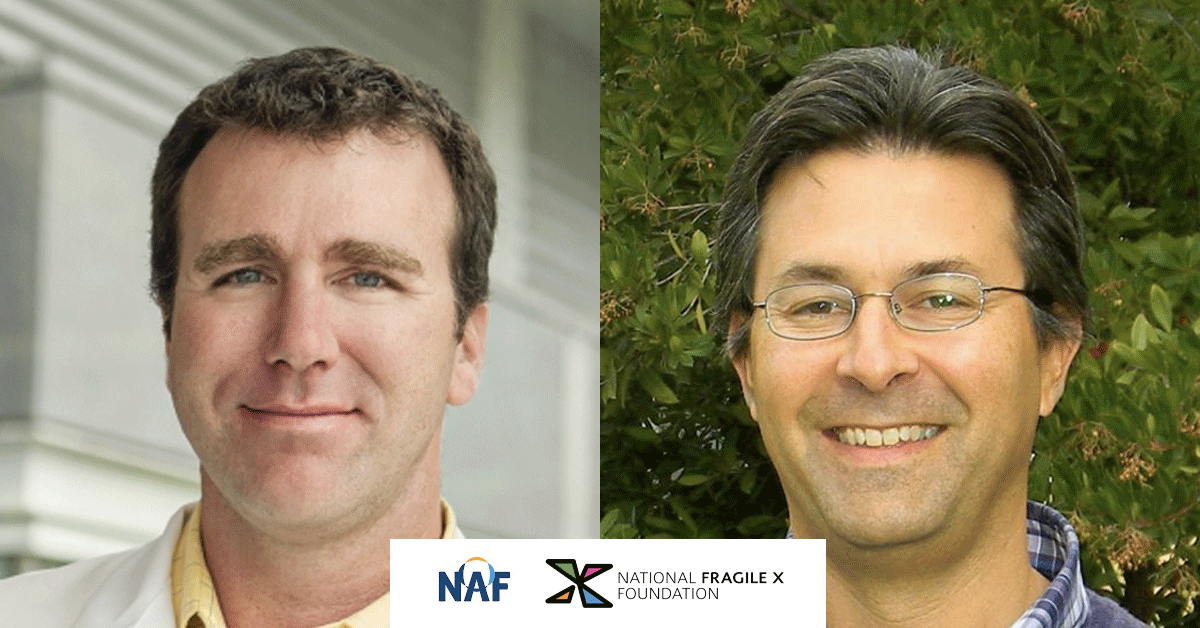
A FXTAS Discussion and Q&A Session With Drs. Deborah Hall and Peter Todd

01 h 05 m

While there is no cure for FXTAS, there has been positive progress in clinical care and treatment, providing hope for the future. Learn more in this one-hour moderated Q&A session discussing FXTAS diagnostic criteria, common symptoms, strategies, and treatments to manage the effects of the disorder, and the importance of research.

About the Webinar

With Drs. Deborah Hall and Peter Todd
Learn more about the presenters

Fragile X–associated tremor/ataxia syndrome (FXTAS) is an adult-onset neurodegenerative disorder related to the Fragile X premutation. All individuals with FXTAS have the FMR1 (Fragile X) premutation (55-200 CGG repeats). FXTAS affects the neurologic system and progresses at varying rates in different individuals.

The webinar was a facilitated one-hour Q&A session covering a wide range of topics:

  • Diagnosing FXTAS can be a complex process. Symptoms vary in individuals diagnosed with FXTAS, but every individual will have a FMR1 (Fragile X) premutation repeat expansion. Learn about FMR1 DNA genetic testing.
  • There are clinics and research locations specializing in the treatment of FXTAS (locate the closest FXTAS clinic). If visiting a clinic is not possible, share this FXTAS Treatment Recommendation with your local healthcare provider (also available in Spanish).
  • Treatments, interventions, and strategies are focused on reducing FXTAS symptoms and involve appropriate follow-up by a healthcare provider. While there are common symptoms, certain symptoms may be more interruptive for certain individuals, and providers will take that into consideration when choosing appropriate interventions. The panelists explain that interventions may require several weeks to evaluate the effectiveness.
  • It is important to consult with your healthcare provider if considering adding or adjusting any intervention, including over-the-counter medications and supplements.
  • Maintaining general health and wellness is crucial. Panelists encourage individuals to engage in regular physical activity in line with the American Heart Association recommendations to support health and wellness.
  • Panelists encourage the use of supportive services and counseling for the individual, caregivers, and the family.
  • Research is helping inform FXTAS treatments and interventions. One of the major efforts to support the future of FXTAS and broad Fragile X premutation research is the International Fragile X Premutation Registry.

The NFXF is seeking individuals to share their feedback on future FXTAS programming. If you or a loved one has FXTAS and would like to be contacted to share your feedback, please let us know.

Additional Resources

We are excited to share the information and resources on our website referenced during the webinar.

About the Presenters
Peter Todd headshot.

Peter K. Todd

University of Michigan Medical School
Professor, Department of Neurology

Peter K. Todd, MD, PhD, is the Bucky and Patti Harris Professor in the Department of Neurology at the University of Michigan Medical School. As a clinician, Dr. Todd co-directs Michigan University’s Multidisciplinary Ataxia Clinic, where he sees patients with FXTAS (Fragile X-associated tremor/ataxia syndrome), and the Fragile X Syndrome Clinic,  where he sees adult patients with Fragile X syndrome. He  also serves as director of the Clinical Neurogenetics Research Program, which aims to improve research and care for patients with inherited neurological disorders.

As a physician-scientist, the Peter Todd Lab studies the mechanisms by which nucleotide repeat expansions cause neurodevelopmental and neurodegenerative disorders with a long-term goal of developing novel therapeutics for currently untreatable conditions. His lab has published extensively on Fragile X-associated disorders, such as Fragile X syndrome and FXTAS, as well as C9orf72 repeat expansions that cause ALS (amyotrophic lateral sclerosis, or Lou Gehrig’s disease) and frontotemporal dementia.

In the past decade, Dr. Todd has given over 80 invited presentations across the world and published over 50 papers on his research.
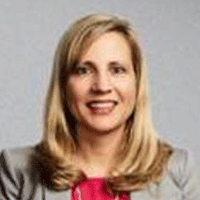
Deborah Hall

Deborah Hall

RUSH University Medical Center, Chicago
Adult Neurologist and Movement Disorder Specialist

Deborah Hall, MD, PhD, is an adult neurologist and movement disorder specialist at Rush University Medical Center in Chicago. She has training in genetics, epidemiology, and human subjects research. She conducts research primarily in two areas. Her work in Parkinson’s disease focuses on early interventions, such as neurotrophic factors and exercise, genetics and genomic causes of disease, and treatment for complications including falls. She also researches ataxia, specifically Fragile X-associated disorders, by investigating epidemiology, clinical features of movement and balance, and interventions. She has been National Institutes of Health–funded for the last 10 years as a primary investigator. She has a busy clinical practice focused on movement disorders within the Department of Neurological Sciences at Rush. She is the director of the FXTAS Clinic at Rush and the Movement Disorder DNA Repository within the Section of Movement Disorders at Rush.

Dr. Hall received her doctorate from Indiana University and her master’s from the University of Colorado, where she completed her residency and fellowship.