Plus, Their Experiences as NFXF Summer Scholars in Their Own Words
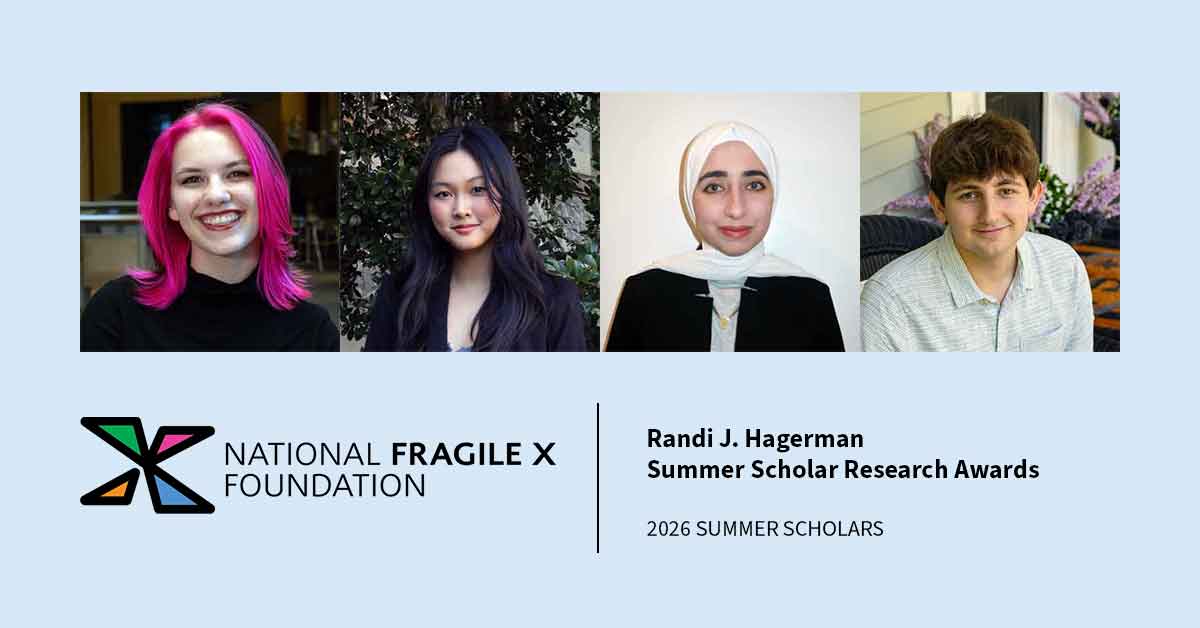
We asked this year’s Randi J. Hagerman Summer Scholars to summarize their summer research project in a 15-minute video presentation along with a short written summary about their experience. Here you can watch and learn more about each of 2026’s four NFXF Summer Scholars — Erin Burnett, Iris Chen, Tim Smith, and Nura Salem — and the research they accomplished.
What are the Randi J. Hagerman Summer Scholars Research Awards? The awards are designed to introduce undergraduate and graduate students to the field of Fragile X research. The NFXF helps to do this by funding summer research projects that contribute meaningful knowledge to the Fragile X field.
New for 2026, we are proud to announce that we increased the amount of funding available through these awards, and also expanded the number of students we support. This investment reflects the NFXF’s commitment to investing in the next generation of Fragile X researchers and creating opportunities for students to collaborate with a nonprofit organization.
To our Summer Scholars and their mentors, thank you for all your work and dedication to Fragile X research!
Meet Erin Burnett, Iris Chen, Tim Smith, and Nura Salem:
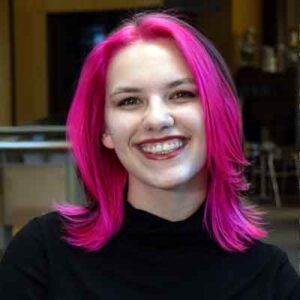
Erin Burnett, Undergraduate Senior, University of California, Davis
Research Project:
Decreased Integrity of the Blood-Brain Barrier (BBB) in Fragile-X Associated Tremor and Ataxia Syndrome (FXTAS)
Major: Neurobiology, Physiology, and Behavior
Mentor: Veroníca Martínez-Cerdeño
In their own words: I spent this summer working to understand the condition of the Blood-Brain Barrier (BBB) in Fragile-X Associated Tremor and Ataxia Syndrome (FXTAS). I visualized fibrinogen, a protein that has the potential to travel into the brain when there is weakening of the BBB. I will continue to work on this project, expanding both my sample size and the number of antibodies I use to stain.
From my initial introduction to FXTAS, to the completion of this phase of my project, my curiosity and enthusiasm have only grown. I plan to carry this passion for research into my long-term career goals of pursuing an MD-PhD program in pathology and would love to continue in the field of FXTAS.
Fragile-X Associated Tremor and Ataxia Syndrome (FXTAS) is not completely understood. For example, we know that some neurodegenerative diseases are known to have disruptions in their blood-brain barrier (BBB), but it’s unknown whether or not FXTAS is included in this. We also know that the BBB is a critical checkpoint in the brain and has components such as proteins and specific cell types that guard access from the bloodstream to the brain. Research has shown that astrocytes – the cell type that makes up the last defense of the BBB – degenerate in FXTAS, but the extent of damage done to the BBB as a whole is unknown.
My goal is to expand our current knowledge by quantifying this data in FXTAS using a technique called immunohistochemistry (IHC). I will visualize proteins that have the potential to travel into the brain when there is weakening of the BBB. This study has potential for not only improved diagnostic methods, but also better therapeutic approaches.
Watch Erin’s Presentation
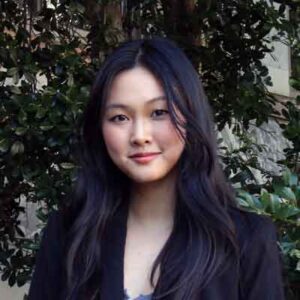
Iris Chen, Undergraduate Junior, Emory University
Research Project:
Investigating the Therapeutic Effects of GLP-1 Receptor Agonists using FXTAS Mouse Model
Major: Biology
Mentor: Peng Jin, PhD
In their own words: This past summer, I had the opportunity to continue investigating semaglutide as a potential novel therapeutic for Fragile X-associated tremor/ataxia syndrome (FXTAS) in the Peng Jin lab. This dedicated time for research allowed me to develop new skills in RNA sequencing, develop deeper understandings of disease mechanisms, and, importantly, learn to navigate unexpected setbacks throughout my project.
One of my favorite experiences was participating in the Summer Scholars networking call. Meeting the NFXF team and learning about the other students’ innovative research made me feel even more deeply connected to the Fragile X community. I am also excited to share my summer experience and research insights with patients and families affected by Fragile X-associated conditions. These opportunities resonate deeply with my future career goals in academic medicine, and I hope to continue building upon this research and advancing our collective goals of improving care for rare and understudied neurological conditions such as FXTAS.
Fragile X-associated tremor/ataxia syndrome (FXTAS) is a neurodegenerative condition that can lead to locomotor, cognitive, and metabolic deficits. There are currently no disease-altering treatments to slow or prevent disease progression. Our project investigates the potential of Semaglutide, an FDA-approved drug commonly used to treat Type 2 Diabetes, in reducing neurodegeneration and improving symptoms in FXTAS patients.
A FXTAS mouse model that mimics key features of the condition will be treated with semaglutide. Histopathology, molecular, and functional assays will be conducted to assess the efficacy of the treatment. Progress in this project could potentially lead to a promising and accessible treatment option for individuals and families affected by FXTAS.
Watch Iris’s Presentation
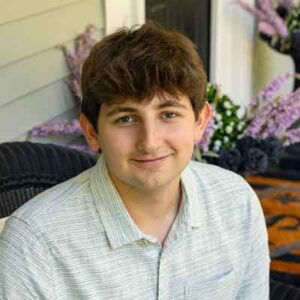
Tim Smith, Undergraduate Freshman, Brown University
Research Project:
Investigating Fragile X Syndrome-Specific and Convergent Neurodevelopmental Disease Signatures
Major: Neuroscience
Mentor: Aditi Singh, PhD, and Emily Osterweil, PhD, Boston Children’s Hospital
In their own words: This summer has been an incredibly rewarding experience, and I am very grateful to the National Fragile X Foundation and the Osterweil Lab for making it possible. As a Randi J. Hagerman Summer Scholar, I’ve had the amazing opportunity to grow as a researcher while exploring questions at the intersection of neuroscience and neurodevelopmental disease. This summer at Boston Children’s Hospital, I have investigated molecular changes associated with Fragile X syndrome using a unique human cortical tissue platform. I have especially enjoyed being able to approach research questions from several different perspectives, combining transcriptomic analysis with hands-on techniques including qPCR and immunohistochemistry. Learning how to move between computational analysis and experiments at the bench has challenged me to think more independently about how we study FXS and other complex neurological disorders.
As a student hoping to pursue a career as a physician-scientist in neurology, this experience has strengthened my desire to bridge scientific discovery with medicine and contribute to a better understanding of neurodevelopmental disorders. I am incredibly grateful to NFXF and the Osterweil Lab for giving me the opportunity to take on a project of my own, learn from such dedicated mentors, and grow more confident in my ability to contribute to neuroscience research.
Fragile X Syndrome happens when a gene called FMR1 is turned off, which changes how brain cells regulate important processes needed for communication and normal function. In this project, I will use a human brain tissue model of Fragile X Syndrome and help validate genes that change when FMR1 is reduced, using both computer-based analysis and laboratory techniques. I will also begin comparing these changes with those seen in other neurodevelopmental disorders to understand which features are specific to Fragile X syndrome and which may reflect broader shared mechanisms. This research will improve our understanding of Fragile X biology and support the development of better disease models and future treatments.
Watch Tim’s Presentation
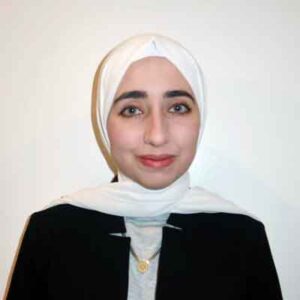
Nura Salem, Undergraduate Sophomore, University of Cincinnati
Research Project:
Including Promoter, 5′ and 3′ Untranslated Regions of the FMR1 Gene to Optimize an FXS Gene Therapy
Major: Biology
Mentor: Peng Jin, PhD
In their own words: This summer has been an incredibly meaningful experience for me, both as a researcher and as someone who has become increasingly connected to the Fragile X community. Through the Randi J. Hagerman Summer Scholars Program, I was able to spend my summer continuing my research on Fragile X syndrome and exploring ways we can better understand FMR1 and improve potential gene therapy approaches. I loved having the time to really immerse myself in my project through trying new experiments, troubleshooting when things didn’t go as planned, and slowly watching the pieces of my research come together.
One of my favorite experiences of the summer was attending the NFXF International Fragile X Conference in Louisville. I had the opportunity to present my research during the poster session, but some of the moments that stayed with me most happened outside of my own presentation. I loved listening to the different speakers and getting to meet researchers, clinicians, self-advocates, and families from all over. It was especially meaningful to hear directly from families and self-advocates about their experiences. It gave a much more personal meaning to research that can sometimes feel very technical when only interacting with it at a lab bench.
I came into this summer already knowing how much I enjoyed Fragile X research, but I am leaving it with an even greater appreciation for the community behind it. The RJH scholarship gave me the chance to grow as a scientist, but more importantly, it reminded me that every experiment ultimately connects back to real people and families. I am incredibly grateful to the National Fragile X Foundation for welcoming me into this community and giving me an experience that I know will continue to shape the kind of researcher and future physician I hope to become.
Fragile X Syndrome is caused by mutations in a gene called FMR1, which normally helps neurons communicate and develop properly. Many new treatments aim to replace or fix this gene, but current approaches might not fully copy how the gene is naturally controlled in the body. Our project looks at specific regions of the gene (untranslated regions) that help regulate when and how the gene is used in neurons. We are testing how these regions affect gene activity and neuron function, especially when cells are stimulated in different ways. By better understanding these parts of the gene, we hope to improve future gene therapies, so they work more effectively and safely for individuals with Fragile X Syndrome.
Watch Nura’s Presentation
Congratulations Erin, Iris, Nura, and Tim Smith! We can’t wait to see what your futures hold.