
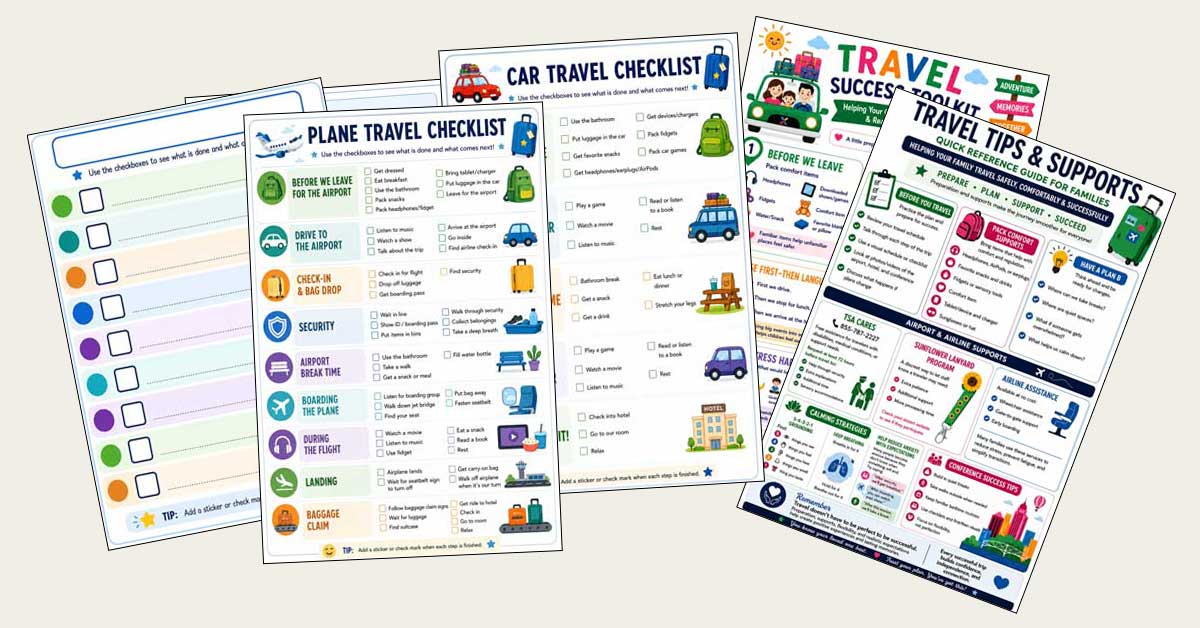

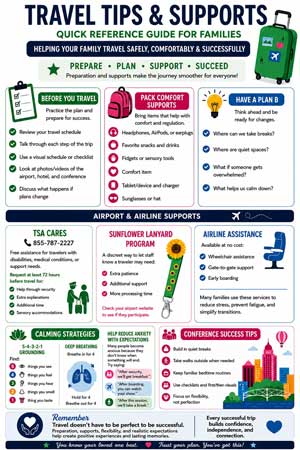
Travel can feel overwhelming — especially when routines change, environments are different, and there is a lot of unexpected input happening around you. However, travel does not have to be perfect to be meaningful and successful. Small supports, preparation, flexibility, and realistic expectations can make a huge difference.
We pulled together these resources to support travel to the NFXF International Fragile X Conference, but they can work for any travel. Every successful travel experience builds confidence, independence, and lasting memories.
We hope that using some of these tips and available supports makes the journey smoother and makes everyone feel more comfortable and safe.
Before You Travel
Checklists
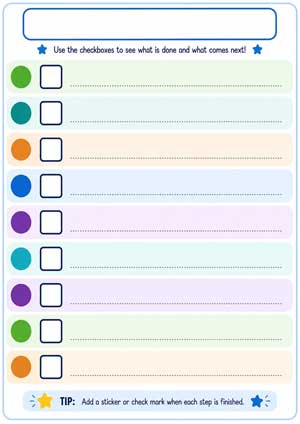
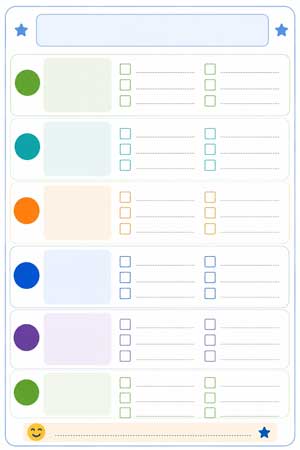
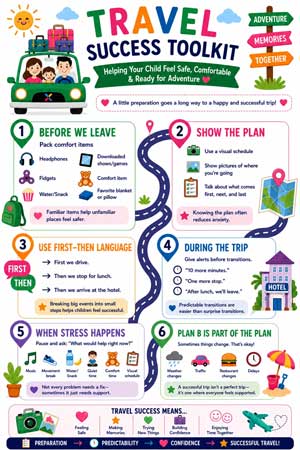
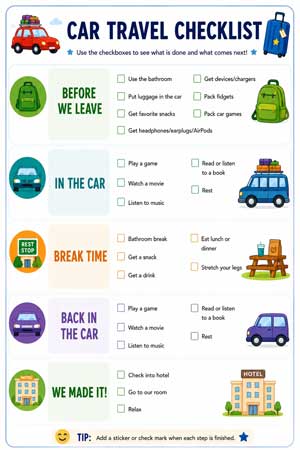
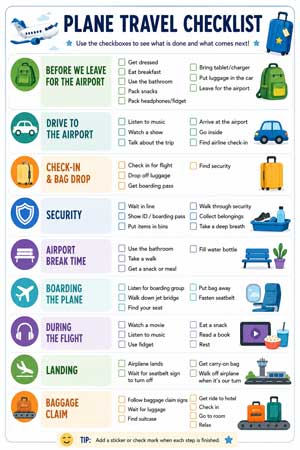
Make a checklist for the airport, plane ride, and any car rides, then review the checklists and travel schedule with everyone who will be taking the journey ahead of time. We have blank checklists you can download to create your own checklists, or use one of our pre-made checklists:
Packing List
Use our blank checklist to create a packing list, and be sure to include:
- Tickets/boarding pass
- ID/passports
- Medications
- Devices and chargers
- Favorite snacks
- Empty water bottle to refill after security (Tip: You can’t bring water through security, but you can take ice)
- Change of clothes, including layers like a jacket, sweater, or sweatshirt (in your carry-on)
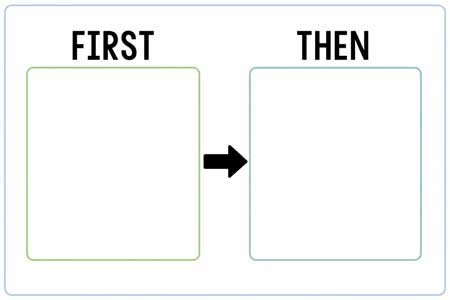
- Visual schedules, checklists, First-Then Chart
- Hotel confirmation
- Transportation plan and reservations
Comfort and regulation items:
- Noise-canceling headphones, AirPods, or earplugs
- Sunglasses
- Weighted lap pad
- Blanket and pillow
- Compression hoodie or jacket
- Favorite fidgets
- Chewelry
- Wobble cushions
- Travel games
- Coloring, activity, or sticker books
Planning
Look at videos and websites of the airport, hotel, and any activities you might be doing at your destination, such as museums or restaurants.
Discuss what happens if something unexpected happens, such as delays, traffic, or a hotel fire alarm. What will you do? Practice calming or recentering exercises, such as those in our Calming Strategies list.
Where can we take breaks?
- Plan out break options at the airport, between airports, and at the hotel and conference center.
- Practice calming or recentering exercises
Download your airport app and check the airport website for airport information.
- Find apps at the airline’s website or visit Google Play or App Store
Does the airport have a sensory room or quiet space in my terminal if needed?
- Check your airline’s website or app.
- Request support through your airline during booking by phone or the airline app. Also, see Airports & Airline Support.
Calming Strategies
Use calming exercises:
- Deep Breathing: Inhale deeply for a count of 4, hold for 4, and exhale slowly for 4.
- The 5-4-3-2-1 Technique: Identify 5 things you can see, 4 you can physically feel, 3 you can hear, 2 you can smell, and 1 you can taste.
- Progressive Muscle Relaxation: While seated or lying down, tense and then release each muscle group one by one, starting from your toes and working up to your head.
- Sensory Deflection: Use noise-canceling headphones or sunglasses to reduce external stimuli, and focus purely on the sensation of something you have with you, such as a comforting toy or object, a device, or a snack.
Sticking to familiar bedtime and meal routines when traveling can feel safe and can be a reset when stressed.
Take walks outside when needed.
Many people become anxious because they don’t know when something will end. Try saying:
- After security, we’ll get breakfast
- After boarding, you can watch your show
- After the session, we’ll take a break
Use checklists and first/then visuals:
Airports & Airline Support
Download your airport app and check the airport website for airport information.
- Find apps at your airline’s website or visit Google Play or App Store
Sign up for TSA Cares, a free program that helps travelers with disabilities, medical conditions, or additional support needs. TSA Cares provides assistance through security, explains the screening process, offers support for sensory or communication needs, provides extra time at checkpoints, and offers guidance when traveling with a medical or comfort item.
- Visit the TSA Cares website
- Sign up at least 72 hours before travel
Request support through your airline. If needed, they can provide wheelchair assistance (you do NOT need to use a wheelchair full-time to request one), gate-to-gate assistance, and early boarding. Some airports even have priority lines for people with disabilities, but you need to check with your airline at the airport and confirm you need them before heading to those lines.
- Request during booking by phone or using the airline app.
- Many families use this assistance to reduce stress, simplify navigation, prevent wandering, avoid fatigue, and help with transitions.
Use the Sunflower Lanyard Program. Many airports recognize the Hidden Disabilities Sunflower program. Wearing a sunflower lanyard discreetly signals that a traveler may need extra patience, additional explanations, more processing time, and assistance navigating busy environments.
- Check the list of participating airports.
- Many airports allow you to apply for and receive your lanyard through their websites or apps. Be sure to check at least 2 weeks before your flight.
And remember: You know your loved one best — planning is one of the greatest travel tools you can bring.