A holiday season or an extended break can bring changes in routine, travel, and excitement, which can be especially challenging for individuals living with Fragile X syndrome (FXS). The disruption of familiar routines during the break, combined with the anticipation of returning to a more structured environment like school, day programs, work, or other activities, can heighten anxiety. This can lead to emotional ups and downs, making it harder for individuals to relax and adjust to returning to their routine, even if they are looking forward to returning.

Many of the strategies you might use to manage changes in routine from the holidays will likely be helpful to get everyone back to a typical day-to-day routine. Strategies such as frequent breaks and visual supports — which may not have been needed before the break — become key to easing back into typical routines. Everyone involved has a role to play in supporting the individual, helping to make the return to routine as smooth and stress-free as possible.

Strategies for Success for Educators, Employers, and Support Staff

Whether in a classroom, workplace, or community setting, it’s important to approach the return with patience, flexibility, and understanding. The following tips offer practical approaches for educators, employers, and support staff to foster a supportive and structured environment during this transition.

1. Review Expectations

Workplace, activity, or classroom expectations may need to be revisited after time off. Reinforce expected behaviors using simple, visual cues to help re-adjust to the demands of the routine.

2. Offer Extra Guidance and Visual Support

Cognitive flexibility may be impacted after a break, so be prepared to provide additional guidance and support. Visual schedules and resources can provide structure and reduce anxiety by providing clear expectations of the day’s events.

3.  Start with Familiar Activities

Begin with activities that individuals enjoy and feel confident in. Offering choices of 2-3 activities can help provide a sense of control and comfort, whether in the classroom, day program, or work environment.

4. Avoid Complex Tasks

Avoid assigning long or overly challenging tasks right away. Plan shorter, engaging activities to ease individuals back into their routines without overwhelming them.

5. Provide Frequent Breaks

Recognize that individuals may have adjusted to less structured days or later bedtimes. Incorporating regular, short breaks can help them manage their energy and avoid frustration.

6. Incorporate Movement Activities

Movement-based activities, known as gross motor activities, can help individuals self-regulate or reduce anxiety and hyperarousal. Start the day with calming movements and include regular movement breaks throughout the day.

7. Allow Extra Time for Transitions

Returning to structured activities can be challenging, even when the next activity is something they enjoy. Including extra time to transition from one task or space to another and let them set their own pace

8. Observe Non-Verbal Signs

Individuals with FXS may have difficulty expressing their feelings with words. Watch for non-verbal signs of anxiety or hyperarousal, such as body language, facial expressions, or fidgeting to understand their emotional state. Avoid asking direct questions and consider utilizing side dialogues to communicate indirectly.

9. Provide a Quiet Space

If an individual requests a break or shows non-verbal signs of needing one, offer a quiet space to help them regroup and calm down if they become overwhelmed.

Strategies for Parents and Caregivers

As parents or caregivers of an individual living with FXS, preparing for the return to routine after a long break can feel like an extraordinary task. We recognize that so much thought and planning may be needed to return to a familiar routine or place, which can feel frustrating and overwhelming. Here are some strategies to help ease the transition back to routine.

1. Plan Ahead

Connect with your loved one’s support team before the break or the return to the routine to proactively discuss strategies like visual supports, physical prompts, and frequent breaks. This ensures everyone is on the same page and ready to reintroduce helpful strategies if needed.

2. Be Aware of Your Own Emotions

It’s natural to feel anxious or worried during transitions but remember that your loved one is highly sensitive to the emotions of those around them. When you remain calm and confident, it can help them feel more secure and reassured. Be kind to yourself—it’s okay to have these feelings, and managing them can create a calmer environment for both of you.

3. Re-establish a Consistent Sleep Routine

If your typical sleep routine fell by the wayside during the break, a few days before the return to routine activities, gradually get back to the regular sleep schedule.

4. Communicate with Clarity and Simplicity

Model the behavior you want to see by using visual or physical prompts, staying calm, and slowing down your speech. Lower your voice and simplify your words to help create a calming environment. This approach reduces anxiety and makes it easier for your loved one to understand what’s happening next, helping them feel more in control.

5. Avoid Adding New Activities or Demands

Avoid introducing new activities or additional demands until your loved one has fully adjusted to the routine. Trying to take on too much too soon can be overwhelming.

6. Allow Time for Adjustment

Understand that re-establishing a routine may take time. Your loved one may need extra support and rest to adjust, and it’s okay if they need a few days to ease back into school, work, day programs, or activities. Be patient and reassure them that it’s normal to take time to get back to the routine.

7. Celebrate the Wins

Acknowledge and celebrate every success, whether big or small. Positive reinforcement can help build confidence and create a sense of accomplishment.

You Are Not Alone

Returning after a long break can be tough, especially for someone with FXS. With a bit of planning and compassion, you and the entire support team can help make the transition smoother. Some days will be easier than others, and it’s okay to adjust as needed. Patience, flexibility, and understanding are key — don’t hesitate to revisit strategies that have worked before.  

The National Fragile X Foundation (NFXF) does not provide medical or legal advice or services. Rather, the NFXF provides general information about Fragile X as a service to the community. The information provided in this summary is not a recommendation, referral or endorsement of any resource, therapeutic method, or service provider and does not replace the advice of medical, legal or educational professionals. The NFXF has not validated and is not responsible for any information or services provided by third parties. You are urged to use independent judgment and request references when considering any resource associated with the provision of services related to Fragile X.

Summarized by Madison Maertens

Summary

Cannabidiol (CBD) is a non-intoxicating substance that is found in cannabis (also known as marijuana) plants. “Non-intoxicating” means that CBD does not cause a “high” feeling when someone uses it by itself. CBD is being investigated as a possible treatment option or supplement for individuals who have Fragile X Syndrome (FXS). So far, there have been studies showing that CBD use may be able to help reduce certain symptoms such as anxiety, sleep problems, and behavioral differences such as hyperactivity, avoiding social situations, and/or aggression.

The goal of this study was to learn about the experiences and opinions of those who care for individuals with FXS that have used CBD supplements. We did so by sending an electronic survey to parents and caregivers that was voluntary and anonymous. The survey included questions about the helpful and harmful effects of CBD supplements that they had observed. The survey also included questions about the type, brand, and dose of the CBD they used, the cost of the CBD, how often the CBD was given, why they had decided to begin giving the CBD, and any side effects they had seen. The survey was mostly made of multiple-choice questions, and there were some free-response questions as well.

The 15 parents and caregivers who completed the survey and were currently giving CBD reported that they used a wide range of types, brands, and doses of CBD when giving the supplements to the individuals with FXS. There were many reasons why they had chosen to begin giving CBD supplements; the most common reasons included that they had heard good things about CBD from members of the community, they felt that CBD had fewer side effects than other medications, and they felt that CBD was a more natural option. Most agreed that CBD helped improved some of the symptoms, including but not limited to anxiety, irritability, and hypersensitivity, and also reported that CBD made a positive difference overall for the individuals with FXS. Caregivers mainly reported that side effects were not experienced, and any that were reported were generally mild or very mild. Lastly, the cost of over the counter (OTC) CBD can be challenging or expensive for some, and a few parents reported that the cost was unreasonable.

Why This Matters

Some caregivers and parents of individuals with FXS have given CBD supplements to the individuals they care for and learning about their insights and experiences is important. This was the first study to learn more about their observations and opinions regarding CBD to treat FXS. Individuals with FXS can have a range of challenges such as anxiety, sleep problems, avoidance of social situations, hyperactivity, and/or aggression. These survey responses provided additional support for CBD having the potential to help improve or relieve some FXS symptoms. Therefore, it is important to improve our knowledge of this topic to promote safe, equitable access. Doctors should always be consulted before changing treatment plans.

Next Steps

Our study found that there is a wide range of different types, brands, and doses of CBD being given to individuals with FXS. The lack of consistency highlights the need for more unified information and guidance on how to safely and effectively provide CBD supplements. One main limitation of the study was the small sample size, so future studies with more participants would be beneficial. Incorporating caregiver surveys during CBD clinical trials may also provide additional valuable insights.

Acknowledgements

The authors wish to thank all the families who participated in the survey for sharing their experiences and insight. The authors would also like to thank the National Fragile X Foundation and their Research Readiness Program advisors for their feedback, collaboration, and overall support of this project.

Summarized by Kaylynn Shuleski

Summary

Given limited data regarding future planning specific to individuals with Fragile X Syndrome (FXS) and the growing population of this community, this study sought to explore the concerns and challenges caregivers of individuals affected by FXS encounter when considering long-term support plans. This involved identifying the reasons individuals with FXS continue to reside with family and the reservations caregivers have regarding future supports and living arrangements. We administered an anonymous online survey consisting of 34 questions assessing eligibility, living arrangements/supports, and future concerns. There was a total of 63 completed surveys that were eligible for analysis

Of the study population, we found that most individuals with FXS were affected with moderate intellectual and developmental disability (IDD) and multiple co-occurring behavioral conditions, but their health was generally good or excellent. Many of the individuals resided at home with family members due to a combination of parental and individual desire, as well as the inability to live independently. Our study found that most caregivers of individuals with FXS are generally concerned about multiple aspects of the individual’s future. Caregivers of younger individuals are the most concerned regarding the individual’s future, but also believe they have time before they need to plan or are unable to currently assess the support the individual will need in the future. Caregiver concern does seem to decrease as the individual with FXS ages, which may be due to a better understanding of the diagnosis or the increased functional skills and independence level of older individuals.

We found that caregivers are generally concerned about multiple aspects of the individual affected by FXS’s future. Factors such as the severity of IDD and the number of co-occurring behavioral conditions did not have an impact on the overall level of concern experienced by caregivers. However, when we explored individual concern aspects and compared them to age groups, we saw the level of caregiver concern for five out of six factors decreased as the age group of the individual affected by FXS increased. The only factor where the level of concern did not decrease was regarding the individual with FXS’ transition to different supports and living arrangements. This result stresses the sentiment held by caregivers, that regardless of the amount of planning they do or the number of supports in place, they are unable to predict how the FXS individual will adjust to these transitions.

There was also an observed decrease in the caregiver’s concern regarding the future as the individual with FXS’ overall dependence decreased. This shows that caregivers of more independent individuals, or those who have achieved set functional skills, are less likely to be concerned about the future. Another interesting result was that the level of concern regarding future financial support did not differ based on the amount of annual household income or the number of financial resources put in place. This finding is well represented by the free response quote, “Never enough money to feel comfortable”, showing that no amount of financial support can fully eliminate a caregiver’s concern. This may represent the idea that it is not a question about the cost of currently available resources, but rather the quality, quantity, and availability that needs to be addressed.

Why This Matters

The results of this study suggest that better understanding of an individual’s FXS diagnosis and greater achieved independence by the individual can relieve some of the concern experienced by caregivers. While caregivers remain concerned about multiple aspects of the future, the study highlights the importance of establishing resources early in the individual’s life as it provides time for both the individual with FXS to adjust as well as the caregiver to make any necessary adjustments. Ultimately, early intervention and establishment of support for individuals affected by FXS can play a large role in alleviating some caregivers’ concerns for the future as well as assist in the transition for individuals with FXS.

Next Steps

One future direction for the study could be to explore the community of individuals currently residing in out-of-home living arrangements. It would be helpful to explore the factors considered and the challenges faced by these caregivers when they were searching. It would also be interesting to assess these caregivers’ concerns given that the individual is in an established residential setting. Future studies could also distribute the survey to both caregivers of non-FXS related individuals with IDD and individuals affected by FXS. This could identify specific differences between these two populations, as they are often equated in research without the consideration of common FXS-related comorbidities.

Acknowledgements

The authors would like to thank all the participants in our study as well as the National Fragile X Foundation.

Authors: Reymundo Lozano, Talia Thompson, Jayne Dixon-Weber, Craig A. Erickson, Elizabeth Berry-Kravis, Sara Williams, Elizabeth Smith, Jean A. Frazier, Hilary Rosselot, Cristan Farmer, and David Hessl
Read the open access article Observable Symptoms of Anxiety in Individuals with Fragile X Syndrome: Parent and Caregiver Perspectives on our website.

Summarized by Jayne Dixon-Weber

Summary

Most caregivers report that individuals with fragile X syndrome (FXS) have high levels of anxiety. However, anxiety is challenging to measure because most individuals with FXS cannot state themselves that they are anxious or have anxiety. The NFXF conducted a comprehensive survey of the presence, frequency, and duration of what caregivers observed when they said the individual was anxious; the survey was completed by caregivers of 456 individuals with FXS, ages 2–81 years, and 24 female and 2 male FXS self-advocates, ages 15–66 years. Caregivers reported classic observable indicators of anxiety, such as avoidance, irritability, agitation, repetitive behavior, aggression, and self-injury. Self-advocate accounts largely paralleled caregiver data.

The results determined that caregivers are capable of observing and reporting behaviors that are valid indicators of anxiety that are usually reported in self-report standardized assessments. This was an important first step in addressing parents’ report that anxiety is one of the primary areas of concern in the individual with FXS. The next step is to develop an anxiety measure for FXS that can be used in future studies.

Why This Matters

Most individuals with FXS cannot state themselves that they are anxious and self-report is needed in current standardized assessments. The information analyzed in this study will result in the development of a measure where observable and quantifiable data on anxiety in those with FXS can become an outcome measure to be used in future research/trials.

Next Steps

Based on the results of this survey, members of the steering committee of the CDC-funded FORWARD-MARCH project will develop an anxiety questionnaire that will be administered as part of the study protocol.

FORWARD-MARCH is the next phase of FORWARD, a natural history study that allows specialty clinics across the U.S. to work together and gather important information about people of all ages with FXS.

Acknowledgements

We thank all the families and self-advocates who participated in this study, and the National Fragile X Foundation.

Are you wondering when and how to talk to your daughter about her Fragile X syndrome diagnosis? If so, you’re not alone. Many families struggle with deciding when the “right” time is and what to say. Here are some strategies to help in having a conversation with your daughter about her Fragile X syndrome diagnosis.

What Does it Mean to Have Fragile X?

Every family has something that makes them unique. In your family, that’s having a daughter (and maybe other family members) with Fragile X syndrome. Fragile X is something people are born with, and there’s nothing they or their family did to cause it.

Having Fragile X syndrome means that your daughter may face additional challenges during school in areas such as reading and math, and may feel uncomfortable in social settings. But this doesn’t mean she can’t achieve what she sets her mind to: she just may need extra help and support.

Fragile X syndrome is not something she’ll “grow out of” but it does make up a part of who she is. Kids with Fragile X are still kids. They like to run around, play, and laugh. Having Fragile X does not affect their ability to have a long, happy, and healthy life full of possibilities.

Everyone faces different challenges in their lives. While Fragile X may make life a little more challenging, it also makes life much more special.

When is the Right Time?

There is no right or wrong time to talk with your daughter about her diagnosis. Consider starting the conversation earlier rather than later so she may continually learn more about Fragile X as she gets older, rather than try to absorb a lot of new information all at once.

As a parent, you may feel an instinct to protect your child from harm, stigma, and stress by delaying talking about her diagnosis. However, research shows that children wish to discuss this information as soon as possible. This reduces anxiety and increases trust in their caregivers. Children would also rather hear this information from someone they know and trust.

Children are more observant than you think. Often, as children get older they begin to compare themselves to their peers. The time may be right when your daughter starts to question why it takes her longer to learn topics in school compared to her classmates, or why she sees the doctor so often. She may bring up the conversation before you are ready or had time to fully prepare.

Consider thinking about this conversation before you even plan to open the dialogue, just in case. It’s okay to be nervous about how your daughter will react. Learning about her diagnosis may allow her to understand why she struggles with certain things and why she may need extra help and support in school.

This is an Ongoing Conversation

Knowing exactly what to say is difficult, so ask yourself: what does my child need to know now and how much can my child handle? Consider starting a natural conversation in a relaxed, open, and familiar environment such as the dinner table or on a walk. Scheduling a specific time or event with your child to talk to them could increase their anxiety. Allow your child to direct you in how much information they wish to know. This is not a one-sided lecture, encourage them to ask questions and allow ample time for discussion.

This is not a discussion that should happen in a single sitting. Over time, peel back the layers of FXS by incorporating bits and pieces of information into everyday discussions. A young child can’t understand all of the information about their diagnosis at once, so deciding what they need to know at each stage of their life is crucial.

The initial conversation should focus on what Fragile X is and how Fragile X syndrome may impact her life. Keep your conversation simple and matter of fact.

Children are curious and your daughter will ask you if she wants to know more. Try not to focus on the “negatives” of Fragile X. It’s important for your daughter to know why she may struggle with reading, math, or when talking to strangers, but let her know that her family, teachers, and doctors are there to support her in succeeding and reaching her goals. It’s also important to emphasize that everyone has strengths and weaknesses regardless of Fragile X syndrome. While certain aspects of school may be challenging, make a point to emphasize what she excels at.

Over time and at the appropriate developmental or life stages, gradually add more to the conversation and let her know what her life may look like going forward. Let her know that she is supported, and that you will work hard with your daughter so that she can gain the skills she’ll need throughout her life. It’s important to be open and honest. Also, allow for open conversations and invite her to ask questions. If you’re not sure of the answer, take the time to sit down together to learn the answer together. This can be a great bonding experience and demonstrates that you’re willing to learn alongside her.

Your daughter is not alone. There are other girls out there with Fragile X syndrome. Consider going to a conference or other event so your daughter can meet other girls with Fragile X syndrome.

Remember, you’re not alone either. Other families have been in the same position as you. Seek out advice from parent and family support groups or forums to gain perspectives on how this conversation went with their own daughters. Ask for suggestions and explore what challenges they faced.

Key Takeaways

  • This conversation does not have to be one-time; it’s an ongoing discussion targeted toward the appropriate developmental stage of your daughter. Studies have shown that children prefer to learn about their condition gradually throughout childhood and adolescence.
  • Allow for open and honest communication and encourage questions.
  • Remind your daughter that she is unique, supported, and loved.
  • The way that each girl experiences Fragile X is different. Ultimately, you are the expert on your daughter and know the right amount of information to provide at a given time.

Additional Resources

Explaining Learning Disabilities to Your Child
It’s important to take this opportunity to create an open and honest dialogue. While every student is different, there are steps you can take to make this conversation more comfortable and helpful. (Source: Churchill Center & School)

How to Help Kids Talk About Learning Disabilities
If your child has a learning disability, getting them help is the first thing on your mind. Helping them get comfortable talking about it is also important, but for a lot of kids, opening up isn’t as easy as it sounds. (Source: Child Mind Institute)

Moms: How to Talk to Your Child About Their Disability
While it may be seen as an intimidating conversation, it can be very helpful for the child, and it will make them understand their world a little bit more. (Source: Smart Kids with Learning Disabilities)

Smart Kids with Learning Disabilities: Educating Your Child About LD
How and when to tell your child about her learning disabilities depends on your readiness as well as theirs and the “right time” is sooner rather than later. (Source: Smart Kids with Learning Disabilities)

Individuals with Fragile X syndrome often have difficulty establishing meaningful friendships. Limited social skills, social anxiety, and an often narrow range of interests contribute to these difficulties. Here, we discuss various interventions that can increase their social network.

Building Early Social Skills for Making Friends

Parents are in a unique position to assess their child’s social strengths, weaknesses, and interests and to provide “real life” intervention across childhood.

If there is a second child in the home, they may serve as a play partner who can help them rehearse social skills. Basic social skills such as greetings, taking turns, making requests, and simple negotiation can be rehearsed at home, thereby increasing the opportunities to use those skills with peers outside the home.

Parents may need a systematic approach to foster friendships for their children, but the earlier social connections are made a priority, the more success a child can have. Parents may also want to make an extra effort and reach out to other parents in the neighborhood or at school.

Parents may need to advocate for their child by explaining Fragile X syndrome and its core symptoms to other parents. By fostering these relationships, it may be easier and more comfortable for the children to get together as peers are more accepting of special needs during the younger years. When relationships are established early, they can pave the way for social support in the future.

It is important to keep in mind that concerning friendships, quality is more important than quantity. Like other children, those with Fragile X syndrome benefit from a range of friendships, from acquaintances to best buddies. In addition, when choosing supportive interventions, parents need to consider individual factors such as the degree of social anxiety, social interest, behavioral perseveration, and frequency of outburst behavior. It is best to schedule only one friend over at a time, to keep the sensory stimulation and social demands at a tolerable level.

Most of the adults with Fragile X syndrome whom I work with have limited sources for developing lasting friendships. This is true for both genders. For most people, friendships are the outcome of mutual interests, proximity, shared experiences, and similar values or perspectives. This is no different for someone with a developmental disability, but often it seems that existing friendships are based more on proximity than on shared interests. Children often develop friendships based on familiarity, due to mutual placement in special education or inclusion programs.

Individual Psychotherapy or Behavioral Therapy

While the term “psychotherapy” is often reserved for insight-oriented mental health support and interpersonal change, the act of meeting with a mental health therapist for support can be helpful for those with Fragile X syndrome. It can be a vehicle for reviewing social situations, making a plan, and then implementing new social skills. Once skills are learned in a one-to-one setting, they can be applied elsewhere.

Experience with Fragile X syndrome is not a prerequisite for the therapist, but they would benefit from learning more about it. People with Fragile X syndrome have a variety of mood, attention, impulse control, anxiety, and regulatory deficits that can lead to behavior problems and interfere with social adjustment. Often these individuals need an ally to translate their underlying symptoms and help explain the triggers of behavioral and social difficulties. Involvement with a therapist can reduce anxiety because the individual feels more supported.

Visual Supports

Visual cues and strategies can help make therapy more concrete and are very important in reducing the load placed on working memory. It is difficult for people with Fragile X syndrome to follow a complex conversation and track verbal information, which many traditional therapies emphasize. Drawing or diagramming a topic as it is discussed can be very helpful. Not only does it help focus visual attention, but it also provides a format for reviewing previous discussions. The therapist does not need to be an artist. Simple stick figures can go far in representing a verbal idea visually and making the conversation more concrete.

Writing out simple words to go along with key ideas serves to organize memory about the conversation. This technique is equally effective when parents use it to facilitate discussions with their children or when teachers use it to highlight an idea with students. It can be very helpful in diagramming a social situation or rehearsing appropriate ways to respond socially. Paper can be kept in a file for a review of previous sessions or ideas. A dry-erase board is nice because it is more fluid. If a mistake is made (clients often correct drawings), a dry-erase board can be edited more easily.

Social Scripting

The social anxiety that most individuals with Fragile X syndrome face interferes with their ability to engage in relationship-building activities. Despite the developmental gains made as people grow older, those with Fragile X syndrome often continue to feel overwhelmed by social interactions. They may have difficulty starting conversations, responding to direct questions, or handling common social situations. On the plus side, they often respond well to social scripting, in which an adult, such as a parent, teacher, or therapist, scripts and then rehearses certain interactions. This allows the person with Fragile X syndrome to memorize the desired social response, decreasing the likelihood of some other less desirable response.

For example, Frank may tell his parents he would like to invite Steve, a peer from school, to go bowling. Despite truly wanting this, Frank may feel too anxious to ask Steve. A social script can teach him exactly how to approach Steve. It may highlight “when” and “how” so that Frank is more prepared for the encounter. His script may even be written or drawn onto a file card so that Frank can review it before the interaction. He can carry it in a pocket to decrease his relative stress, though even this may not be enough to allow Frank to make the request.

Since no two people are alike, intervention strategies should be tried and then refined as needed. If Frank is ultimately not able to approach Steve, it should not be considered a failure of the intervention. Rather, it is a success because it has provided the information that the level of support was not high enough.

Subsequent strategies might include a familiar adult approaching Steve with Frank, and providing proximal support. It may be that the adult needs to initiate the interaction and make the initial request, with Frank providing additional details as he feels comfortable. Frank might prefer to hand Steve a written invitation or, with help, send an email. All of these options allow Frank to enhance his social skills, and with success, to decrease his social anxiety.

Facilitated Social Interactions

Some individuals with Fragile X syndrome need their interactions with peers to be directly facilitated. This may be particularly true for younger children if they are just starting to have play dates. It may also be true for older children or adults who have had limited social success or who have a history of aggressive behavior patterns. These individuals require supportive scaffolding.

For a play date, it is important to pay attention to structure, organization, and supervision. Structure refers to the specifics of the situation (when, where, what) in concrete terms so that the child knows what to expect. Rather than letting the play unfold, it may be more successful to specify what the children will do. If 6-year-old Joey is having a friend over, what three activities would he like to do? These can be represented using pictures (such as a picture schedule using line drawings or photographs) so that Joey and his friend have a reference point as they progress.

A snack time may be helpful since snacks are almost always popular with children. Finally, there should be a scheduled timeframe. It is much better to keep the first few playdates too short, with the children wishing for more, rather than to have them too long, with the children pushed beyond their sensory and regulatory capabilities.

There should also be adequate supervision and an active adult in the room who can guide the process successfully along. It might mean simply sitting on the sidelines, but it could expand to facilitating turn-taking, sharing, or negotiating. For an adult with FXS, a facilitated social interaction might include a structured social event (baseball game, bowling) where a very similar structure is utilized.

A visual schedule may be helpful. It will be useful to review and predict ahead of time what types of behaviors will be expected and what type of events will occur. This may include expectations regarding snacks, restroom locations, desired social behavior, and whether a souvenir will be purchased. By keeping an eye on structure, facilitators can increase the likelihood of success and help build ongoing social support for the future.

Limited social skills, social anxiety, and a diminished range of interests often interfere with social adjustment despite a person’s desire for social connection. Individuals with Fragile X syndrome often need additional support to create and sustain social relationships within their peer group.

Like many of you, I will always remember the day and time when I received the diagnosis of our son, Ian: Fragile X syndrome — never heard of it.

We had the good fortune of being able to meet with Dr. Randi Hagerman and Amy Cronister, a genetic counselor, the week after we received our diagnosis. I also remember meeting “Mouse and Tracy.” They were all working in Denver at the time.


“Mouse and Tracy,” aka Sarah K. Scharfenaker and Tracy Murnan Stackhouse, are co-founders of DevelopmentalFX, a Denver based nonprofit that works with children that have a range of learning and developmental disabilities. Sarah has since retired.


My takeaway from that initial appointment was I realized this was a big deal, and it was not going to go away. In hindsight, I had no idea about the magnitude of the people I was meeting. My head was spinning.

But this is not where I started.

How Will I Do This?

A few weeks later, my husband, Larry, and I went for a road trip through Colorado. Ian was not quite 2 years old so we stopped frequently, usually at parks and school playgrounds, to get out and move around. We were on our way home, and we stopped at a school playground to take one more break before we headed home.

Ian and I were playing on a jungle gym when a little girl joined us. I would have guessed her age to have been around 5 years old, and she seemed really nice. After we had played for a few minutes, she asked, “Does your son have a disability?” Pretty quickly I said, “No, why do you ask?” She replied, “I don’t know. I just thought that.”

We played for another ten minutes or so and then I said it was time to go. Larry had stayed at the car. When I walked up to him I said, “I can’t do this.”

Larry asked, “Did that little girl say something to you?”

“Yeah, she did,” I answered. “She asked me if Ian had a disability, and I told her no. If I am going to lie to a 5-year-old girl — someone I will never see again, someone who seemed really nice — how will I ever do this?”

That is where I started.

I started thinking about why I lied to that little girl. Obviously, I had not accepted the diagnosis, and I know part of that was because I didn’t know what it meant or what it was going to mean. Was I afraid of how that little girl was going to respond? Was she going to get a look of horror on her face, or would she have been sympathetic? I didn’t know. I realized I was afraid of how people would respond to Ian.

I finally told my neighbor, “Ian has Fragile X syndrome.” She didn’t do the “Oh no!” or “I am so sorry!” She was very calm, like it was not that big of a deal, and proceeded to tell me about an inclusive preschool at the University of Colorado. It was not far from where we lived.

I walked away with two things:

  • I didn’t know what “inclusive” meant.
  • Maybe telling others wasn’t going to be awful.

I have this snapshot in my head of Ian’s first IEP meeting, sitting at a table with all these people around it. They were talking about Ian when someone asked me, “What do you think?”


IEP: An IEP, or individualized education program, is for students who need extra support and are eligible for special education services. It outlines the goals and support services necessary for the child to succeed. It is free of charge for families with children in public school.

Preparing for Your Child’s Individualized Education Program (IEP)


“Whatever you guys think is fine,” I replied. “You are the professionals.”

“No” one of them said, “You are the mom, you know him better than anyone else. What do you think?” They really wanted to know what I thought. Looking back, it was a major turning point in my life.

I realized that I needed to know the answer to that question, and the only way to do it was by truly getting to know my son. Since I had just had another baby, I realized it is what you do for your children. You get to know them.

These are some of the lessons I learned and some of the things I learned about myself.

Lesson #1: “The Mosey” is Going to be a Part of Your Life

mo·sey | ˈmōzē
verb
Walk or move in a leisurely manner.

Ian moves at his own speed. He is rarely in a hurry, even at 25 years of age, unless it is something he really wants to do, but that is more the exception. I allow a half hour each morning for Ian to get dressed; that is how long it can take.

We go to the grocery store to get milk (four minutes away), and it might take 40 minutes because a fire truck is there and we always have to spend time looking at a fire truck.

Transitions

You really see “the mosey” when it comes to transitions. I thought transitions were something you just did. When it’s time to go to school, you go to school — no dawdling. When I saw that Ian had difficulty with transitions, I researched them.

There was a book about life transitions, including moving to a new house or city, starting a new job, and graduating from high school or college. In this book, it described three phases to a transition:

  1. Saying goodbye.
  2. The neutral zone.
  3. Making a new beginning.

What I realized was that these three phases applied to all transitions, and everything was a transition to Ian. His day was a series of transitions.

Since Ian moves at his own speed, the more the transitions, the longer everything takes. Even when you do all the right things like having a routine, knowing what to expect, using a visual schedule, Ian just needs time. When Ian can use the mosey throughout the day, his day is pretty successful. We can tell he uses the mosey to self regulate.

One day, Ian was getting ready to go to work and I said, “We have to hurry.”

He looked at me and asked, “Why?”

I thought to myself: Because there is this thing called time and being late and schedules and keeping your job.

It made me think of how often I say, “Come on, let’s go. Come on, let’s go.” Sometimes I even hear, “I know, Mom.” I get annoyed with saying it, and I’m sure that Ian must find it really annoying.

I know you have to find a balance because our world cannot always move at the mosey pace, but the next time you find yourself repeating, “Come on, let’s go. Come on, let’s go,” ask yourself: Why?

Lesson #2: Follow Your Child’s Interests

I think many of us look to see what our children are interested in, and it was interesting to see the difference in my own children.

My daughter was interested in sports and music. Ian was — and still is — interested in fire stations. “Fascinated” might be a better word. This is what we have learned about fire stations.

  • There are seven stations in Boulder, relatively evenly spaced geographically throughout the community.
  • They are the first responders in most communities, which means when someone calls 911, a fire truck/fighter is the first to respond.
  • If you see only one truck go on a call, it’s a medical emergency.
  • If you see two trucks, it’s a fire.
  • In our city, they work 48-hour shifts.
  • The response time to our house is roughly 90 seconds (and I think that is just a good thing to know).

We have visited all of the stations in Boulder and taken pictures of them. We have met many of the firefighters. Most importantly, we know they like treats during the holidays and have become quite fond of BBQ sauce from Kansas City, which is where I grew up.

One year for Ian’s birthday, I stopped by the fire station nearest our house and told them that what my son wanted for his birthday was to help them, the firefighters, wash their truck. They thought it was a great idea and loved having Ian help them!

2 men washing a fire truck with long brushes and soap and water
Ian helping local firefighters wash their fire trucks.

Another year we asked if we could bring pizza and a birthday cake to have dinner with the firefighters. They even accommodated that!

It is pretty fun to think that in a town our size (100,000 people), a fire truck will pull up next to our car, and the guy driving the truck will call out, “Hey Ian, how’s it going?”

The interesting thing is that because Ian knows the locations of the fire stations in our city, we use them as a basis of where other businesses are located. Our favorite bagel shop is by Station No 1. Our favorite taco place is by Station No 2. We recently went to a wedding at a church none of us had been to before. We looked it up on the computer and found it was right by Station No 6. Ian loved that.

Follow your child’s interests and just know there will most likely be a unique twist to it. You will learn about things you would have never learned about otherwise. If your child’s interest happens to be fire stations, let me know when you meet a firefighter or you learn your response time, whichever comes first!

Lesson #3: Don’t Take Life Too Seriously

I know you have stories to tell about something your child said or did because our children are so funny. What should we take away from this? You should not take life too seriously.

Let’s Wear Helmets in the Car

One afternoon, the whole family decided to run down to the grocery store for a few things, and Ian said, “Let’s all wear helmets in the car.”

I’m thinking, “You can never be too safe.”

Cassie’s thinking, “Really?”

Before we knew it, Larry and Ian started gathering helmets for us all to wear in the car.

Then you have that child who puts on a costume and rides his bike around the neighborhood in the middle of the summer. You wonder what the neighbors will think and then you chuckle about it.

I’ll See You in Court

When Ian was young, I remember wondering if he would ever talk. Then I wondered if he would ever be able to be understood. You know his speech is getting pretty good when you take your child to school, he gets out of the car, and you think he’s going to say “See you later mom,” but instead says, “I’ll see you in court” and slams the door. You look around to see who heard and nonchalantly drive off.

Can I Put an Exhaust Pipe on It?

Ian broke his leg a few years ago, and when we saw that crutches were too tippy, he asked for a wheelchair. A couple of days after we got the wheelchair, Ian asked if we would put an exhaust pipe on his wheelchair. I looked at Larry, then back at Ian and said, “Uhh, sure Ian.” Don’t ask why we have a spare exhaust pipe at our house.

A boy in the street on a wheelchair with a smoking tail pipe.
Ian showing off his tailpipe in his wheelchair!

Who Skips?

One time when we were going to the store, Ian was out the door ahead of my daughter, and I saw some people look at Ian and do this kind of chuckle. I looked at my daughter and said, “They’re laughing at him.”

She looked at me, “Mom, he’s skipping. He’s 20 years old, six feet tall, weighs 200 pounds . . . and he’s skipping.”

Sometimes I see Ian, and I forget that he has his quirks. It really is funny. I mean, besides little kids, who skips? Now when I see him skip, I smile.

You’re Never Too Old to Wear a Pink Tutu

Both of my children run in a 10K road race every May. They train with a group of people, some with and some without disabilities. Last year, Ian asked if he could wear a pink tutu for the race.

Like the helmets, costumes, and exhaust pipe, I said, “Sure Ian. I don’t think you’re ever too old to wear a pink tutu.”

Ian and three other runners wearing pink tutus for a local race event
Ian and three friends wearing pink tutus at a 10K event.

“And the best thing he’s ever done for me, is to help me take my life less seriously, it’s only life after all.”

Indigo Girls – Closer to Fine, 1989

Lesson #4: You Never Know Where You Will Meet the Nicest People

There are some very nice people in this world, and you never know where you are going to meet them. They may be the people you expect like neighbors or friends from school, but they may also come from places you least expect. They may be people you never thought of getting to know, or they may be people who help you through activities that are difficult for your child.

These are the people that Ian has gotten to know and sees as his friends:

  • Emily is a (typical) friend and has been since they were in the third grade together. She is out of college now, and she still takes Ian out for dinner when she’s in town.
  • Trash collector Mike taught Ian how to work the levers on the trash truck. Juan is our current trash collector and he has taken Ian for a ride in the truck.
A boy and a man riding on the back of a garbage truck.
Ian riding on the back of the trash truck with Juan.
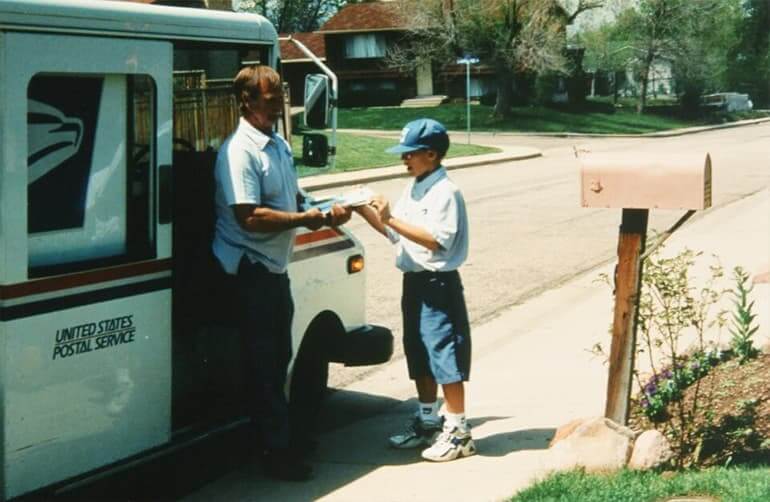
  • Mail carrier Larry taught Ian how to deliver mail, and he gave Ian a tour of the post office.
A boy helping a mailman by his truck
Ian helping the mailman when he was a young boy.
  • Wesley cuts Ian’s hair, and she was able to get Ian to tolerate a haircut and a shampoo.
  • Dental hygienist Bonnie was the one to get Ian to lie back in a chair, have all his teeth cleaned, and do X-rays.
  • Firefighters Tony & Reggie showed Ian the hand signals to use when guiding a fire truck that is backing up. Firefighter Jason gave Ian his old bunker gear.
  • The people Ian works with at the grocery store are so nice to Ian that it just warms my heart.

How does Ian respond to all these wonderful people?

  • He learns what their favorite soda pop is and takes it to them.
  • He learns what their favorite sports team is, buys the team cap, and wears it when he knows he’s going to see them.
  • He sometimes buys burritos and doughnuts and takes them to work to give to people.

These are his ways of connecting with people. It is pretty unique and the other people just love it.

Now, let me tell you about Coach Z.

Coach Z

Ian has been interested in football since he was a young boy. When he started high school, I asked the freshman football coach, Coach Z (his given name is John Zadigian) if Ian could be the manager of the team. “Absolutely,” he said.

Ian started going to football practice every day and helping out with the water, but he mostly watched the other guys practice. Before the first game, Ian asked Coach Z if he could dress out for the game. Coach Z paused, “I don’t believe I have ever had a manager dress out before, but I don’t see why not.”

The next day we met Coach Z in the equipment room, and Ian got his helmet, shoulder pads, jerseys, pants, thigh pads, and knee pads — the works. I have never seen Ian so excited in all his life.

Ian showed up at the first game dressed like one of the guys. Watching Ian on the sideline gave Coach Z an idea. Without telling my husband or me, we saw Ian run out to the field toward the end of the game when our team was ahead by many points. Coach Z had talked to the coach on the other team, and they decided to set up a play for Ian.

The ball was hiked, the quarterback turned, and he handed the ball off to Ian. Ian took off running toward the end zone. The players on the other team were diving toward Ian, but they missed him every time. Ian ran into the end zone and spiked the ball. The whole stadium burst into applause and cheers for Ian as he ran along the sideline and high-fived the rest of his team. And the legend began.

Over the last 11 years, Ian has run for over 100 touchdowns.

Never underestimate the impact your child has and will have on other people. Your child will form unique bonds with people — bonds that you may never understand. For the most part, your child brings out the best in other people, and you can’t say that about too many people. You will have your challenges and your ups and downs, but you will work through them. It really will be okay!

Whenever I get down about anything, Ian can always tell, and he comes up to me and says, “It’s going to be okay, Mom.” When I see the world through his eyes, I realize he is right. I just have to do that more often.

Coach Z and Ian, a football coach and the team equipment manager and spare quarterback
Ian with his football coach, John “Coach Z” Zadigian.

In Closing

All you need to know about life you will learn from your child or children. I hope that you won’t just learn to live with Fragile X. I hope you learn to embrace it and enjoy the benefits it has to offer!

Fragile X-associated tremor/ataxia syndrome (FXTAS) is a degenerative neurological disorder that affects approximately 40% of premutation carrier men and 13% of carrier women over age 50.

Common symptoms are imbalance, action tremors, Parkinsonian signs, thinking and psychological changes, bladder and bowel dysfunction, and loss of sensation in the feet. In one study, tremor was the most frequent initial motor sign, followed by onset of imbalance within two years, falls within six years, dependence on a walking aid in 15 years, inability to do most daily activities within 16 years, and death within 21 years. Dementia is frequent at end-stage disease. In the months before death affected persons are bedridden, have difficulty with speech and swallowing, are without bladder or bowel control, are rigid, and have slow movement. As the disease progresses, dependence on a caregiver increases substantially.

Family caregivers play a critical role in managing the needs of individuals with FXTAS throughout the illness. People with FXTAS rely on caregivers for a wide range of support — preparation of meals, household chores, transportation, medications, bathing, dressing, feeding, physical, emotional and social care, and managing family money.

Without caregivers, persons with advanced FXTAS would have a poorer quality of life and need institutional care more quickly. Given the importance of caregivers to FXTAS patients and that the job is overwhelming, it is necessary to support the caregivers as well as the affected persons. However, only a few research studies have evaluated the needs and burden of FXTAS caregivers.

Caregivers often report difficulties such as these:


“I am presently on mental overload. Every day of caregiving for my husband is extremely trying — physically — because he can do nothing for himself, and emotionally because he doesn’t speak or have much communication at all with me. Thus, my default daily situation is exhausting. There is always so much for me to think about just to keep my husband and me afloat through every day. Yesterday afternoon, I felt the tension rising inside me and everything in me screaming, stop the world, I want to get off! So I put aside the health insurance until a later date, turned off the computer, turned off his TV, sat down, and cried for an hour. The person I care for manages to drive me crazy.”

—Terri Corcoran, Wife and Caregiver of Vince Corcoran


“The behavior of the person I care for causes problems. I can’t find time to rest …”

Anonymous


Caregivers suffer physical and mental health issues, loss of social support, social isolation, employment difficulties, financial problems, and decreased satisfaction with life and family relationships. It is vital to understand caregiver burden, to provide needed support, and to help caregivers learn how to take care of themselves.

Caregiver Burden

Caregiver burden is defined as “distress that caregivers feel as a result of providing care,” and this distress is different from depression, anxiety, and other emotional responses. The burden is due to restrictions on their time and the sense of failure regarding their hopes and expectations.

FXTAS caregivers are required to manage multiple patient symptoms such as tremor imbalance and cognitive impairment. Caregiver burden increases with increasing disability and symptoms, particularly with falls and mental health problems such as dementia and depression. As FXTAS progresses, affected persons suffer increasing disability related to neurological symptoms, pain, and cognitive decline.

Caring for a person with a degenerative disease creates conditions of chronic stress that increase the risk of poor physical and psychological health in the caregiver.

Caregivers are reported to suffer from a host of stress-related symptoms and altered immune systems, which increase their susceptibility to physical illness, depressive symptoms, anxiety, poor sleep, fatigue, and chronic illness. Poor sleep is linked to diminished quality of life, depression, and increased risk of stroke and cardiovascular disease in caregivers.

Further, stress leads to increased levels of cortisol. Cortisol not only contributes to impaired cognitive function but also toward developing other risk factors associated with cognitive impairment such as obesity, poor blood sugar control, and inflammation.

Caring for a patient and also having to bear a high proportion of the personal, social, and economic costs of caring, is chronically stressful. The caregiver burden of FXTAS is likely similar to those experienced by caregivers of patients with other degenerative disorders, e.g., Parkinson’s and Alzheimer’s disease. Depression and anxiety are common mood disturbances among caregivers of both.

Different from the caregivers of Parkinson’s and Alzheimer’s, most caregivers of patients with FXTAS are female spouses, because men develop FXTAS more often and frequently more severely than women.

Multiple family members may be affected by the full FMR1 mutation or premutation, compounding the burden of unaffected family caregivers. Middle-aged family members may care for both their children or siblings with Fragile X syndrome as well as aging persons with FXTAS.

Caregiver Interventions

Several interventions can be extremely beneficial for FXTAS caregivers.

First and foremost, caregivers need to manage their own health. Thus they should see their physician for routine care as well as treatment of symptoms such as anxiety, depression, and insomnia. Caregivers need to find the time to maintain a healthy lifestyle, which besides seeking medical care includes exercise and proper nutrition.

In addition, the provision of information and emotional social support and reducing burden are crucial. This is best done through a multidisciplinary team (including a specially trained neurologist, pediatrician, nurse specialist, physiotherapist, occupational therapist, speech and language therapist, psychologist, and other specialists) that has expertise in Fragile X disorders, FXTAS, or neurodegenerative disease and includes regular and long-term follow-up.

Both patients and caregivers, when surveyed, rated informational needs (what to expect in the future and how the person with FXTAS can be helped) as most important. Understanding the impact of the disease on the family was a priority.

A Network of Social Support

For caregivers, having contact with other families affected by FXTAS is an extremely important source of support. Creating a network of family, friends, and activities outside the home can help create independence and an identity beyond that of “caregiver.”

It can be helpful to establish routines such as attending community or religious functions, playing bridge, engaging in regular exercise, and maintaining relationships that involve time away from caregiving duties. These routines help caregivers maintain emotional health and become more effective in their role.

Consult with a seasoned caregiver is beneficial, since an experienced caregiver has already gone through many trying situations and can share strategies for dealing with them.

Pyschosocial Support Interventions

Psychosocial support interventions — including education, skill-building, counseling, information, and emotional support — aim to improve the caregivers’ ability to manage the caregiving situation. The interventions at the individual caregiver’s level can be given in their home and can be beneficial in reducing or stabilizing depression, stress, role strain, and burden. This improves the caregiver’s coping ability.

Group Support and Respite Services

In addition, group interventions also have a social dimension. The interaction between group members can have an effect on caregivers that is impossible to achieve with individual support. Group support has a positive effect on the caregiver’s coping ability, knowledge, social support, and reducing depression and anxiety.

Respite services provide caregivers a temporary rest from caregiving to improve the well-being of the caregiver. Respite care can help reduce depression, burden, and anger.

Information and Communication Technology

Information and communication technology has recently been developed to support caregivers. This involves the use of the telephone or computer. For example, the Williams LifeSkills is coping skills program to identify your daily stressors, diminish your maladaptive reactions, and improve your coping skills. When tested in a group of dementia caregivers, the program significantly reduced depression, anxiety, and stress, and normalized systolic and diastolic blood pressure over the six-month follow-up period.

Problem-Solving Therapy

Problem-solving therapy (PST), a psychological treatment that helps to effectively manage the negative effects of stressful events, is beneficial. The PST approach improves depressive symptoms in both persons with FXTAS and their caregivers. Skills include making effective decisions, generating creative means of dealing with problems, and accurately identifying barriers to reaching one’s goals.

Mindfulness-Based Stress Reduction

Another beneficial form of psychotherapy is mindfulness-based stress reduction (MBSR). Dr. Jon Kabat-Zinn developed the program at the University of Massachusetts Medical Center. Since its inception, MBSR has evolved into a common form of complementary medicine addressing a variety of health problems. MBSR may help caregivers manage the chronic stress of caring. It’s a standardized program designed to reduce stress and manage difficult emotions through mindfulness training, based on ancient healing practices.

Mindfulness practice is ideal for cultivating greater awareness of the unity of mind and body, as well as of the ways the unconscious thoughts, feelings, and behaviors can undermine emotional, physical, and spiritual health. The mind is known to be a factor in stress and stress-related disorders, and meditation has been shown to positively affect a range of autonomic physiological processes, such as lowering blood pressure and reducing overall arousal and emotional reactivity.

Also see Palouse Mindfulness: Mindfulness-Based Stress Reduction

Palliative Care

Palliative care is a holistic multidisciplinary approach that is likely to benefit every family with a member with FXTAS. This is an approach to patient care that focuses on reducing suffering by addressing medical symptoms such as pain, psychological issues, social factors, and spiritual well-being. Palliative care engages with patients and caregivers at any point in the disease course rather than being restricted to the end of life. The goal is to improve the quality of life for both the patient and the family.

Palliative care is provided by a specially-trained team of doctors, nurses, social workers, palliative care specialists, massage therapists, pharmacists, nutritionists, chaplains, and other specialists who work together to provide an extra layer of support. Palliative care for neurological disease is a new medical area and is being developed in a few medical centers, such as the University of Colorado Denver. However, many medical facilities in the U.S. are starting to offer general palliative care services, which have the potential to improve quality of life and reduce caregiver burden and nursing home placement.

Religion

Last, but not least, religion can be an important personal resource of strength for caregivers. Caregivers who use faith and religion have a better opinion of caring, a better relationship with the affected person, and lower levels of depression.

Caregiving Includes Taking Care of Oneself

In summary, persons with FXTAS are highly dependent on their caregivers; caregivers are at exceptionally high risk for stress-related disease; and caregivers that have needed support can provide better care and are healthier. Caregivers need to take care of their own health first.

Also, caregivers need special skills, such as knowing how to deal with and assist angry, impulsive individuals, learning how to take care of themselves, and knowing how to manage their stress. This includes forgiving themselves for not being perfect — to enable the caregiving role to continue, to take 10 deep breaths, and to call a friend to alleviate stress.

Caregivers need to learn how to recognize fatigue warning signs, such as depression, despair, feelings of hopelessness, and emotional strain, which often manifest as varying physical symptoms, an ongoing tendency to ignore or postpone taking care of their own health needs, feelings of profound tiredness and exhaustion not relieved by sleep, growing feelings of isolation, feelings of anxiety and uncertainty about the future.

Featured image by Gerd Altmann from Pixabay

When parents first learn about Fragile X, their primary focus is on the meaning of the diagnosis for their child with the syndrome. Once the dust settles though, they begin to think about the genetic implications for other family members, and in particular, for typically developing siblings who may or may not carry a Fragile X mutation.

It seems an unfair second blow to now realize that there could be long-term reproductive and health concerns for their other children. Parents are sometimes tempted to avoid discussing Fragile X at home in an effort to spare their unaffected children from worry. They may respond to questions with vague answers, relying on general terms, such as “special needs,” to describe a sibling’s disability. Whispered conversations between parents and white lies about the cause of a sibling’s difficulties end up creating unnecessary misunderstandings and anxiety.

The discussion of how and when to tell unaffected siblings about Fragile X has many parallels to the worries parents feel about discussing “the birds and the bees” with their children. Fortunately, many of the same strategies for the “sex talk” apply equally to the “Fragile X talk.”

Make it an Ongoing Dialogue

From an early age, look for opportunities to incorporate information about Fragile X into everyday conversations with siblings. Relevant observations, both positive and negative:

Fragile X makes our family special.

Sometimes it’s hard having Fragile X.

… and even humor:

It’s gonna be one of those Fragile X days!

… set a tone of normalcy for future discussions.

Look for teachable moments to point out that every family has its own challenges, and your family just happens to have Fragile X. A discussion about the downsides of growing up with Fragile X should be balanced by pointing out the positives:

  • The uniquely sweet and funny personalities of brothers and sisters with Fragile X syndrome.
  • The opportunity for siblings to develop an open and tolerant attitude toward people with differences.
  • The valuable lessons families learn about what’s really important in life.

Be Truthful and Accurate

Answer questions as simply and honestly as possible, using language appropriate to the situation and to the child’s age. For young children, Fragile X can be described as:

A kind of medical problem that makes someone behave and learn differently from other kids.

Older children should be exposed to the concept that Fragile X “gets passed down in families.” In some families, this may be obvious because several relatives are affected; the discussion should also include the idea that people can “carry” Fragile X without knowing it.” Teenagers can learn terms such as premutation, full mutation, FXPOI, and FXTAS, and they should be encouraged to read understandable resources such as those available here, the NFXF website.

Hiding information in order to protect a curious teen is unrealistic, as information about Fragile X is readily available on the internet and social media. Open communication between parents and children from an early age can ensure that siblings have an accurate understanding of the meaning of Fragile X for them and for their family.

Avoid Overexplaining

When a child or teen asks a question about Fragile X, parents should not feel the need to provide a comprehensive explanation about all the disorders or the complex genetics of Fragile X. Try to find out what is really being asked.

A young child who asks about Fragile X may have heard that it “runs in families” and might be worried that he or she will “catch” behavior problems from a sibling.

A teenage girl might be convinced that she’s a carrier and worried about having children in the future.

Asking direct questions, such as:

  • What do you think the chance is that you carry Fragile X?
  • Can you tell me what you’ve heard about FXTAS?

… help to focus the conversation. Provide a simple answer to the specific question, but leave the door open for more discussion on other topics.

Help Siblings Build a Buddy System

By the time they reach school age, siblings often worry about what their friends think of their brother or sister with Fragile X syndrome. They may make them feel embarrassed and they may avoid bringing friends home from school. They may not know how to explain their sibling’s condition to friends. When appropriate, a parent can provide child-friendly information about Fragile X to a school class or community group.

A parent can initiate a simple discussion about Fragile X with a sibling and their best friend; this can be an ice breaker that gets communication flowing. Above all, siblings need to know that there is nothing shameful about having Fragile X in a family. In fact, they are often relieved and surprised to find out that their friends are very sympathetic and may be dealing with family worries of their own.

Keep Things in Perspective

Knowledge about Fragile X-associated disorders has expanded greatly over the past 10 years, and in the next decades, still more advances will be made. The conversation with a 13-year-old girl today about future childbearing will likely include many options when she’s ready to consider having children. Testing and treatments for Fragile X disorders will continue to evolve over time, and it’s important to emphasize this when talking about Fragile X and its future implications for siblings.

To Test or Not to Test

Organizations for genetics professionals, such as the National Society of Genetic Counselors , recommend against genetic testing for unaffected minors. When the point of testing is solely to find out whether or not an asymptomatic child is a carrier of a specific condition, testing should be deferred until the child is old enough to participate in making the decision whether or not to be tested. If a child has symptoms, such as learning disabilities or psychiatric problems, then testing should be considered as a diagnostic test, not a carrier test.

It is important to recognize that some people feel empowered by knowing their genetic test results, even if it means finding out they are carriers; other people feel burdened by such knowledge and prefer not to know. Either way, once the results are known, there is no way to “undo” the knowledge, so testing decisions should not be taken lightly.

Even though a parent may be curious as to whether an unaffected sibling carries a Fragile X mutation, testing should be postponed until the sibling is old enough to independently make an informed decision. In some cases, it may be appropriate for mature teens to participate in decision-making about their own carrier testing. Every situation is different, and decisions about testing will depend on the maturity of the teenager, their ability to make an informed decision, and the perceived benefits of testing versus waiting.

Call in a Professional

Everyday conversations about Fragile X can and should be incorporated into the day-to-day routine of a family’s life. Some parents become very emotional at the thought of talking about carrier issues with their children, and this can make important discussions awkward for all involved. Sometimes, teens are more receptive to hearing the information from an unrelated, “neutral” person, such as a genetic counselor or other knowledgeable professionals.

A core skill of genetic counselors is to explain complex genetic information in a way that is understandable to families. This is particularly important when a teen may be considering carrier testing and needs to understand and discuss key pros and cons in order to make an informed decision. To locate a genetic counselor in your area, use Find a Genetic Counselor (from NSGC). Parents should realize that they’re not alone in these situations and can reach out to the NFXF and to professionals in the Fragile X community  for help.

Remember that family discussions about the many aspects of Fragile X cannot be boiled down to a single talk. Every family’s Fragile X journey changes over time, and siblings’ questions and adaptation to Fragile X evolve too as they grow and develop. Families do best when there is open and honest communication about Fragile X, a recognition that all families have challenges, and a willingness to ask for help when needed from Fragile X professionals.

Authors: Melissa Raspa, PhD, Don Bailey, PhD (Distinguished Fellow), Carla Bann, PhD (Statistician), and Ellen Bishop (Lead Programmer)

Family adaptation is the process by which parents and other family members adjust, accommodate, or transform their roles and responsibilities to better meet current demands. All families must change and adapt over time, but this is especially true for families who have a child with Fragile X syndrome (FXS). For these families, adaptation begins with the diagnosis and continues throughout their child’s life.[1] [2] [3] [4] [5] Adaptation is a complex process and involves changes on multiple levels. Ultimately, positive adaptation is needed to ensure good outcomes for both children and families.[6] [7]

Several unique characteristics of FXS suggest that it is an especially important condition in which to study family adaptation. FXS is passed on to children through carrier parents, and because children often aren’t diagnosed until 36 months of age, approximately 25 percent of families have more than one affected child.[8] FXS can affect extended family members and the diagnosis may have an impact on family cohesion and dynamics as well.[9] Individuals with the full mutation often have developmental delays, attention problems, hyperactivity, autism, and behavior problems, though there is wide variation in the FXS phenotype. Individuals who are premutation carriers of Fragile X, may experience cognitive or emotional challenges, although less severely. Carriers are also at risk for Fragile X-associated primary ovarian insufficiency (FXPOI) and Fragile X-associated tremor Ataxia Syndrome (FXTAS). Collectively, these challenges may make it harder for families to adapt to the needs of their child (or children) and often have negative effects of parents themselves.IMG_2517

The purpose of this study was to draw on data from a national survey to address gaps in the current knowledge of family adaptation to FXS. First, we wanted to describe the nature of both positive and negative family adaptation to FXS. Using more than 1,000 families who had a child with the full mutation or premutation of FXS, we sought to characterize and quantify multiple areas of adaptation, many of which have not been previously reported, including parenting knowledge of FXS, social support, respondent well-being, family social life, financial impact, family quality of life, and overall family impact. We also wanted to examine how factors that are unique to families who have a child with FXS, such as family composition, (i.e., number and FXS status of affected children), played a role in adaptation. Results are presented below.

Families were asked a series of six questions about their knowledge of FXS as well as how much they knew about helping their child and locating services. The majority of respondents knew a good amount or a great deal about the genetics (86 percent) and heritability (88 percent) of FXS. Seventy-four percent of families responded that they knew about how to help their child develop and learn new skills, but only 60 percent indicated they knew a good amount or a great deal about how to help their child behave the way they would like. Fewer families knew about services that were available for their child and about the rights of families who have a child with FXS; 60 percent said they knew about services whereas 44 percent knew about their rights.

Families responded to four questions about informal social support from friends and knowledge of other families who have a child with FXS. A majority of families usually (27 percent) or almost always (40 percent) had someone to talk to or someone to rely on for help when needed (28 percent, 32 percent, respectively). However, more than one-third of families responded they had lower levels of social support. Just over one-quarter of families (27 percent) did not know another family that had a child with FXS, another 29 percent knew one or two families, 27 percent knew three to 10 families, and 17 percent knew more than 10 families. Of those that did, 41 percent indicated that it took more than one year after their child was diagnosed for them to meet another family with a child with FXS.

Almost all respondents agreed or strongly agreed they were able to handle problems in their life (94 percent). Respondents were asked questions about their levels of stress, history of depression, and ability to handle problems and cope. Almost all respondents agreed or strongly agreed they were able to handle problems in their life (94 percent). However, 41 percent replied they had a hard time coping with all the things they have to do. Most respondents agreed that they were able to find time to relax (67 percent) and do the things they enjoy (75 percent). Nearly three-quarters, however, said that caring for their child with FXS puts a strain on them. Approximately 36 percent of respondents had been diagnosed or treated with depression; of those who had, 57 percent were currently being treated. Forty-one percent of respondents had been treated once, 18 percent twice, and 41 percent more than twice.

IMG_9794We posed five questions to families to ask about their social life. About half of all families indicated that having a child with FXS has somewhat or very much affected their ability to take a vacation (53 percent), go to church or other religious activities (45 percent), eat out at a restaurant (45 percent), go shopping (49 percent), or get together with friends (46 percent). When asked how often their family is able to do the things they enjoy together, 27% responded almost always, with another 30 percent indicating usually, 29 percent sometimes, and 14 percent seldom.

Respondents were asked about the impact of having a child with FXS on different areas of family life. Approximately 27 percent of families responded that having a child with FXS has not caused any financial burdens, however another 26 percent reported a little, 30 percent somewhat, and 17 percent a great deal of financial burden. In thinking about the overall impact of FXS on their family, 18 percent of respondent said it was mostly positive, 35 percent somewhat positive, 33 percent somewhat negative, and 14 percent mostly negative. The majority of families (78 percent) reported that their overall life situation was either good or very good, with 19 percent indicating it was fair, and 3 percent poor.

The majority of families (78 percent) reported that their overall life situation was either good or very good, with 19 percent indicating it was fair, and 3 percent poor.Next, we wanted to determine which factors played a role in family adaptation. Our analyses showed that several child and family factors were important. Families with more education/schooling reported greater parenting knowledge. Male respondents (e.g., fathers or grandfathers) reported less parenting knowledge than female respondents (e.g., mothers or grandmothers). Families that only had children with the premutation and families who had at least one daughter (but not a son) with the full mutation reported less knowledge when compared to families that had a son with the full mutation. Families that had older children or those whose children had fewer co-occurring conditions (e.g., hyperactivity, autism, seizures, etc.) reported better social lives. Having children with more co-occurring conditions was associated with less social support and a more negative overall impact of FXS on the family.

However, some of these things appear to be mediating the nature of adaption for families. For example, families with more parenting knowledge, better social lives, more social support, and less financial impact reported a higher quality of life and better respondent well-being. Not surprisingly, families with worse social lives, less social support, and greater financial impact reported a negative overall impact of FXS on the family. This suggests that although some of the child and family factors mentioned above (e.g., having a child with multiple co-occurring conditions) may place families at-risk for negative adaptation, if families are able to make improvements in some areas, such as increasing their social support or enriching their social lives, they will be more likely to have positive outcomes. This information is important for clinicians and other professionals who work with families so that targeted interventions can be developed to ensure successful adaptation.